What Does It Feel Like to Eject from a Fighter Jet?
TL;DR
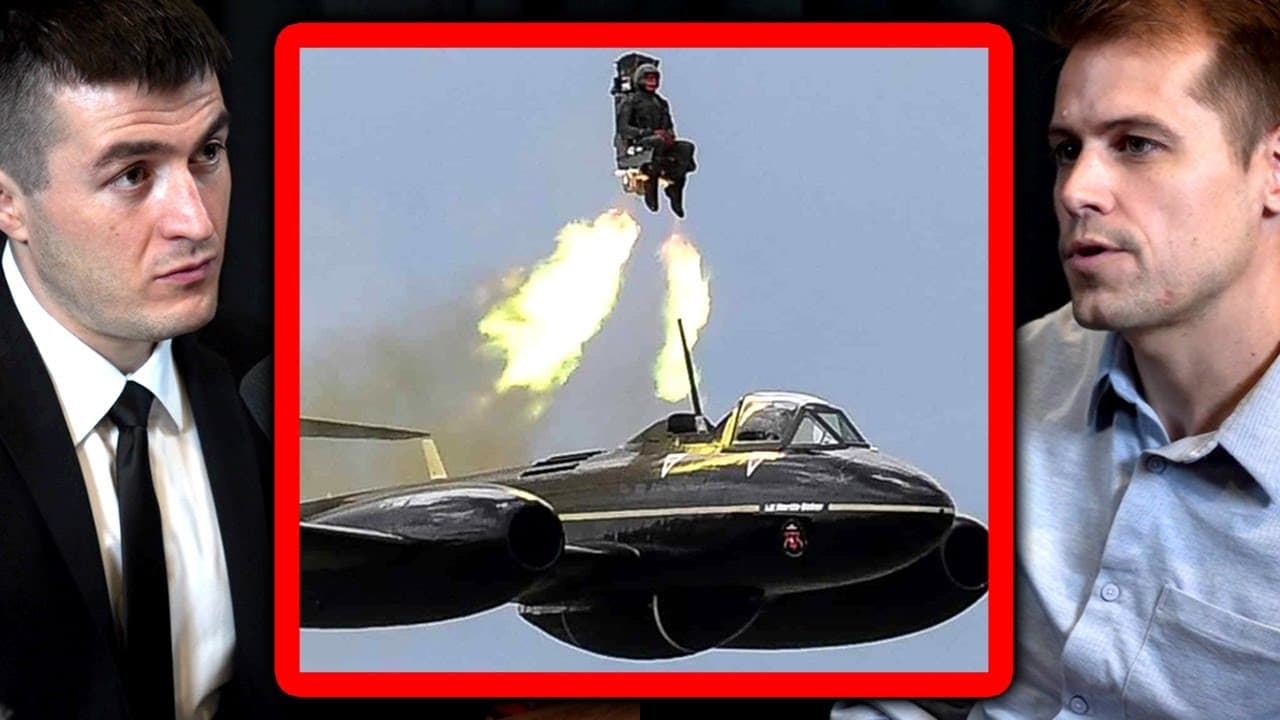
Experiencing a fighter jet ejection can subject a pilot to extreme forces, reaching up to 250 g's momentarily. This sudden event can lead to loss of consciousness or disorientation, making it a uniquely intense and unpredictable experience. Understanding the physics involved underscores the risks pilots face during naval training.
Transcript
you were twice deployed in the middle east flying the fa-18f super hornet can you briefly tell the story of your career as a navy pilot sure so i joined the navy in 2009 right after college i went to officer essentially officer boot camp officer kinder school i applied as a pilot and i got into the pilot that was the advantage of going that way is ... Read More
Key Insights
- 👻 Joining the Navy as an officer allows individuals to have more control over their career path, such as becoming a pilot.
- 🪡 The selection process for specific aircraft in the Navy depends on the needs of the Navy.
- 🧑✈️ Training as a Navy pilot involves progressing through various stages, including primary flight training and aircraft-specific training.
- 💨 Transitioning from a prop plane to a jet requires mental adaptation due to the increased speed and faster decision-making.
- 🦺 Ejection incidents, while uncommon, can occur during training, highlighting the importance of safety protocols.
- 🛸 The T-45 Goshawk serves as a training aircraft for carrier operations, focusing on skills like formation flying and low-level flying.
- 🧑✈️ The Navy pilot's first flight in the T-45 Goshawk was eventful due to a landing gear malfunction, which resulted in some exciting moments.
- 🎙️ More videos with Ryan Graves:
Install to Summarize YouTube Videos and Get Transcripts
Explore YouTube Video Summarizer or Get YouTube Transcript Extractor
Questions & Answers
Q: What made the Navy pilot choose to become a Navy pilot?
The pilot had a desire to become a pilot and had the advantage of choosing his career path in the Navy.
Q: How did the pilot's training progress after joining the Navy?
After joining, the pilot underwent initial training, followed by primary flight training, which prepared him for future jet training.
Q: What is the significance of being assigned a "tail hook" in the Navy?
Being assigned a tail hook meant that the pilot was selected to train specifically for carrier landings, known as "traps."
Q: What was the pilot's experience transitioning from a prop plane to the T-45 Goshawk jet?
The transition was significant, considering the substantial increase in horsepower and the faster pace of operations in a jet aircraft.
Summary & Key Takeaways
-
The Navy pilot joined the Navy in 2009 and went through officer training before applying to be a pilot.
-
He was fortunate to secure a slot for the F-18 fighter jet training and went on to fly the T-45 Goshawk as part of his training.
-
Transitioning from a prop plane to a jet was a significant jump in power and required adjustments to handling and decision-making.
Read in Other Languages (beta)
Share This Summary 📚
Summarize YouTube Videos and Get Video Transcripts with 1-Click
Try YouTube Summary with ChatGPT & Claude or YouTube Transcript Generator
Explore More Summaries from Lex Clips 📚




Summarize YouTube Videos and Get Video Transcripts with 1-Click
Try YouTube Summary with ChatGPT & Claude or YouTube Transcript Generator