How to Turn Failure Into Strength and Success
TL;DR
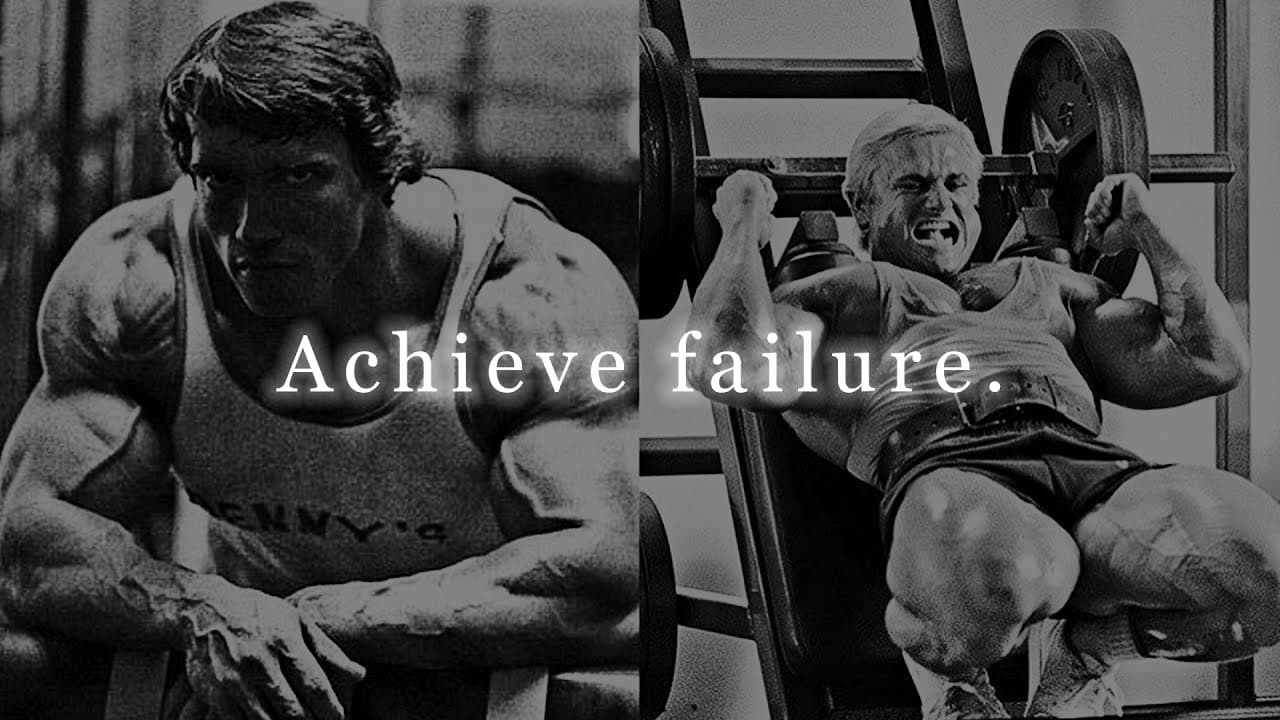
Failure becomes useful when you treat it as feedback, learn from it, and repeatedly get back up. Tom Platz and Arnold Schwarzenegger argue that progress requires discomfort, risk, full commitment, and the willingness to push beyond perceived limits without letting fear freeze your actions.
Transcript
I can't tell you how many times I dropped the weight on the floor, dropped the weight, just tossed it off my back, fell down, got up again, and continue the set. You got to be willing to fail. If you can't fail, what I learned in the gym is you got to go out there and fail. You got to go out there and fall down. Most people who have won big have fa... Read More
Key Insights
- Failure is presented as a necessary part of winning because people who achieve major success often experience major setbacks. Falling short is not the final outcome when it leads to another attempt, additional training, and a clearer understanding of what must improve.
- The final 5% of effort is described as the decisive margin where most people stop because continuing feels frightening or painful. Tom Platz treats this remaining effort as a place of unusual value, requiring a person to push beyond the point where they initially believe they are finished.
- Training to failure works by revealing the boundary of current physical capacity. Arnold Schwarzenegger says going all out shows how much a person can actually lift, while repeated unsuccessful attempts provide information that can guide further training rather than prove permanent inability.
- Fear of failure can prevent action by making a person freeze, become stiff, and lose the relaxed state needed for strong performance. Becoming comfortable with the possibility of losing allows someone to move forward, think more clearly, and give an effort everything they have.
- Full commitment concentrates effort on the primary goal. Arnold Schwarzenegger argues that a fallback plan can draw thought and energy away from the main plan, while his own approach was to keep working repeatedly toward bodybuilding, moving to America, and becoming a leading man.
- Risk is closely connected to opportunity because greater possibilities often require greater uncertainty and discomfort. The speakers argue that avoiding the frightening final portion of effort may allow a limited window of opportunity to pass to someone else who is willing to take that risk.
- Mental strength develops through pain and discomfort in a way compared with muscular growth. The transcript argues that continually choosing comfort can make people softer, while facing setbacks and difficult periods can produce learning, resilience, toughness, and greater personal growth.
- A winner is defined by recovery rather than an absence of failure. Losing competitions, missing lifts, or producing unsuccessful movies does not make someone a loser. The unacceptable response is staying down, while repeatedly getting up and continuing the work reflects a winning mindset.
Install to Summarize YouTube Videos and Get Transcripts
Explore YouTube Video Summarizer or Get YouTube Transcript Extractor
Questions & Answers
Q: How can failure help someone become successful?
Failure can support success when it is treated as information rather than a permanent judgment. The speakers describe unsuccessful lifts, lost competitions, and poorly received movies as experiences that revealed the need for more work. Failure teaches lessons, strengthens the mind, and identifies current limits. Its value comes from getting up, adjusting, training again, and continuing toward the goal.
Q: What does the final 5% of effort mean?
The final 5% represents the effort remaining after a person believes the task is essentially finished. Tom Platz calls it a special place that few people enter because it feels painful, risky, and frightening. He argues that pushing into this margin can separate ordinary effort from championship effort, provided people are prepared to fail, recover, and attempt the work again.
Q: Why do Tom Platz and Arnold Schwarzenegger embrace failure?
Tom Platz and Arnold Schwarzenegger embrace failure because they see it as an unavoidable step in discovering limits and improving performance. Platz connects muscular failure with giving everything available, while Schwarzenegger describes repeated losses and missed lifts as reasons to train more. Both reject the idea that a setback defines a person, emphasizing the response that follows it instead.
Q: How does training to failure apply to everyday life?
Training to failure applies to life by teaching people to tolerate discomfort, take risks, test their abilities, and continue after setbacks. In the gym, a person may drop a weight, fall, recover, and resume the effort. The speakers argue that the same pattern works elsewhere: commit fully, accept unsuccessful attempts, learn from them, and repeatedly get back up.
Q: Why can fear of failure stop progress?
Fear of failure can stop progress because it makes people freeze, become tense, and avoid forward movement. Arnold Schwarzenegger says strong performance and clear thinking require relaxation, which becomes difficult when someone is constantly worried about losing. Accepting that everyone fails reduces this fear and makes it easier to act, take risks, and give the goal a complete effort.
Q: Why does Arnold Schwarzenegger warn against having a Plan B?
Arnold Schwarzenegger warns that a Plan B can become a safety net that draws attention and energy away from Plan A. He says each thought devoted to the fallback is effort removed from the main commitment. His preferred approach was to commit completely to becoming a bodybuilding champion, reaching America, and succeeding as a leading man through repeated work.
Q: What can repeated failed attempts teach a person?
Repeated failed attempts can show a person where current ability ends and where additional preparation is needed. Arnold Schwarzenegger describes missing a 500-pound bench press at least ten times before completing it on the eleventh attempt. He did not interpret the misses as proof that he was a failure. He concluded that he needed to train more and continue trying.
Q: What is the difference between failing and being a loser?
Failing is an unsuccessful attempt that can happen to anyone, including winners. Being a loser, as defined in the transcript, means failing and choosing to stay down. Winners may lose competitions, miss lifts, or produce unsuccessful work, but they recover and try again. The decisive behavior is repeatedly getting up rather than expecting a life without setbacks.
Summary & Key Takeaways
-
Tom Platz presents training to failure as both a bodybuilding method and a life philosophy. He describes falling, dropping weights, continuing difficult sets, and searching for the final 5% of effort. That uncomfortable margin represents the place where few people willingly go, but where he believes meaningful progress and winning become possible.
-
Arnold Schwarzenegger argues that fear of failure can freeze people and prevent forward movement. He describes losing competitions, missing a 500-pound bench press repeatedly, and making poorly reviewed movies. Instead of treating these outcomes as permanent defeat, he viewed them as signals to train more, learn, and try again.
-
Both speakers connect physical training with mental development. Muscles grow through pressure, pain, and discomfort, while the mind becomes stronger through setbacks and difficult experiences. Their central distinction is between failing and remaining defeated: winners can fail repeatedly, but they continue getting up, recommitting, and giving their full effort.
Read in Other Languages (beta)
Share This Summary 📚
Summarize YouTube Videos and Get Video Transcripts with 1-Click
Try YouTube Summary with ChatGPT & Claude or YouTube Transcript Generator
Explore More Summaries from Chispa Motivation 📚



Summarize YouTube Videos and Get Video Transcripts with 1-Click
Try YouTube Summary with ChatGPT & Claude or YouTube Transcript Generator