How to Progress Faster by Accepting Early Failure
TL;DR
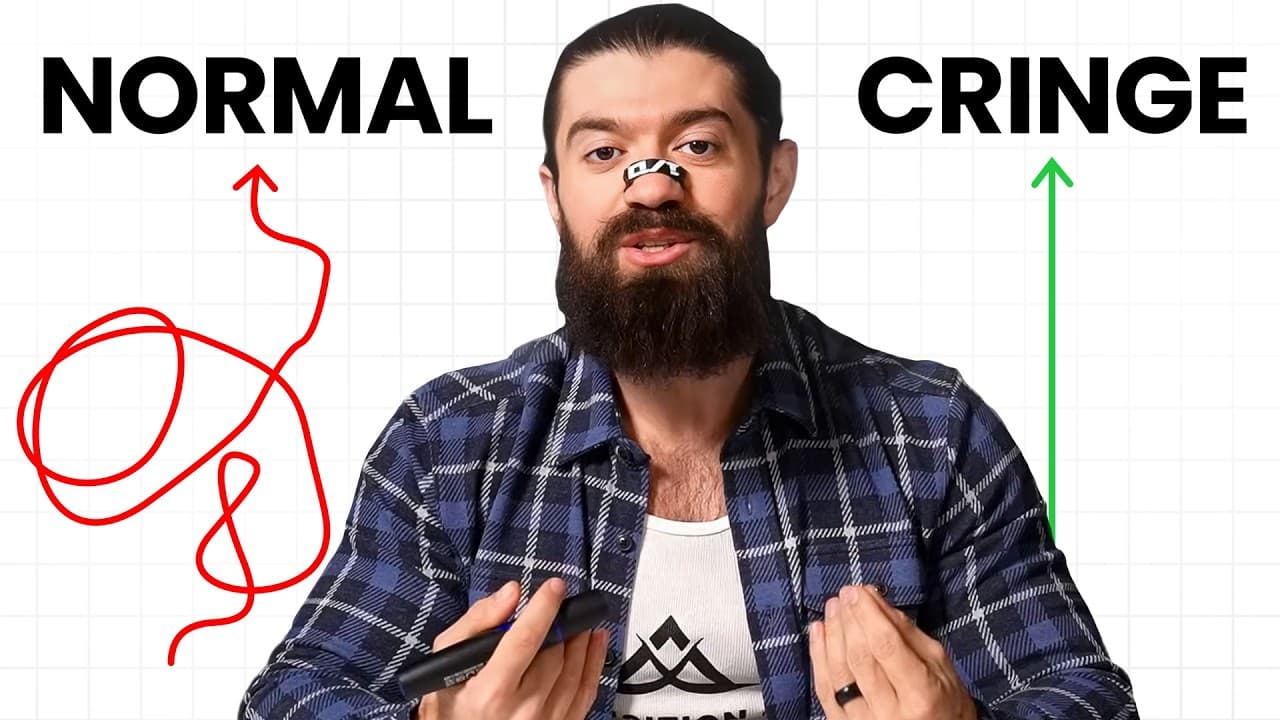
Progress begins with accepting that your early work will probably be awkward and poor. Start anyway, collect feedback, improve through repeated attempts, and continue despite embarrassment or criticism. Documenting the struggle also preserves evidence of growth and helps prevent unfair comparisons between your beginning and another person's far more advanced stage.
Transcript
This is the first piece of content I ever made. >> Don't let your >> This is the first ad I ever made. >> Are you tired fitness? >> Fast forward today. We make 450 pieces per week. I broke the Guinness World Record for the fastest selling non-fiction of all time with $16 million in sales in a weekend. And we own a portfolio of companies that did no... Read More
Key Insights
- Early work is usually poor because competence develops through repeated attempts. Hormozi contrasts his first advertisements, posts, videos, and podcast with his later output to show that polished performance is the result of continued production, feedback, and adjustment.
- Cringe is described as supposed secondhand embarrassment that can operate as a defensive status move. When someone mocks visible effort, Hormozi suggests the criticism may reflect discomfort with another person's commitment or changing position rather than a useful judgment about the work.
- Caring deeply can make almost any activity appear embarrassing when described dismissively. Bodybuilding, competitive chess, making YouTube videos, and writing books can all sound absurd when their demanding routines are stripped of purpose and presented through a cynical frame.
- The fear of looking cringe is more limiting than producing awkward early work. Avoiding embarrassment prevents the attempts needed to build skill, while accepting temporary discomfort allows a person to begin, receive evidence from reality, and improve over time.
- Rules are if-then statements that should be examined before they guide behavior. Hormozi recommends asking whose rules are being broken, whether those rules were accepted, what outcomes they optimize for, whether their assumptions are true, and why they matter.
- Documentation creates a record of struggle that success stories often omit. Hormozi regrets not preserving more of his difficult periods because shame made him hide them, and he argues that people who expect to succeed should preserve the beginning of their story.
- Comparison becomes misleading when a beginner judges an early attempt against another person's much later stage. Hormozi uses his archived work to demonstrate that visible success conceals a long sequence of weak, awkward, and unsuccessful efforts that came before it.
- Improvement depends on a simple continuing process: start, take feedback, get better, and do not stop. Hormozi argues that deserving a desired result requires becoming good, while becoming good requires tolerating a long period of being bad.
Install to Summarize YouTube Videos and Get Transcripts
Explore YouTube Video Summarizer or Get YouTube Transcript Extractor
Questions & Answers
Q: How can I make progress faster when starting something new?
Start before your work feels polished, then use feedback to improve each attempt. Hormozi argues that people become good only after being willing to remain bad for a long time. His early advertisements, videos, posts, and podcast were awkward, but producing them created opportunities to learn. Faster progress comes from shortening the delay before action and continuing the cycle of making, evaluating, and adjusting.
Q: Why is accepting embarrassing early work important for growth?
Accepting embarrassing work makes practice possible. If every first attempt must protect your image, you may avoid publishing, selling, creating, or asking for feedback altogether. Hormozi presents his own early content as evidence that weak beginnings do not determine later ability. The embarrassment is temporary, while the attempts provide experience, information, and skills that cannot be gained by waiting privately for confidence.
Q: What does cringe mean in the context of pursuing a goal?
Cringe is defined as supposed secondhand embarrassment, meaning someone claims to feel embarrassed on another person's behalf. Hormozi interprets it as a possible defensive status play when visible effort changes how people compare themselves with the person trying. Under this view, being called cringe does not automatically identify bad work. It may simply show that commitment, ambition, or improvement has become noticeable to others.
Q: How should I respond when people mock me for trying hard?
Examine the standards behind the criticism before accepting it. Ask whose rules you are supposedly breaking, whether you agreed to those rules, what outcome they optimize for, and whether their assumptions are true. Hormozi argues that dismissing sincere effort as uncool often says more about the critic's relationship with commitment than about the goal. Continue if the effort serves an outcome you genuinely value.
Q: Why should I document the difficult stages of my journey?
Documentation preserves the parts of progress that are easy to forget or hide. Hormozi says he regrets not recording more of his struggle because he felt ashamed of it. He later began documenting deliberately when he had $1,000 left in his bank account after losing everything. A record of early conditions can reveal improvement, support honest reflection, and become part of the story told after recovery.
Q: How can I stop comparing my beginning with another person's success?
Compare your current work with your own previous attempts and remember that public success rarely displays every earlier failure. Hormozi shows his first advertisement, content piece, YouTube video, Instagram post, and podcast to make that hidden progression visible. The useful comparison is not your first chapter against another person's 25th or thousandth chapter. It is your latest attempt against what you produced before.
Q: Why does caring deeply about a goal sometimes look cringe?
Almost any serious pursuit can sound ridiculous when described without its purpose. Hormozi illustrates this by reducing bodybuilding to posing in small trunks, chess to staring at wooden pieces, YouTube production to talking into a camera, and writing to typing alone. The dismissive framing does not prove the activity lacks value. It shows that visible commitment can be mocked regardless of the specific pursuit.
Q: What process does Hormozi recommend for continuous improvement?
The recommended process is to start, take feedback, improve, and never stop. Starting creates a real attempt that can be evaluated, while feedback identifies what needs adjustment. Repetition then converts those lessons into better work. Hormozi links this process to his own progression from poor early content to producing 450 pieces per week, emphasizing that output quality followed sustained practice rather than appearing at the beginning.
Summary & Key Takeaways
-
Early work is likely to feel embarrassing because skill develops after repeated practice, not before it. Hormozi supports this point by revisiting his first advertisement, content piece, YouTube upload, Instagram post, and podcast. Their shortcomings show why beginners should compare themselves with their own earlier attempts instead of established performers.
-
Fear of appearing overly serious can discourage people from committing to meaningful work. Calling sincere effort cringe may function as a status defense, especially when another person's ambition creates an uncomfortable comparison. The practical response is to examine whose standards are being applied and whether those standards support the outcome being pursued.
-
Sustained improvement requires starting before feeling ready, accepting feedback, and refusing to stop. Documenting difficult periods creates an honest record of the journey and may later become a valuable learning resource. Hormozi connects his development to repeated public attempts, including work created after losing everything for the second time.
Read in Other Languages (beta)
Share This Summary 📚
Summarize YouTube Videos and Get Video Transcripts with 1-Click
Try YouTube Summary with ChatGPT & Claude or YouTube Transcript Generator
Explore More Summaries from Alex Hormozi 📚


Summarize YouTube Videos and Get Video Transcripts with 1-Click
Try YouTube Summary with ChatGPT & Claude or YouTube Transcript Generator