How to Build an AI Asset-Based Lead Gen System
TL;DR
Build an automated outreach system by sourcing leads from Apollo through Apify, scraping each prospect's website, and using AI to create a personalized asset such as a newsletter. Convert the asset into a Google Doc, then add the prospect to an Instantly email sequence that offers the work upfront without beginning with an aggressive request.
Transcript
Today I'm going to be building an assetbased AI lead generation system. Essentially, we're going to be scraping customer data and then generating a custom lead magnet or asset for them using artificial intelligence and some pretty smart prompting before finally adding them to an email campaign and running this on autopilot. The same approach is bei... Read More
Key Insights
- Asset-based lead generation is an outreach method that creates something specifically useful for each prospect before asking for a response. The demonstrated asset is a personalized newsletter, although suggested alternatives include YouTube titles, emails, and applications.
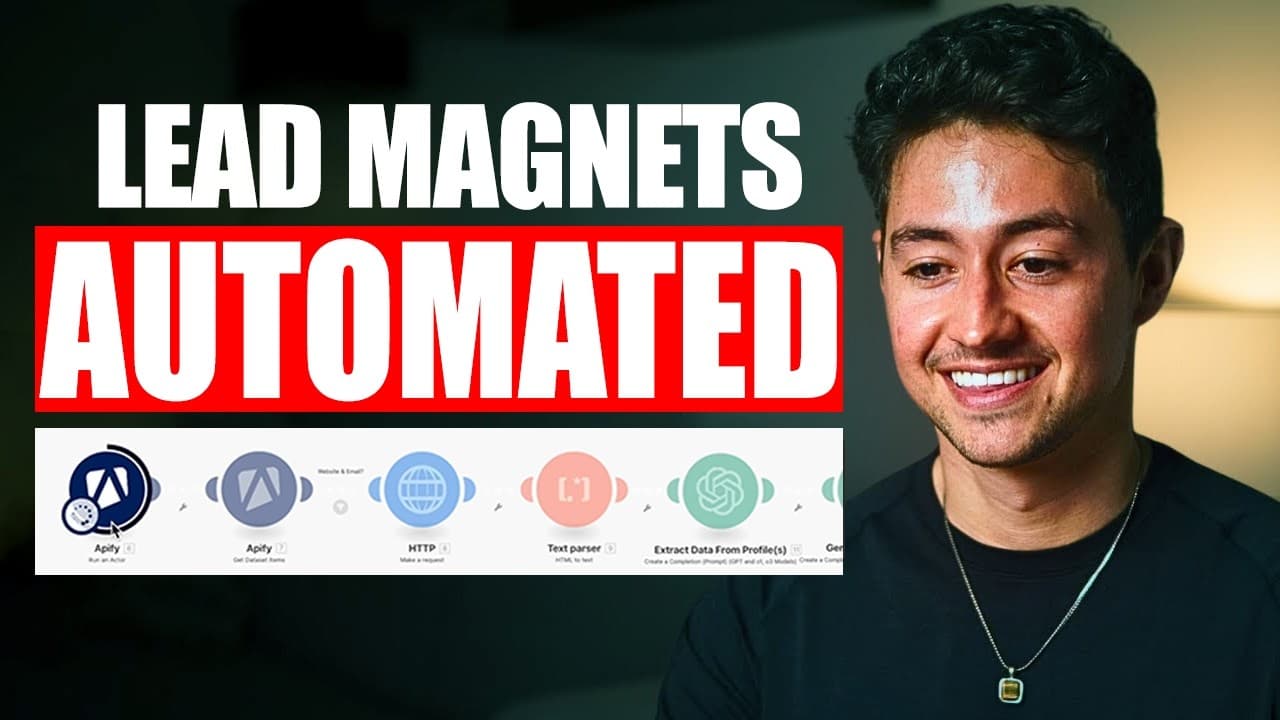
- The system's workflow is lead sourcing, prospect research, AI asset creation, document generation, and campaign enrollment. Make.com connects the necessary services so these stages can operate together in a single automated scenario.
- Apollo provides prospect information such as email addresses, names, websites, job titles, employment history, and verification status. Filtering its people database lets the sender define an audience before passing the resulting search URL to an Apify scraper.
- Apify's code_crafter/apollo-io-scraper can scrape up to 50,000 leads from one Apollo search URL. The demonstration requests only 500 records initially because reviewing a smaller test dataset helps confirm that the source and fields are suitable before automation proceeds.
- Website scraping supplies business-specific context beyond the structured Apollo fields. An HTTP request retrieves the prospect's website as HTML, which is converted into text so an OpenAI step can analyze it alongside personal and organizational data.
- The first OpenAI step extracts personalized context and proposes angles for the prospect's asset. A subsequent generation process uses that context and an established content structure to produce a longer newsletter intended to offer meaningful value rather than superficial personalization.
- The finished newsletter is converted to HTML and inserted into a Google Doc. The document also contains customized introductory messaging that tells the prospect the asset was prepared for them and expresses an interest in working together.
- The outreach strategy emphasizes delivering value before making a difficult request. The presenter reports that people using similar asset-based approaches can obtain reply rates above 5%, 10%, or even 15%, while noting that campaign asks can still be tested.
Install to Summarize YouTube Videos and Get Transcripts
Explore YouTube Video Summarizer or Get YouTube Transcript Extractor
Questions & Answers
Q: How do you build an AI asset-based lead generation system?
Start by defining an audience in Apollo and sending the resulting search URL to an Apify Apollo scraper. Retrieve the lead dataset in Make.com, scrape each prospect's website through an HTTP request, and convert the HTML into text. Use OpenAI to extract personalized context and generate a relevant asset, create a Google Doc from it, and add the prospect to an Instantly campaign.
Q: What is asset-based AI lead generation?
Asset-based AI lead generation is a cold outreach approach in which the sender creates something valuable for a prospect before requesting a conversation or commitment. The asset can be a newsletter, an email, YouTube titles, or even an application. AI makes individualized production practical by turning scraped information about the prospect and company into relevant, structured content.
Q: Why create a personalized asset before sending cold email?
A personalized asset gives the recipient useful value upfront and helps an email stand out as the volume and quality of cold outreach increase. Instead of opening with a demanding ask, the sender can explain that something was created specifically for the prospect and provide a link. The presenter associates comparable approaches with reply rates above 5%, 10%, or even 15%.
Q: How are leads sourced from Apollo and Apify?
First, build an Apollo people search using filters appropriate to the intended audience, such as job titles, locations, and company characteristics. Copy the search URL into Apify's code_crafter/apollo-io-scraper and specify the required record count. The scraper can process up to 50,000 leads per search URL, while the demonstration uses 500 records for an initial proof-of-concept test.
Q: What prospect data does the lead generation workflow use?
The scraped dataset can include email addresses, first names, last names, company websites, city and country information, email verification or catch-all status, job titles, and employment history. Website and social profile content can add further context. Combining these sources gives the AI information about the individual, the organization, and potential angles for creating a relevant asset.
Q: How does the workflow turn a prospect's website into AI context?
Make.com sends an HTTP request to the prospect's website and receives the page as HTML. The workflow parses that HTML into text because text can be passed more easily to the OpenAI step. The model then evaluates the website material together with Apollo fields, returns personalized context, and suggests distinctive angles that can guide the generated newsletter or another asset.
Q: How is the personalized newsletter delivered to a prospect?
After AI generates the newsletter, the workflow converts the content into HTML and uses it to create a Google Doc. The document includes a customized note explaining that the sender prepared the material for the prospect, followed by the newsletter itself. An HTTP call to Instantly enrolls the prospect in a cold email sequence containing a link to that document.
Q: How should an asset-based cold outreach email be written?
The email should be short, identify the recipient personally, mention genuine interest in their work or company website, and explain that the sender created something useful for them. It should link directly to the personalized asset and avoid beginning with an overly difficult request. The central message is that value has already been delivered, while the recipient can choose whether to continue the conversation.
Summary & Key Takeaways
-
The system begins with a filtered Apollo search for suitable prospects, such as founders and co-founders of creative agencies. Apify's Apollo scraper extracts contact and company fields from the search URL. The demonstration initially limits the run to 500 records so the resulting data can be inspected before the complete automation is built.
-
Make.com coordinates the workflow after lead sourcing. It retrieves the Apify dataset, requests each prospect's website HTML, converts that HTML into usable text, and supplies the text alongside Apollo fields to OpenAI. The model identifies personalized context and useful angles before generating a substantial asset based on a predetermined structure.
-
The generated newsletter is converted into HTML and placed in a Google Doc with a customized introductory message. An HTTP request then adds the prospect to an Instantly sequence. The outreach email briefly explains that the sender created something useful for the recipient and links to the asset without making an overly demanding initial request.
Read in Other Languages (beta)
Share This Summary 📚
Summarize YouTube Videos and Get Video Transcripts with 1-Click
Try YouTube Summary with ChatGPT & Claude or YouTube Transcript Generator
Explore More Summaries from Nick Saraev 📚





Summarize YouTube Videos and Get Video Transcripts with 1-Click
Try YouTube Summary with ChatGPT & Claude or YouTube Transcript Generator