Interstellar Expansion WITHOUT Faster Than Light Travel
TL;DR
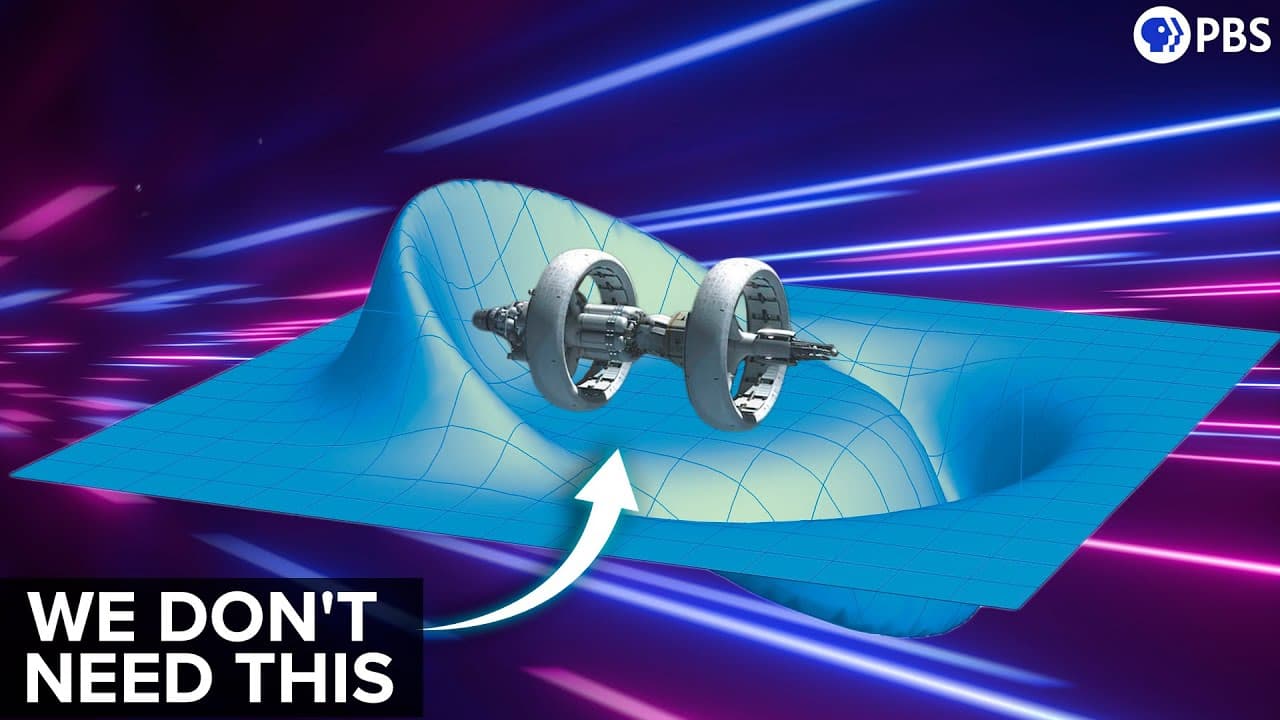
Exploring generation ships as a solution for interstellar travel.
Transcript
Before we get started I wanted to let you know, today’s episode is brought to you by Space: The Longest Goodbye. Available now on the PBS App and YouTube. So check out the link below. We are the middle children of history. Born too late to explore Earth, and born too early to explore the universe —- to partially quote someone on the internet wh... Read More
Key Insights
- Generation ships are proposed as a feasible solution for interstellar travel without faster-than-light technology, relying on multi-generational crews.
- Achieving near-light speeds is crucial for reducing travel times, but current propulsion technologies are insufficient for such speeds.
- Nuclear fusion propulsion offers a potential method for achieving higher speeds, though it remains speculative and technologically challenging.
- Maintaining genetic diversity is vital for the success of a generation ship, requiring a minimum starting population to avoid inbreeding and genetic issues.
- Life support systems must include advanced recycling technologies for water and air to sustain a multi-generational crew over long journeys.
- Artificial gravity, possibly achieved through rotating habitats, is necessary to prevent health issues associated with long-term weightlessness.
- Psychological well-being and social stability of the crew are critical, necessitating virtual reality and AI support systems for mental health.
- Cultural continuity and mission focus across generations are key challenges, requiring robust educational and social structures on board.
Install to Summarize YouTube Videos and Get Transcripts
Explore YouTube Video Summarizer or Get YouTube Transcript Extractor
Questions & Answers
Q: What is a generation ship, and why is it proposed?
A generation ship is a spacecraft designed to support human life for several generations, allowing interstellar travel without faster-than-light technology. It is proposed as a feasible solution for reaching distant planets, relying on successive generations to complete the journey due to the vast distances involved.
Q: What propulsion methods are considered for interstellar travel?
The discussion considers various propulsion methods, including scaling up current technologies like those used in the Parker Solar Probe and more speculative methods like nuclear fusion propulsion. Fusion propulsion, though technologically challenging, offers the potential for achieving speeds closer to a significant fraction of the speed of light.
Q: How is genetic diversity maintained on a generation ship?
Maintaining genetic diversity is crucial to avoid inbreeding and genetic issues over generations. The minimum starting population must be large enough to ensure genetic health, with studies suggesting a crew of at least 100 to multiply to 500, accounting for potential disasters and infertility rates.
Q: What are the key life support challenges for a generation ship?
Key life support challenges include advanced recycling technologies for water and air, as carrying sufficient supplies for long journeys is impractical. Efficient food production, possibly through hydroponics and alternative protein sources like insects, is also necessary to sustain the crew.
Q: Why is artificial gravity important for long-term space travel?
Artificial gravity is important to prevent health issues associated with long-term weightlessness, such as bone density loss. This can be achieved through rotating habitats, which create centrifugal force to mimic Earth's gravity, ensuring the crew's physical health over extended periods.
Q: How can psychological well-being be maintained on a generation ship?
Psychological well-being can be maintained through virtual reality environments that simulate Earthly experiences and AI support systems for mental health. These tools help mitigate the isolation and stress of long journeys, providing comfort and connection to Earth for the crew.
Q: What are the cultural challenges facing a generation ship's crew?
Cultural challenges include ensuring continuity of mission focus and preserving cultural knowledge and traditions across generations. This requires robust educational and social structures on board, fostering a stable and efficient society that balances operational needs with individual freedoms and mutual respect.
Q: What role does AI play in supporting a generation ship's crew?
AI plays a crucial role in supporting the crew's mental health and social stability. Tools like AI therapists can provide advice, encouragement, and conflict resolution, helping maintain harmony and focus on the mission despite the challenges of isolation and confined living conditions.
Summary & Key Takeaways
-
The concept of generation ships is explored as a means to achieve interstellar travel without faster-than-light technology, relying on multi-generational crews to reach distant planets.
-
Current propulsion technologies are insufficient for near-light speeds, but nuclear fusion offers a potential solution, albeit with significant technological hurdles to overcome.
-
Ensuring the success of a generation ship involves addressing challenges in genetic diversity, life support, artificial gravity, psychological well-being, and cultural continuity.
Read in Other Languages (beta)
Share This Summary 📚
Summarize YouTube Videos and Get Video Transcripts with 1-Click
Try YouTube Summary with ChatGPT & Claude or YouTube Transcript Generator
Explore More Summaries from PBS Space Time 📚




Summarize YouTube Videos and Get Video Transcripts with 1-Click
Try YouTube Summary with ChatGPT & Claude or YouTube Transcript Generator