What Are Singularity Points in Black Holes?
TL;DR
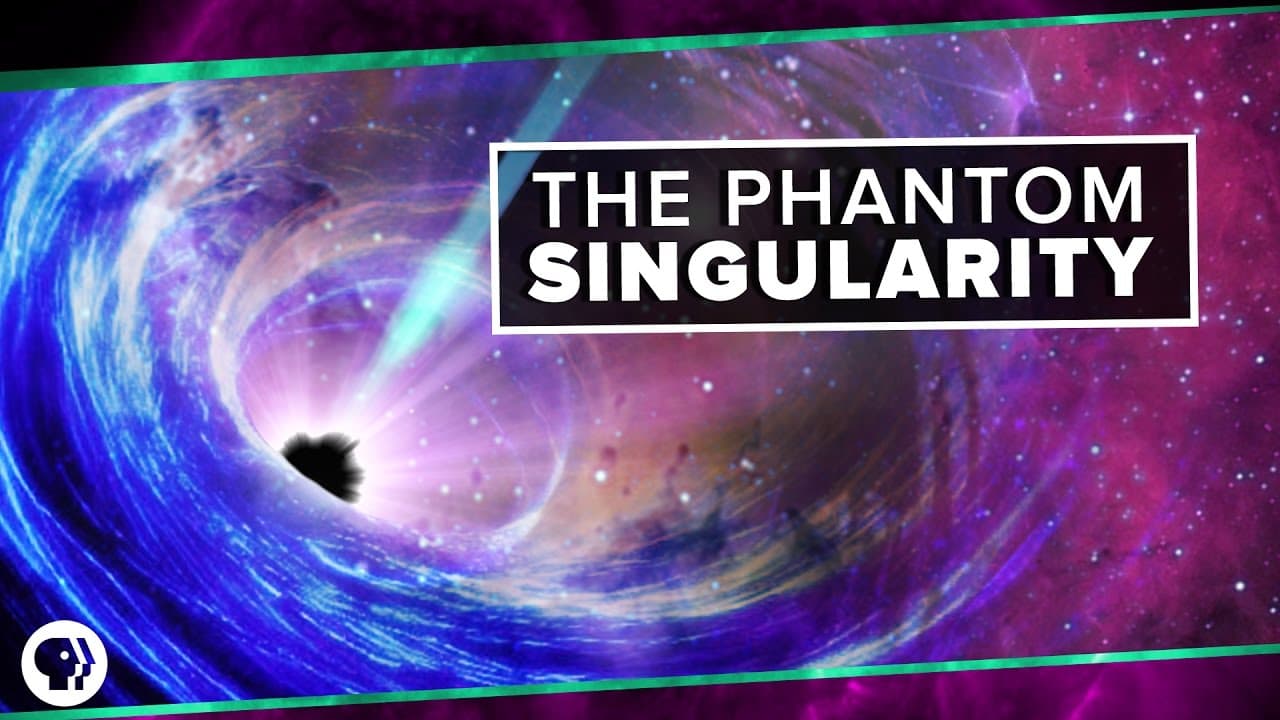
Singularity points in black holes represent locations of infinite density and curvature, where current physical theories break down. Newton's law predicts infinite gravitational force at zero distance, while Einstein's general relativity introduces both coordinate and real singularities. The study of these points challenges our understanding of gravity and prompts reevaluation of established scientific laws.
Transcript
The singularity, the point of infinite density at the core of a black hole but also so much more. In mathematics, singularities come in wild and wonderful varieties. The black hole itself contains more than one. intro Isaac Newton's universal law of gravitation was an incredible insight when he figured it out in the late sixteen hundreds. In fact... Read More
Key Insights
- Newton's law of gravitation suggests infinite gravitational force at zero distance, leading to the concept of singularities.
- Singularities are problematic points where quantities approach infinity, common in black hole mathematics.
- Mathematical singularities can arise from coordinate systems, like Earth's poles, but not all are physical.
- Einstein's general relativity provides a more complete theory but introduces additional singularities, such as at the event horizon.
- The Schwarzschild metric reveals singularities in black holes, indicating both coordinate and physical singularities.
- The event horizon represents a coordinate singularity where time and space roles switch, affecting object behavior.
- Central singularities in black holes suggest infinite density, challenging the completeness of general relativity.
- Mathematical singularities often lead to questioning and revising existing physical theories.
Install to Summarize YouTube Videos and Get Transcripts
Explore YouTube Video Summarizer or Get YouTube Transcript Extractor
Questions & Answers
Q: What is a singularity in the context of black holes?
A singularity in black holes refers to a point where densities become infinite, leading to undefined physical laws. In mathematical terms, it's where quantities approach infinity, causing problems in calculations and predictions. Singularities challenge both Newtonian and Einsteinian physics by introducing scenarios where traditional laws break down.
Q: How does Einstein's theory of general relativity address singularities?
Einstein's general relativity provides a more complete understanding of gravity, predicting singularities not just at the center of black holes but also at the event horizon. While it offers a more nuanced view than Newtonian physics, it still suggests the existence of infinite densities, indicating that the theory might be incomplete.
Q: What is the Schwarzschild metric and its significance?
The Schwarzschild metric is a solution to Einstein's field equations for a spherically symmetric mass in an empty universe. It reveals the presence of singularities in black holes, such as at the event horizon and center, highlighting both coordinate and real singularities. It helps understand how time and space behave near massive objects.
Q: Why are singularities considered problematic in physics?
Singularities are problematic because they represent points where physical quantities, like density and gravitational force, become infinite, leading to undefined behavior. This challenges existing physical laws, indicating that our current understanding of physics may be incomplete or incorrect in these extreme conditions.
Q: What is the difference between coordinate and real singularities?
Coordinate singularities arise from the choice of reference frame or coordinate system, such as Earth's poles, which can be resolved by changing coordinates. Real singularities, like those at the center of black holes, represent actual physical infinities, such as infinite density, which cannot be resolved by coordinate transformations.
Q: How do singularities affect the perception of time near black holes?
Near black holes, particularly at the event horizon, singularities cause time to behave differently. The roles of space and time switch, leading to scenarios where time can appear to stop or behave non-linearly. This affects how objects and light interact with the black hole, challenging our understanding of temporal physics.
Q: What implications do singularities have for the completeness of general relativity?
The existence of singularities suggests that general relativity might be incomplete. While it predicts these phenomena, the infinite densities and undefined behaviors imply that there might be aspects of gravity and spacetime that are not fully understood, necessitating further theoretical development or new physics.
Q: How do singularities lead to questioning existing physical theories?
Singularities often highlight the limitations of existing theories by presenting scenarios where traditional laws break down. This prompts physicists to question and potentially revise or expand current theories to accommodate these extreme conditions, driving the development of new models or theories in physics.
Summary & Key Takeaways
-
Newton's universal law of gravitation introduces singularities at zero distance, indicating infinite force and density, which are problematic in physics.
-
Einstein's general relativity, while more comprehensive, also predicts singularities, particularly at black hole event horizons and centers.
-
Mathematical singularities, such as those in black holes, challenge existing theories and often require re-evaluation of physical laws.
Read in Other Languages (beta)
Share This Summary 📚
Summarize YouTube Videos and Get Video Transcripts with 1-Click
Try YouTube Summary with ChatGPT & Claude or YouTube Transcript Generator
Explore More Summaries from PBS Space Time 📚
Summarize YouTube Videos and Get Video Transcripts with 1-Click
Try YouTube Summary with ChatGPT & Claude or YouTube Transcript Generator