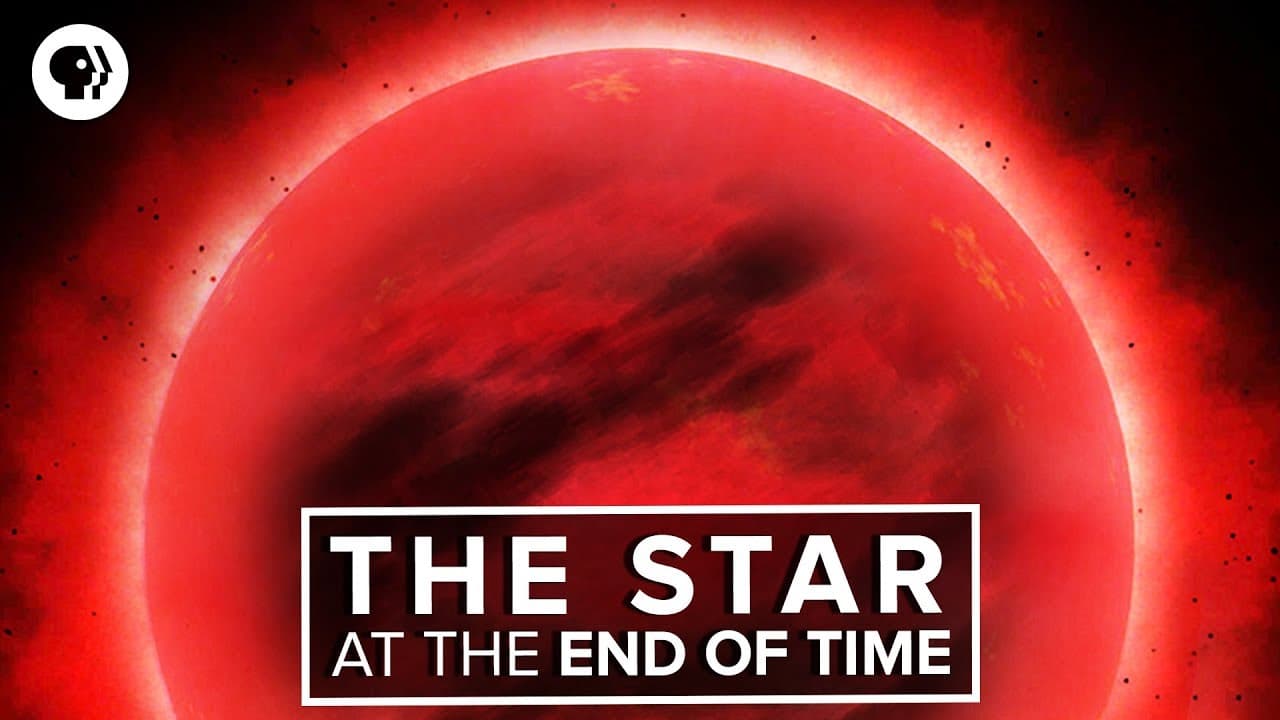
The Star at the End of Time
TL;DR
Red dwarfs could sustain life for trillions of years.
Transcript
[MUSIC PLAYING] If our descendants or any conscious being is around to witness the very distant future of our galaxy, what will they see? How long will life persist as the stars begin to die? [THEME MUSIC] For the sake of argument, let's say that humanity survives the several ends of world that await us. We somehow persist through the gradual heati... Read More
Key Insights
- Humanity may survive cosmic events such as the Sun's expansion and the Milky Way-Andromeda merger, seeking refuge in outer solar systems.
- Energy is crucial for life; stars like red dwarfs could provide energy for trillions of years, far beyond the lifespan of more massive stars.
- Red dwarfs, despite their small size, have long lifespans due to their efficient fuel usage, potentially lasting 10 trillion years.
- Unlike larger stars, red dwarfs are fully convective, allowing them to burn all their hydrogen fuel, extending their lifespan significantly.
- As red dwarfs age, their cores heat up, increasing fusion rates and surface temperatures, eventually emitting white or blue light.
- In the distant future, red dwarfs will be the last warm places in the universe, potentially hosting life on thawed planets in their systems.
- Red dwarfs may stabilize near the end of their lives, providing a consistent energy output that could support new life forms.
- The potential for life around red dwarfs remains uncertain due to their violent early stages, but stability in later years could foster new evolution.
Install to Summarize YouTube Videos and Get Transcripts
Explore YouTube Video Summarizer or Get YouTube Transcript Extractor
Questions & Answers
Q: What role do red dwarfs play in the future of life in the universe?
Red dwarfs are crucial for the future of life in the universe due to their longevity and efficient fuel usage. Unlike larger stars, red dwarfs are fully convective, allowing them to burn all their hydrogen fuel. This extends their lifespan to trillions of years, making them a potential energy source for life long after larger stars have died.
Q: How do red dwarfs differ from more massive stars in terms of energy production?
Red dwarfs differ from more massive stars in that they are fully convective, allowing them to use all their hydrogen fuel. This makes them more efficient and longer-lived. While massive stars burn fuel quickly and have short lifespans, red dwarfs burn slowly, potentially lasting trillions of years, providing a stable energy source.
Q: What happens to red dwarfs as they age?
As red dwarfs age, their cores shrink and heat up, increasing fusion rates and surface temperatures. This causes them to emit more energy and shift their light spectrum from red to white or blue. Despite this increased energy output, their lifespan remains significantly longer than that of more massive stars, potentially supporting life for trillions of years.
Q: Can red dwarfs support life on planets in their systems?
Red dwarfs can potentially support life on planets in their systems, especially as they stabilize near the end of their lives. This stability could provide a consistent energy output, allowing planets to thaw and sustain life. However, their early violent stages pose challenges for life evolution, making it uncertain if life can thrive around them.
Q: Why are red dwarfs considered the last warm places in the universe?
Red dwarfs are considered the last warm places in the universe because they are the longest-lived stars. As other stars die, red dwarfs will continue to provide energy for trillions of years. This makes them crucial for any remaining life forms, offering a last refuge of warmth in an otherwise dark universe.
Q: What is the significance of red dwarfs' fully convective nature?
The fully convective nature of red dwarfs is significant because it allows them to use all their hydrogen fuel efficiently. Unlike larger stars, which are limited to burning hydrogen in their cores, red dwarfs can circulate new material throughout the star. This extends their lifespan significantly, making them potential energy sources for a much longer time.
Q: How does the lifespan of red dwarfs compare to that of the Sun?
The lifespan of red dwarfs is much longer than that of the Sun. While the Sun will burn through its hydrogen in approximately 10 billion years, red dwarfs, due to their slower fuel consumption and fully convective nature, can last for up to 10 trillion years. This makes them crucial for the future of life in the universe.
Q: What potential does the TRAPPIST-1 system hold for life?
The TRAPPIST-1 system holds potential for life due to its seven terrestrial planets, two of which are in the habitable zone. These planets could have liquid water, a key ingredient for life. As red dwarfs like TRAPPIST-1 stabilize, they may provide a consistent energy source, potentially supporting life evolution over billions of years.
Summary & Key Takeaways
-
The video explores the distant future of our galaxy, focusing on the potential for life to persist as stars like the Sun die. Red dwarfs, small but long-lived stars, could provide energy for trillions of years, making them crucial to the survival of life in the universe.
-
Red dwarfs are fully convective stars, allowing them to use all their hydrogen fuel efficiently. As they age, their cores heat up, increasing fusion rates and surface temperatures. This process extends their lifespan significantly, potentially supporting life for trillions of years.
-
In the future, red dwarfs will be the last stars burning, providing the final warm places in the universe. They may support life on thawed planets in their systems, offering a stable energy source for new evolution despite their early violent phases.
Read in Other Languages (beta)
Share This Summary 📚
Summarize YouTube Videos and Get Video Transcripts with 1-Click
Try YouTube Summary with ChatGPT & Claude or YouTube Transcript Generator
Explore More Summaries from PBS Space Time 📚




Summarize YouTube Videos and Get Video Transcripts with 1-Click
Try YouTube Summary with ChatGPT & Claude or YouTube Transcript Generator