Don't Suffer More Than Needed | Buddhist Philosophy on Pain and Suffering
TL;DR
Buddhist perspective on managing pain and suffering through awareness and acceptance.
Transcript
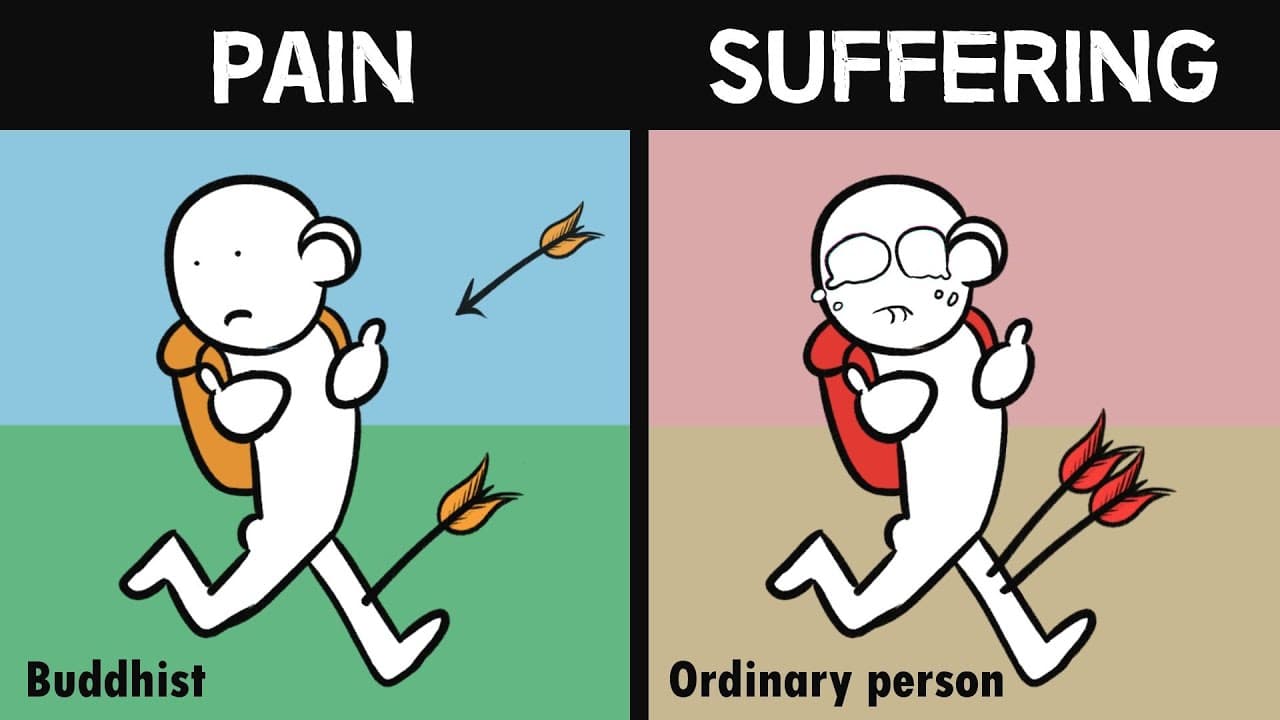
When we think of pain and suffering, we usually think about more or less the same thing. When there’s pain, there’s suffering. And we can only be free from suffering if we eliminate pain, right? Well, even though these two experiences are interconnected, pain and suffering are two fundamentally different things, as far as the Buddhists are concerne... Read More
Key Insights
- 👨🎨 Pain and suffering are fundamentally different in Buddhism.
- 🛟 The Eight Worldly Winds concept highlights life's impermanence and unpredictability.
- 🐵 Awareness and mindfulness are key tools to manage suffering in the face of pain.
- 🥺 Clinging to illusions of permanence leads to disappointment and suffering.
- 🥺 Accepting impermanence and sailing skillfully through life's challenges can lead to a more peaceful existence.
- ❓ Buddhism offers a path to freedom from suffering through the Eightfold Path.
- 💘 Avoiding the "second arrow" of suffering involves accepting inevitable pain and choosing mindful responses.
Install to Summarize YouTube Videos and Get Transcripts
Explore YouTube Video Summarizer or Get YouTube Transcript Extractor
Questions & Answers
Q: How does Buddhism differentiate between pain and suffering?
Buddhism views pain as inevitable, stemming from life's afflictions, while suffering is seen as optional and is generated by our reactions to pain.
Q: How can awareness help in alleviating suffering according to Buddhism?
Awareness allows individuals to recognize the distinction between the inevitable pain (first arrow) and the optional suffering (second arrow), empowering them to choose their reactions mindfully.
Q: What role does impermanence play in Buddhist teachings on suffering?
Impermanence is a core concept in Buddhism, emphasizing the ever-changing nature of life and the futility of clinging to fleeting pleasures, which leads to disappointment and suffering.
Q: How can mindfulness and meditation help in reducing suffering?
By cultivating awareness of internal states and practicing mindfulness, individuals can identify and let go of destructive emotions and thought patterns, ultimately avoiding unnecessary suffering.
Summary & Key Takeaways
-
Pain and suffering are seen as distinct by Buddhists, with pain being inevitable and suffering optional.
-
Buddhism teaches that suffering can be managed through awareness, acceptance, and inner work.
-
The Eight Worldly Winds concept highlights the impermanence and unpredictability of life.
Read in Other Languages (beta)
Share This Summary 📚
Summarize YouTube Videos and Get Video Transcripts with 1-Click
Try YouTube Summary with ChatGPT & Claude or YouTube Transcript Generator
Explore More Summaries from Einzelgänger 📚




Summarize YouTube Videos and Get Video Transcripts with 1-Click
Try YouTube Summary with ChatGPT & Claude or YouTube Transcript Generator