How Does AI Impact US-China Geopolitical Tensions?
TL;DR
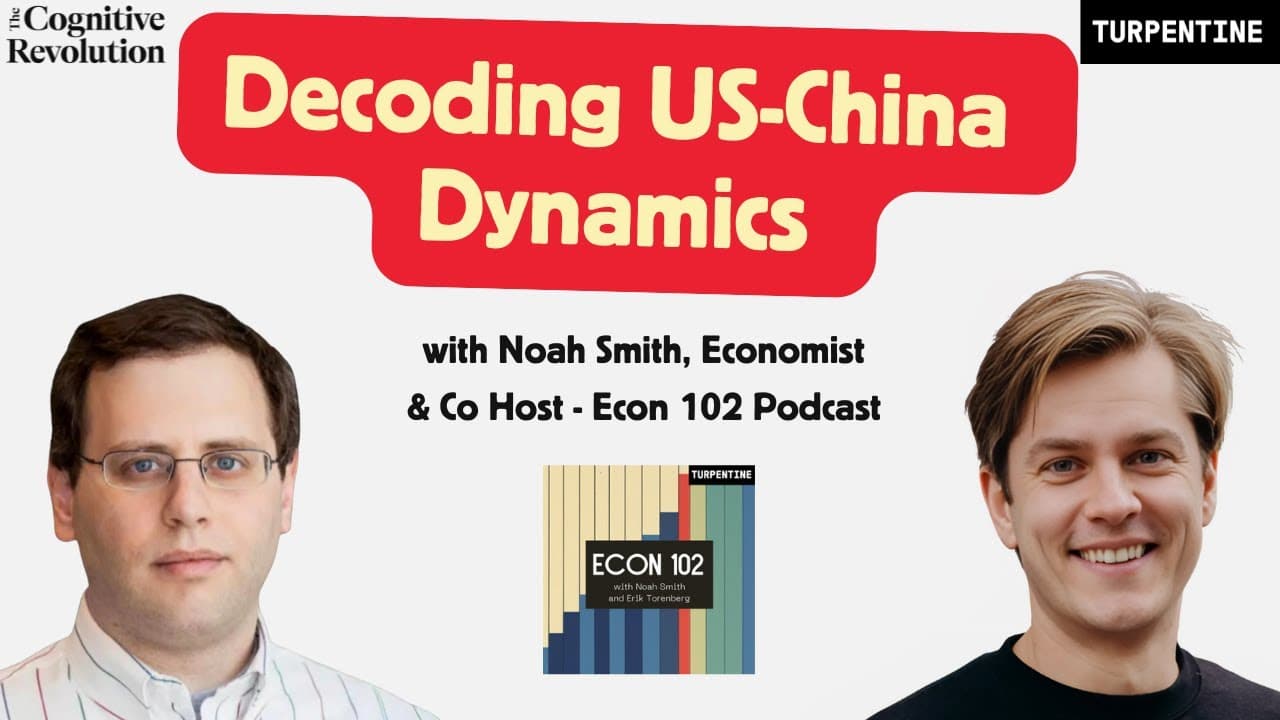
U.S.-China relations are fraught with tension due to China's technological advancements, particularly in AI, and the U.S.'s export controls aimed at maintaining a military technological edge. The discussion highlights the historical context of cooperation, the role of misinformation, and societal destabilization. The future of U.S.-China relations hinges on stabilizing interactions and managing geopolitical threats effectively.
Transcript
we have to get out of the mentality of thinking that America makes all the choices that we have all the power that we have all the agency that we're the big one who makes all the choices we're not the big one anymore they're bigger than us in most the important ways we're big we're still big but they're bigger than us in most important ways I have ... Read More
Key Insights
- China's strategic shift under Xi Jinping aims to challenge the U.S.-led global order.
- Export controls are part of a broader strategy to maintain military technological superiority.
- Precision weaponry and autonomous drone swarms are central to future military conflicts.
- China seeks control over global trade routes, both physical and digital.
- Sharp power involves using economic leverage to influence and destabilize societies.
- The Cold War model of deterrence is seen as a way to manage U.S.-China tensions.
- U.S. export controls have effectively slowed China's domestic chip manufacturing.
- Stabilizing U.S.-China relations requires addressing mutual dependencies and strategic threats.
Install to Summarize YouTube Videos and Get Transcripts
Explore YouTube Video Summarizer or Get YouTube Transcript Extractor
Questions & Answers
Q: How does China's strategic shift impact U.S.-China relations?
China's strategic shift under Xi Jinping aims to challenge the U.S.-led global order and establish control over global trade routes. This shift has heightened geopolitical tensions, prompting the U.S. to implement export controls and maintain military technological superiority. The shift reflects a broader ambition to redefine global power dynamics, impacting diplomatic and economic interactions.
Q: What role do export controls play in U.S.-China tensions?
Export controls are a key component of the U.S.'s strategy to maintain a military technological edge over China. By restricting China's access to advanced chip manufacturing equipment and technology, the U.S. aims to slow China's military advancements, particularly in precision weaponry and autonomous drones. These controls are intended to deter potential military conflicts and preserve global stability.
Q: How does precision weaponry influence military balance?
Precision weaponry, which includes advanced missiles and autonomous drones, plays a crucial role in maintaining military balance by offsetting China's production capacity with technological superiority. These weapons rely on advanced chips and AI for targeting and operational efficiency, making export controls a strategic tool in preserving the U.S.'s military edge and deterring potential conflicts.
Q: What is the significance of China's control over trade routes?
China's ambition to control global trade routes, both physical (maritime) and digital (internet cables), poses a strategic challenge to the U.S.-led global order. Control over these routes would allow China to exert significant influence over global commerce and potentially destabilize international trade dynamics. This ambition has contributed to geopolitical tensions and the U.S.'s efforts to counterbalance China's influence.
Q: How does sharp power affect U.S. society?
Sharp power involves China's use of economic leverage and influence operations to destabilize U.S. society and weaken its global influence. By promoting societal divisions and targeting key industries, China aims to reduce the U.S.'s ability to counter its strategic ambitions. This approach highlights the non-military dimensions of U.S.-China tensions and the importance of addressing internal vulnerabilities.
Q: What lessons from the Cold War apply to U.S.-China relations?
The Cold War model of deterrence offers valuable lessons for managing U.S.-China relations. By maintaining a balance of power and preventing direct military conflicts, the Cold War demonstrated the effectiveness of strategic deterrence in preserving global stability. Applying similar principles to U.S.-China tensions could help stabilize interactions and prevent potential escalation into open conflict.
Q: How effective are U.S. export controls on China's chip industry?
U.S. export controls have been effective in slowing China's domestic chip manufacturing capabilities by restricting access to advanced manufacturing equipment and technology. While these controls have not completely halted China's technological advancements, they have created significant barriers to achieving parity with U.S. capabilities, particularly in military applications.
Q: What are the future prospects for U.S.-China relations?
The future of U.S.-China relations hinges on stabilizing interactions and managing strategic threats effectively. While current tensions are high, historical cooperation suggests potential pathways for reconciliation. Addressing mutual dependencies, ensuring technological balance, and fostering diplomatic engagement are essential for long-term peace and cooperation between the two nations.
Summary & Key Takeaways
-
U.S.-China relations are currently strained due to China's ambitions to challenge the U.S.-led global order and the U.S.'s response through export controls. These controls aim to maintain a military technological edge, particularly in precision weaponry and autonomous drone swarms. The discussion emphasizes the importance of stabilizing interactions to prevent conflicts.
-
China's strategic actions, including influencing global trade routes and using sharp power, pose significant challenges to global stability. The U.S. aims to deter potential military conflicts through technological superiority, while the future of AI in military applications remains uncertain.
-
The historical context of U.S.-China cooperation highlights the potential for future stabilization of relations. However, current geopolitical tensions necessitate careful management of mutual dependencies and strategic threats to ensure long-term peace and cooperation.
Read in Other Languages (beta)
Share This Summary 📚
Summarize YouTube Videos and Get Video Transcripts with 1-Click
Try YouTube Summary with ChatGPT & Claude or YouTube Transcript Generator
Explore More Summaries from Cognitive Revolution "How AI Changes Everything" 📚






Summarize YouTube Videos and Get Video Transcripts with 1-Click
Try YouTube Summary with ChatGPT & Claude or YouTube Transcript Generator