How Does Steam Condensation Crush Steel Drums?
TL;DR
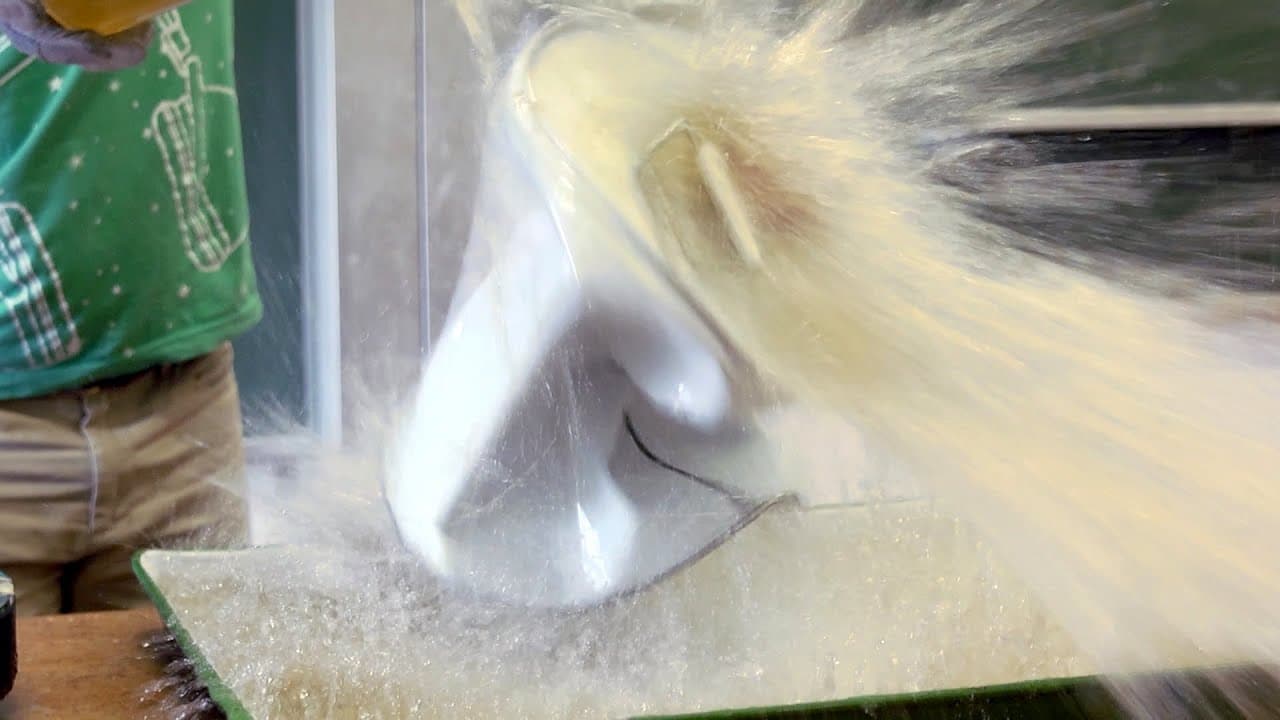
Cooling steam inside a sealed drum condenses the water vapor and creates a low-pressure interior, allowing higher atmospheric pressure outside to crush the container. High-speed footage at 1,200 frames per second reveals that the collapse occurs in about one quarter of the 100 milliseconds needed for a human blink, while dents and structural differences influence the final crumpling pattern.
Transcript
so a while back I did an imploding drum experiment but at the time I didn't have a very good high-speed camera and so I used something called Optical flow to interpolate between the frames and basically just tries to add in what must have happened but since it doesn't actually capture what happened you can see that it actually warps the frame and l... Read More
Key Insights
- Steam condensation creates a low-pressure region inside a sealed drum because gaseous water vapor becomes liquid when cooled. The higher pressure of the surrounding atmosphere then pushes inward, producing a rapid implosion rather than an outward explosion.
- High-speed recording at 1,200 frames per second captures the drum’s real motion without relying on optical-flow interpolation. The earlier interpolation method merely estimated missing movement and visibly warped frames, making the collapse appear unrealistic.
- Atmospheric pressure is powerful enough to crumple both a 20-liter drum and a thick 200-liter drum when their internal steam condenses. The crushing force comes from the pressure difference between the atmosphere and the low-pressure interior.
- Suction is the name given to fluid movement from an area of higher pressure toward an area of lower pressure. In the drum experiment, atmospheric air cannot enter the sealed container, so its pressure instead forces the drum walls inward.
- Steam condensers improve turbine operation by cooling steam after it has passed across the turbine. Hot steam pushes on one side, while condensation creates lower pressure on the other, producing a larger energy change that helps turn the turbine.
- Round containers are highly resistant to compression until their symmetry is disturbed. A small hammer dent significantly weakened the large drum’s circular structure, providing a point where atmospheric pressure could initiate buckling and trigger the full collapse.
- The large drum imploded in about one quarter of the 100 milliseconds required for a human blink. The collapse happened so quickly that water beside the drum could not move at the same pace, making high-speed footage necessary to observe it.
- Crumpling patterns differed between the containers: the large drum formed an equilateral triangular prism, while the smaller drum resembled a hexagon. Possible explanations raised include different weld locations, manufacturing structures, and the general stability provided by three corners.
Install to Summarize YouTube Videos and Get Transcripts
Explore YouTube Video Summarizer or Get YouTube Transcript Extractor
Questions & Answers
Q: How does condensing steam cause a drum to implode?
Steam first fills the drum with water vapor and displaces much of the original gas inside. After the drum is sealed and cooled, the water vapor condenses into liquid, creating a low-pressure interior. The surrounding atmosphere remains at higher pressure and pushes against the drum’s exterior until its walls buckle inward and the container rapidly collapses.
Q: Why is a high-speed camera needed to record a drum implosion?
The drum collapses in about one quarter of the 100 milliseconds required for a human blink, so ordinary footage cannot clearly show the sequence of deformation. Recording at 1,200 frames per second captures the actual motion. This avoids optical-flow interpolation, which invents intermediate frames and can warp the image because it estimates rather than records what happened.
Q: What role does atmospheric pressure play in the drum experiment?
Atmospheric pressure supplies the external force that crushes the drum. Cooling converts the sealed water vapor into liquid and lowers the internal pressure, but it does not directly pull the metal inward. Instead, the higher-pressure atmosphere pushes on every exterior surface. Once the container loses structural stability, that pressure difference drives the fast inward collapse.
Q: Why did the large drum need to be dented with a hammer?
The large drum’s round shape made it highly resistant to compression, so cooling and condensation initially produced an underwhelming result. A hammer created a small ding that disrupted the strength of the circular structure. That weakened area gave the pressure difference a place to initiate buckling, after which the rest of the drum rapidly folded inward.
Q: How does steam condensation help turn a power station turbine?
Very hot steam pushes across the turbine, but useful operation also depends on cooling the steam after it exits. A condenser turns the outgoing steam into liquid and creates low pressure on that side of the turbine. The combination of hot pushing steam and lower exit pressure produces a large energy change that turns the turbine.
Q: What does suction mean in the drum implosion experiment?
Suction describes fluid flowing from an area of higher pressure toward an area of lower pressure. In the sealed drum, condensation creates the lower-pressure region, while the surrounding atmosphere remains at higher pressure. Because outside air cannot flow through the sealed walls, atmospheric pressure acts on the metal instead and forces the container inward.
Q: Why did the large drum collapse into a triangular prism?
The measured remains of the large drum formed a perfect equilateral prism. The explanation offered is that, for a given perimeter, an equilateral triangle encloses the minimum area among regular polygons. The collapsing drum therefore reduced its interior volume as the low-pressure region persisted. Three corners may also have helped stabilize the final compressed shape.
Q: Why did the two drums form different crumpling patterns?
The large drum formed an equilateral triangular prism, while the smaller drum collapsed into a shape resembling a hexagon. The transcript does not provide a confirmed cause. It proposes that the drums may have been manufactured or welded at different points, creating different structural weaknesses, and notes that the stability of three-cornered shapes may have influenced the larger drum.
Summary & Key Takeaways
-
Steam was used to fill a 20-liter drum with water vapor before the drum was removed from its heating element, sealed, and cooled. As the vapor condensed into liquid, the pressure inside dropped. The resulting pressure difference allowed the surrounding atmosphere to rapidly crush the drum while a high-speed camera recorded it.
-
A larger 200-liter drum was heated by two gas heaters until steam escaped from its opening. After sealing and cooling it with water, the experiment initially produced little visible movement. A hammer then created a small dent that weakened the round structure, after which the drum suddenly collapsed under external atmospheric pressure.
-
The experiment connects steam condensation to turbine operation at power stations. Hot steam pushes across a turbine, while a condenser cools the steam after it passes through. Condensation creates lower pressure and strong suction on the exit side, increasing the energy change that turns the turbine and demonstrating why cooling is essential.
Read in Other Languages (beta)
Share This Summary 📚
Summarize YouTube Videos and Get Video Transcripts with 1-Click
Try YouTube Summary with ChatGPT & Claude or YouTube Transcript Generator
Explore More Summaries from Veritasium 📚





Summarize YouTube Videos and Get Video Transcripts with 1-Click
Try YouTube Summary with ChatGPT & Claude or YouTube Transcript Generator