Your business needs Systems and Processes 🏆
TL;DR
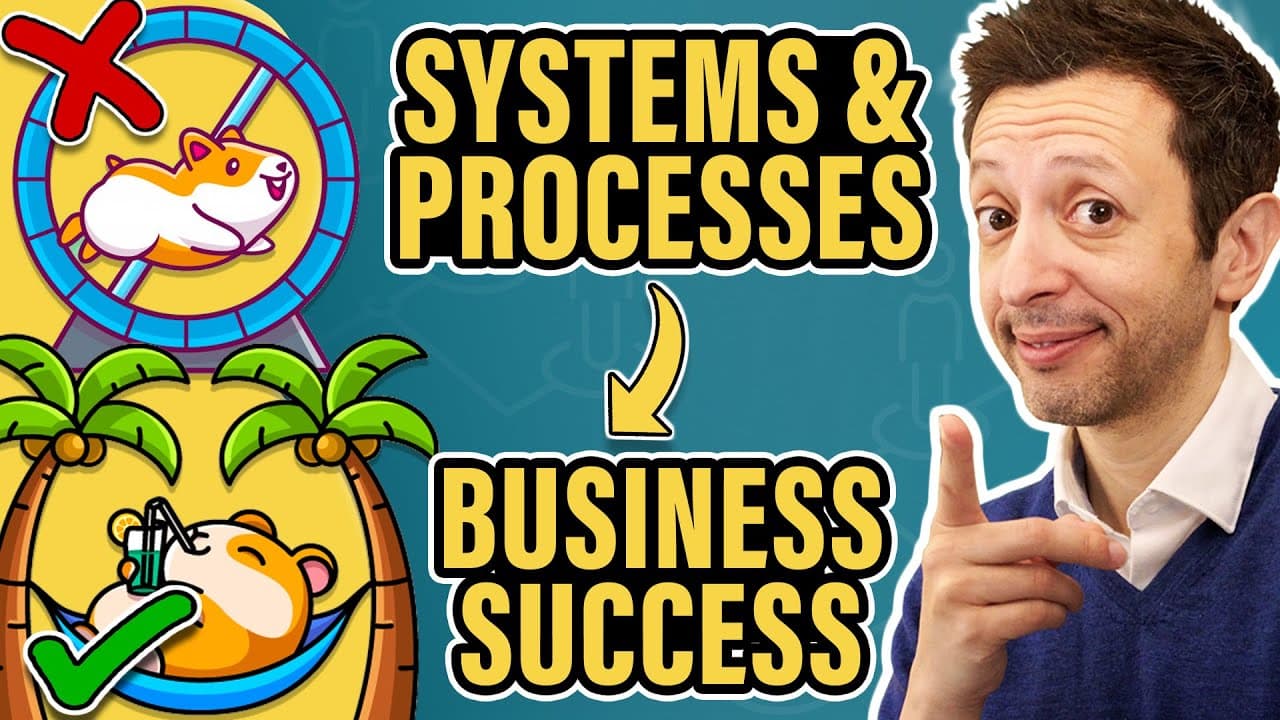
Implementing systems and processes is crucial for business growth and sustainability.
Transcript
35 000 of them you and i make 35 000 of them each and every single day do you know what i'm talking about yet yeah decisions and every single time we make one of those 35 000 decisions each and every single day it saps a little bit of our time and a little bit of our energy yeah a lot of it it's a word anyway a little bit of our time and a little b... Read More
Key Insights
- 👨💼 Decision fatigue is a significant challenge, as individuals make around 35,000 decisions daily, which demands efficient business processes.
- 👨💼 Businesses need to operate autonomously to avoid dependency on individual owners, promoting sustainable growth.
- 👨💼 Enhancing effectiveness focuses on optimizing processes, while improving efficiency involves synchronizing various business activities and technologies.
- 🎭 Documenting processes is the first step toward creating systems, ensuring tasks are performed consistently and accurately.
- 👨💼 The clear distinction between processes and systems is critical for successful business management and growth strategies.
- 👨💼 Measurement and KPIs are pivotal in continually refining processes and ensuring alignment with business goals.
- ⚾ Effective training and onboarding based on standardized processes can significantly reduce employee errors and enhance performance.
Install to Summarize YouTube Videos and Get Transcripts
Explore YouTube Video Summarizer or Get YouTube Transcript Extractor
Questions & Answers
Q: Why is it essential to have systems and processes in place for a business to thrive?
Systems and processes are crucial because they create a structured environment where tasks can be performed consistently and efficiently. Without them, businesses rely on the unpredictable nature of individual decision-making, which can lead to chaos and inefficiency. By having these frameworks, businesses can ensure stability and scalability, ultimately aiding in their growth and success.
Q: How do systems and processes improve business efficiency?
Processes provide a set sequence of actions for tasks that are repeated, thus improving effectiveness. Systems combine these processes with appropriate technology and personnel roles to streamline operations. This integration allows businesses to function seamlessly without constant oversight, reducing the time spent on repetitive decisions and increasing overall productivity.
Q: What does "goals are for losers, systems are for winners" mean in a business context?
This phrase suggests that solely relying on goals may lead to sporadic success, as goals can be unachievable or forgotten over time. On the other hand, implementing systems creates consistent frameworks for achieving objectives, ensuring long-term success and stability, as they foster a habit of efficient operation.
Q: How can a business owner start developing processes and systems?
Begin by identifying repetitive tasks in daily operations. Document the steps involved in these tasks to create a process. Then, assess how these processes fit into the overall strategy of the business and determine what technologies or personnel are needed to enhance efficiency, thus forming a coherent system.
Q: What role does measurement play in effective systems and processes?
Measurement is critical for evaluating the effectiveness of processes and systems. By establishing key performance indicators (KPIs), business owners can assess whether the processes meet expected outcomes and make necessary adjustments. This ongoing evaluation helps to optimize operations and ensures that the business meets its strategic objectives.
Q: Why do many businesses fail when expanding, and how can having processes help?
Many businesses fail during expansion due to a lack of clarity and inconsistency in operations. When processes are not in place, new employees lack guidance, leading to errors and inefficiencies. By having clear processes documented as standard operating procedures (SOPs), businesses provide new hires with the necessary tools to succeed and ensure everyone operates within the same standards.
Q: How do effective processes lead to improved employee performance?
Effective processes provide employees with a clear roadmap of tasks and expectations, reducing confusion. When employees know what to do and how to do it, they are more likely to perform well, leading to higher productivity and job satisfaction. This structure helps align their efforts with the organization's goals.
Q: What is the importance of the relationship between processes and systems in a business?
The relationship is crucial because processes lay the groundwork for the operations that systems will streamline. While processes are about the tasks themselves, systems integrate these processes into a cohesive framework that connects various business functions. This interplay allows a business to operate more efficiently and adaptively, enhancing overall performance.
Summary & Key Takeaways
-
Every day, individuals make approximately 35,000 decisions, which can drain energy and time, emphasizing the need for effective systems and processes in business.
-
A well-structured business should be able to operate independently of the owner, ensuring it runs smoothly even in their absence, supporting stability and growth.
-
The key difference between processes and systems lies in their roles; processes enhance effectiveness through repeatable steps, while systems improve efficiency by integrating various processes and technologies.
Read in Other Languages (beta)
Share This Summary 📚
Summarize YouTube Videos and Get Video Transcripts with 1-Click
Try YouTube Summary with ChatGPT & Claude or YouTube Transcript Generator
Explore More Summaries from CEO Entrepreneur 📚


Summarize YouTube Videos and Get Video Transcripts with 1-Click
Try YouTube Summary with ChatGPT & Claude or YouTube Transcript Generator