How He Helped Double Lung Cancer Survival Rates from 13% to 26% | Dorian Averbuch
TL;DR
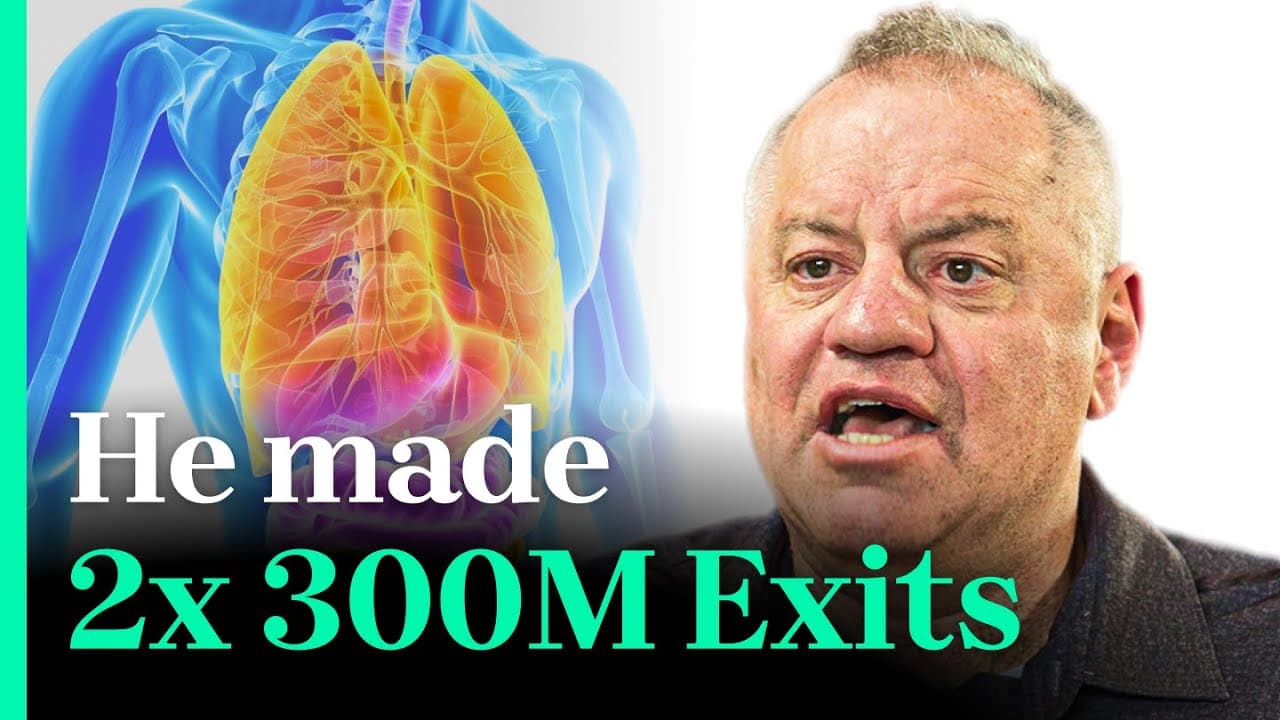
Dorian Averbuch helped improve lung cancer survival rates by developing electromagnetic navigation technology that enabled doctors to reach and biopsy previously inaccessible lung lesions. The system used pre-operative CT imaging and a sensor-tipped flexible tool, received FDA clearance around 2006, and became a standard of care within the next 10 years. Read on to see how doctor feedback, rapid prototyping, and regulatory planning shaped the technology.
Transcript
the way I approach this I would approach this from the end what problem we are solving and what is this the solution the second is who is going to use it and how in order to solve the problem so we are talking about health care I would have first conversation with the doctor if this makes them excited or not the next step would be to create very ea... Read More
Key Insights
- Dorian Averbuch's journey began with a passion for medicine, which he redirected into engineering due to educational barriers in the Soviet Union.
- His career in computer engineering led to significant contributions in healthcare, particularly in developing diagnostic technologies for lung cancer.
- Averbuch emphasizes the importance of understanding the problem and end-users when developing new healthcare solutions, starting with early prototypes and doctor feedback.
- He developed a groundbreaking electromagnetic navigation technology for lung cancer diagnosis, significantly improving survival rates by enabling access to previously unreachable lesions.
- The success of his technology led to its adoption as a standard of care and the acquisition of his company by a major medical corporation.
- Averbuch highlights the complex regulatory landscape in healthcare technology development, stressing the need for a clear strategy and awareness of timelines.
- He is now tackling the issue of back pain management, aiming to shift procedures from hospitals to ambulatory centers for more efficient and accessible care.
- Averbuch invites collaboration and innovation in addressing large-scale healthcare challenges, emphasizing the potential for impactful solutions.
Install to Summarize YouTube Videos and Get Transcripts
Explore YouTube Video Summarizer or Get YouTube Transcript Extractor
Questions & Answers
Q: How did Dorian Averbuch help double lung cancer survival rates from 13% to 26%?
Averbuch developed electromagnetic navigation technology that helped doctors reach and biopsy lung lesions that had previously been inaccessible. By supporting diagnosis of these lesions, the technology contributed to improved lung cancer survival rates from 13% to 26%.
Q: How does electromagnetic navigation help doctors biopsy lung lesions?
Doctors guide a flexible bronchoscope toward a lesion and extend tools through its working channel to collect tissue. A sensor on the flexible tool uses a map created from pre-operative imaging such as CT, allowing doctors to navigate toward lesions beyond the areas they can directly see.
Q: Why were some lung lesions difficult to diagnose?
Lung lesions can be enclosed within the chest and surrounded by ribs, important organs, and many blood vessels, making tissue sampling risky. Some lesions were also too far from visible bronchoscopic areas for doctors to approach without navigation technology.
Q: How does lung lesion size relate to survival rates?
Averbuch says lung cancer survival is directly connected to lesion size. For lesions measuring about 5 to 15 mm, survival is close to 90%, while survival for larger lesions is around 26% today and was about 15% at the time he discussed.
Q: What commercial results did the SuperDimension technology achieve?
The product received FDA clearance around 2006 and then began its commercial journey in the United States. It became a standard of care within the next 10 years, reached about 70,000 treated patients, and generated sales of about $70 million.
Q: What happened to the company behind SuperDimension?
The company was acquired in 2012 for $350 million by Covidien. Averbuch says the technology later remained part of Medtronic.
Q: What process does Dorian Averbuch use to develop healthcare technology?
He starts by defining the problem and identifying who will use the solution and how. He then speaks with doctors to test whether the idea excites them, creates an early prototype as quickly as possible, and incorporates their feedback into the product.
Q: What must healthcare innovators consider beyond the technology itself?
Averbuch identifies three central parties: the doctor using the product, the medical institution buying it, and regulators permitting its use. He stresses that developers must plan for regulatory requirements and timelines while ensuring that the product matches how doctors actually want to perform diagnostics.
Summary & Key Takeaways
-
Dorian Averbuch's innovative approach to lung cancer diagnostics has significantly improved survival rates by enabling doctors to access and diagnose previously unreachable lesions. His technology became a standard of care worldwide, demonstrating the impact of combining engineering expertise with healthcare needs.
-
Averbuch's methodology focuses on understanding the problem from the end-user's perspective, creating early prototypes, and incorporating feedback from medical professionals. This approach ensures that the technology meets practical needs and aligns with regulatory requirements.
-
Currently, Averbuch is addressing the challenge of back pain management, aiming to move procedures to more efficient settings. His vision involves creating solutions that benefit patients, doctors, and payers while leveraging his experience in healthcare technology innovation.
Read in Other Languages (beta)
Share This Summary 📚
Summarize YouTube Videos and Get Video Transcripts with 1-Click
Try YouTube Summary with ChatGPT & Claude or YouTube Transcript Generator
Explore More Summaries from EO 📚


Summarize YouTube Videos and Get Video Transcripts with 1-Click
Try YouTube Summary with ChatGPT & Claude or YouTube Transcript Generator