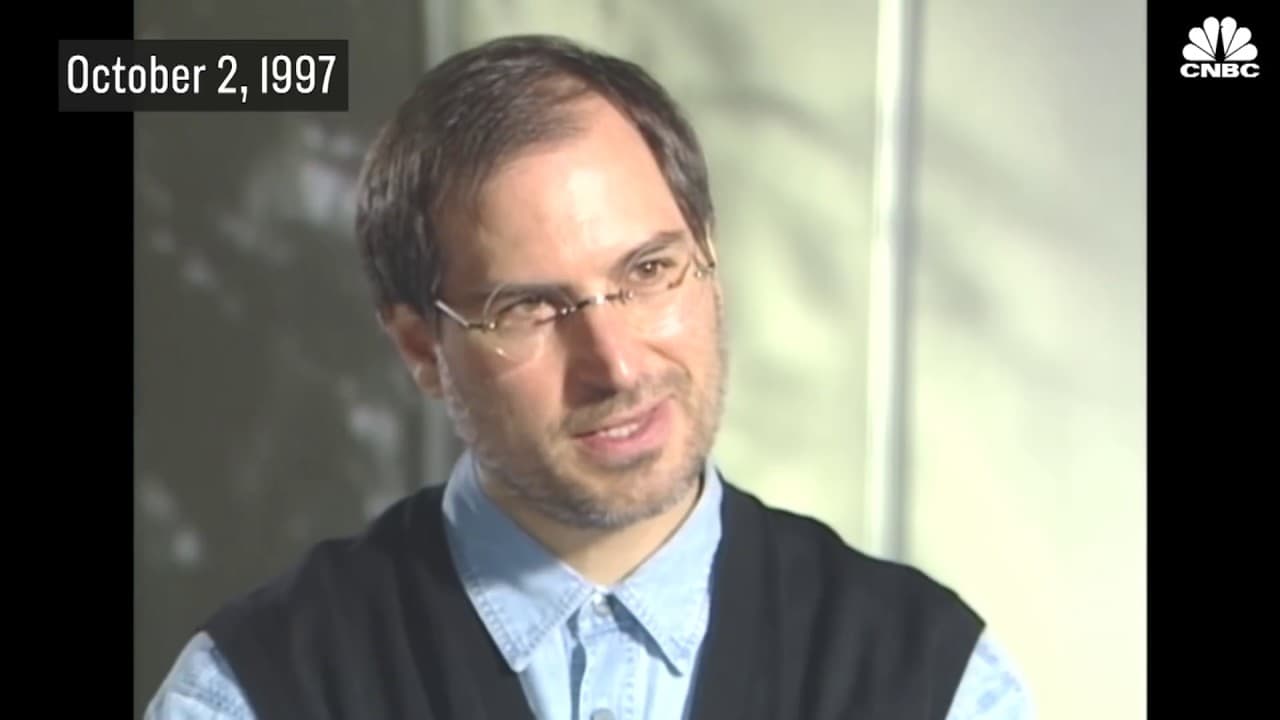
Steve Jobs on How Apple Could Turn Itself Around
TL;DR
Apple’s turnaround depended on concentrating talent and resources on fewer, stronger products while improving strategy, marketing, operations, distribution, and the customer buying experience. Steve Jobs argued that profitability would follow from getting those fundamentals right, and he presented his hard work, symbolic salary, emotional connection to Apple, and support for an independent board as evidence of his commitment.
Transcript
we don't predict their financials yeah I think that there's a lot of things changing to Apple right now and some are gonna show up in the financials positively some are gonna show up in the financials negatively and I think that we're gonna get to a new trend but that new trend will not become evident for another quarter so so I really don't think ... Read More
Key Insights
- Apple’s product strategy was to concentrate equal or greater resources on fewer projects. Jobs said the future roadmap contained strong ideas alongside unnecessary or merely adequate work, so reducing the project portfolio would help the company execute its best ideas more effectively.
- Profitability was treated as the consequence of strong operating fundamentals. Jobs argued that the right strategy, people, culture, products, marketing, logistics, manufacturing, and distribution would improve financial results more reliably than concentrating management attention on financial reengineering.
- Apple’s restructuring was intended to occur selectively rather than through massive corporate layoffs. Individual groups were reviewing their work plans, responsibilities, and organizational arrangements, with some positions potentially disappearing as departments combined activities or aligned themselves with the company’s clearer direction.
- Jobs’s commitment was demonstrated through sustained work and personal attachment rather than stock ownership alone. He described arriving early, staying late, working weekends, protecting family time, accepting a symbolic salary, and wanting to restore the company he had started with Steve Wozniak.
- Apple’s retail strategy required stronger commitments from channel partners. The company was speaking with major partners about investing in a better buying experience, and Jobs reported that important partners were responding positively to the direction and expressing renewed confidence in Apple.
- Apple’s board was designed to make independent decisions for the company. Jobs emphasized that its members were talented, experienced, opinionated, and not personal cronies, and he promised to support whatever decision they concluded was right for Apple, including leadership decisions affecting him.
- The Microsoft relationship was being normalized without erasing the companies’ differences. Jobs believed Apple and Microsoft could disagree strongly while still cooperating on matters that benefited customers and both businesses, replacing an excessively polarized relationship with practical collaboration.
- Apple’s turnaround required both change and continuity. Jobs wanted to alter practices that were outdated, ineffective, or no longer meaningful to customers while vigorously preserving the values and distinctive qualities that made the company worth saving.
Install to Summarize YouTube Videos and Get Transcripts
Explore YouTube Video Summarizer or Get YouTube Transcript Extractor
Questions & Answers
Q: How did Steve Jobs plan to turn Apple around?
Steve Jobs planned to turn Apple around by narrowing its future product roadmap and concentrating resources on fewer, stronger priorities. He also emphasized better product, market, communication, logistics, manufacturing, distribution, and retail strategies. Rather than treating financial reengineering as the central solution, he believed improved execution across these areas would lead the company toward profitability and renewed prosperity.
Q: Why did Apple reduce the number of projects it was pursuing?
Apple reduced its projects because its review of the future product roadmap found that some ideas were exceptionally strong, while many others were merely adequate, unnecessary, or connected to businesses the company did not need to pursue. Jobs wanted the same or greater investment directed toward fewer priorities so teams could focus their talent and produce better results.
Q: Was Apple planning massive layoffs during its reorganization?
Jobs said Apple was not planning massive corporate layoffs at that time. Each group was reviewing its work plan and determining what it needed to accomplish under the clearer company direction. Some functions would be reorganized or combined, and certain employees might be left without positions, but Jobs characterized those changes as selective, departmental, and relatively low-key.
Q: Why did Steve Jobs focus on strategy instead of financial engineering?
Jobs believed financial results would follow when a company made the right choices at the operating level. His priorities included strategy, people, culture, products, marketing, logistics, manufacturing, and distribution. He said Apple’s central problem was not a lack of financial reengineering, so management energy belonged on rebuilding the capabilities that create useful products and effective customer experiences.
Q: How did Steve Jobs defend his commitment to Apple?
Jobs pointed to his demanding work schedule, his symbolic annual salary, and his deep personal connection to the company. He described arriving early, remaining late, and working weekends while still valuing family time. Because he had founded Apple with Steve Wozniak in his parents’ garage, he said the company held a definite place in his heart.
Q: How did Steve Jobs view Apple’s relationship with Microsoft?
Jobs viewed the renewed Microsoft relationship as the beginning of normalization rather than a simple deal or a surrender of Apple’s identity. He expected the companies to remain different and disagree in important areas, but he believed they could still cooperate where their interests aligned, serve customers better, and create opportunities for both businesses to make money.
Q: What role did Apple’s board play in the turnaround?
Apple’s board was intended to provide strong, independent judgment about what was best for the company. Jobs described its members as talented, experienced, and willing to debate different opinions until they reached a persuasive decision. He said the board should act for Apple rather than for him, another individual, or a leadership candidate, and he pledged full support for its conclusions.
Q: How did Steve Jobs balance changing Apple with preserving its identity?
Jobs argued that Apple needed to change practices that were outdated, ineffective, or no longer sensible to customers while refusing to abandon the qualities that made the company distinctive. He did not view popularity as the measure of success. His responsibility was to help Apple’s team make difficult choices that could restore prosperity while remaining committed to the company’s values.
Summary & Key Takeaways
-
Jobs said Apple had reviewed its future product roadmap and removed projects or businesses that were merely adequate, unnecessary, or distracting. The company would maintain or increase the resources invested while concentrating them on fewer priorities, allowing its teams to produce stronger work without relying primarily on broad corporate layoffs.
-
The turnaround strategy emphasized improving the activities that create business results: product direction, market strategy, communication, logistics, manufacturing, distribution, and retail execution. Jobs resisted focusing on financial reengineering or short-term predictions. He believed that selecting the right strategy, people, culture, and products would eventually produce better financial performance.
-
Jobs defended his personal commitment through his work schedule, emotional connection to the company he founded with Steve Wozniak, and symbolic salary. He also supported an independent board, cooperation with Microsoft where customer interests aligned, selective organizational change, and preserving the distinctive values that continued to make Apple valuable.
Read in Other Languages (beta)
Share This Summary 📚
Summarize YouTube Videos and Get Video Transcripts with 1-Click
Try YouTube Summary with ChatGPT & Claude or YouTube Transcript Generator
Explore More Summaries from CNBC 📚





Summarize YouTube Videos and Get Video Transcripts with 1-Click
Try YouTube Summary with ChatGPT & Claude or YouTube Transcript Generator