Why Did Trump Push Reparations for January 6th Rioters?
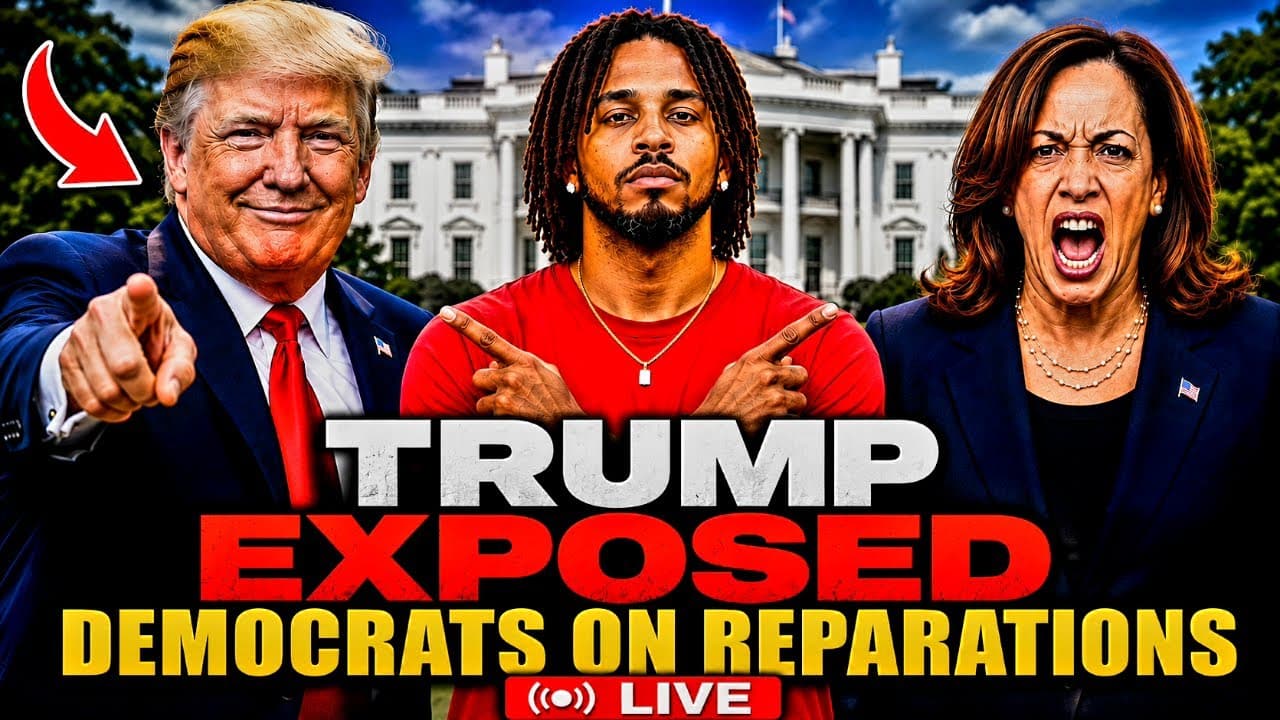
TL;DR
Donald Trump has initiated a $1.8 billion fund to compensate those he claims were wrongfully targeted by the government, including January 6th participants. This move has sparked controversy and debate, particularly among Democrats, who have been criticized for their inaction on reparations for Black Americans. The fund's existence raises questions about political priorities and the mechanisms available for reparations.
Transcript
FBA Friday. We in the house. Reparations for January 6ers, BUT THE DEMOCRATS SAID THEY AIN'T have the money. AND THEY GAVE US A DOLLAR STORE OBAMA. YES, REPARATIONS FOR JANUARY SIXERS, BUT THE DEMOCRATS SAID THEY HAD SOME HUSH PUPPIES AND SOME CATFISH NUGGETS. HELL TO THE N. You got REPARATIONS FOR ALL OF THESE OTHER PEOPLE, BUT THE DEMOCRATS SAID ... Read More
Key Insights
- Donald Trump established a $1.8 billion fund for those claiming government weaponization against them.
- The fund is part of a settlement Trump made after dropping a lawsuit against the IRS.
- Critics argue that the fund could be considered reparations for January 6th participants.
- The fund utilizes the judgment fund, which bypasses the need for congressional approval.
- Democrats have faced backlash for their perceived inaction on Black American reparations.
- The fund's existence exposes deeper political tensions and questions about government priorities.
- Obama's administration set a precedent for using the judgment fund for settlements without congressional approval.
- The debate highlights the complexity and controversy surrounding reparations in the U.S.
Install to Summarize YouTube Videos and Get Transcripts
Explore YouTube Video Summarizer or Get YouTube Transcript Extractor
Questions & Answers
Q: How did Donald Trump establish a fund for January 6th participants?
Donald Trump established a $1.8 billion fund as part of a settlement after dropping a lawsuit against the IRS. The fund is intended to compensate those who claim they were wrongfully targeted by the government, including January 6th participants. It utilizes the judgment fund, which allows for settlements without congressional approval, setting a precedent for bypassing traditional legislative processes.
Q: What is the judgment fund and how does it work?
The judgment fund is a permanent, indefinite appropriation managed by the U.S. Department of Treasury. It is used to pay legal settlements and court judgments when federal agencies are sued, without needing congressional approval. This allows the government to quickly resolve legal claims, and it has been used in the past for various settlements, including those involving discrimination and other grievances.
Q: Why are Democrats criticized in the context of this fund?
Democrats are criticized for their perceived inaction on reparations for Black Americans, especially in light of the fund established by Trump for January 6th participants. Critics argue that while Trump was able to create a fund quickly, Democrats have not made similar efforts for Black American reparations, highlighting a disparity in political priorities and actions.
Q: How does the fund relate to reparations for Black Americans?
The fund has sparked debate about reparations for Black Americans, as it demonstrates a mechanism through which reparations-like compensation can be provided without congressional approval. This raises questions about why similar efforts have not been made for Black American reparations, and it highlights the political and social complexities surrounding the issue.
Q: What precedent did Obama's administration set regarding the judgment fund?
Obama's administration set a precedent by using the judgment fund for settlements without congressional approval, such as in the case of Native American farmers who sued the USDA for discrimination. This precedent is now cited by Trump's administration to justify the creation of the anti-weaponization fund, showing continuity in how the judgment fund can be utilized.
Q: What are the implications of the fund for political discourse?
The fund has significant implications for political discourse, as it highlights the mechanisms available for reparations-like compensation and exposes political tensions and priorities. It challenges traditional narratives about government accountability and reparations, and it has sparked a broader conversation about how different groups are prioritized for compensation.
Q: How has the fund affected public perception and media narratives?
The fund has created a clash between public perception and media narratives, with some viewing it as a necessary compensation mechanism and others criticizing it as unjustified reparations for January 6th participants. This has fueled debates about political accountability, government priorities, and the broader implications of reparations discussions in the U.S.
Q: What are the broader social and political tensions highlighted by this fund?
The fund highlights broader social and political tensions related to reparations, government accountability, and political priorities. It has exposed frustrations with perceived inaction on Black American reparations and has sparked debates about the fairness and implications of compensating certain groups over others. This reflects deeper issues of inequality and political representation in the U.S.
Summary & Key Takeaways
-
Donald Trump has initiated a $1.8 billion fund to compensate individuals claiming wrongful government targeting, including January 6th participants. This fund, seen by some as reparations for these individuals, has sparked controversy and criticism, particularly towards Democrats for their inaction on reparations for Black Americans. The fund bypasses congressional approval, utilizing the judgment fund, and raises questions about political priorities and precedents set by previous administrations.
-
The fund's creation has exposed deeper political tensions and frustrations, with public perception and media narratives clashing over the implications of this move. Critics argue that it highlights the disparity in how different groups are prioritized for compensation, while supporters suggest it provides a mechanism for addressing grievances. The debate continues to gain momentum, reflecting broader discussions on reparations and political accountability.
-
Obama's administration previously set a precedent for using the judgment fund for settlements, a point referenced by Trump's administration to justify the current fund. This has led to increased scrutiny of political messaging and promises, as well as the mechanisms available for reparations. As the conversation around reparations grows, it remains a contentious issue with significant implications for political discourse and voter sentiment.
Read in Other Languages (beta)
Share This Summary 📚
Summarize YouTube Videos and Get Video Transcripts with 1-Click
Try YouTube Summary with ChatGPT & Claude or YouTube Transcript Generator