How to Use 'IF' and 'WOULD' in English Conditionals
TL;DR
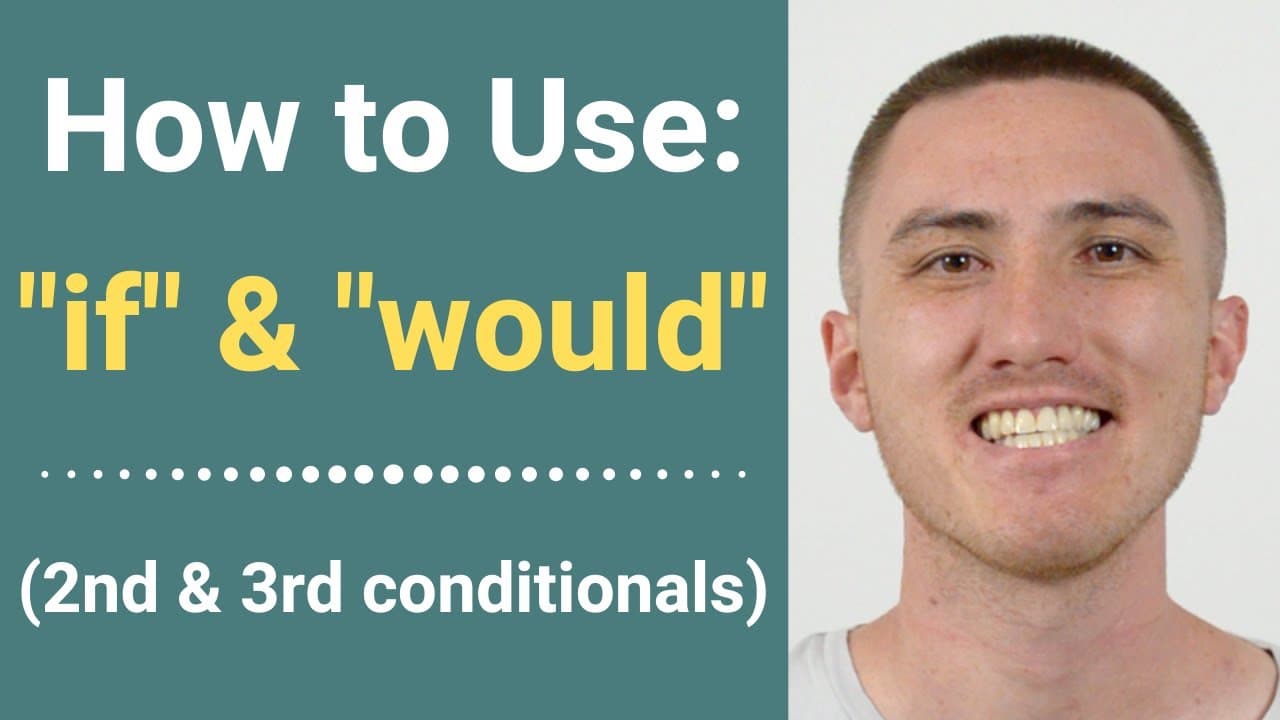
To use 'if' and 'would' in English conditionals, the second conditional describes imaginary present situations with 'if' followed by past simple, and 'would' in the main clause. The third conditional addresses imaginary past situations, using 'if' with past perfect and 'would have' for outcomes. Remember, the verb 'were' is preferred with 'to be' in the second conditional.
Transcript
what's up guys today i'm gonna teach you how to use the second conditional and the third conditional using the words if and would after watching this video you'll be able to use these structures like a native speaker before we start remember to subscribe to the channel click on the bell and follow us on instagram so many english learners have troub... Read More
Key Insights
- 🍝 Second conditional is for present imaginary situations, using past simple in the if clause and "would" in the main clause.
- 🍝 Third conditional is for past imaginary situations, utilizing past perfect in the if clause and "would have" in the main clause.
- ❓ Verb "were" is preferred over "was" in the second conditional with the verb "to be" for all subjects.
- ❓ "Will" is not used in either the second or third conditional; "would" or "could" are the correct choices.
Install to Summarize YouTube Videos and Get Transcripts
Explore YouTube Video Summarizer or Get YouTube Transcript Extractor
Questions & Answers
Q: What is the second conditional used for in English?
The second conditional is used for imaginary situations in the present to envision outcomes that are not currently true, using "if" followed by past simple and "would" in the main clause.
Q: How does the third conditional differ from the second conditional?
The third conditional is used for past imaginary situations and their consequences, showcasing what would have happened if past actions had been different, using "if" followed by past perfect and "would have" in the main clause.
Q: Why is the verb "were" used in the second conditional with the verb "to be"?
In the second conditional, "were" is used instead of "was" with the verb "to be" for all subjects to maintain the correct structure, regardless of the subject being used.
Q: Can "will" be used in both the second and third conditionals?
"Will" cannot be used in either the second or third conditionals; instead, "would" or "could" is used to express the hypothetical nature of the situations being discussed.
Summary & Key Takeaways
-
Explains the second conditional for imaginary situations in the present with examples.
-
Introduces the third conditional for past imaginary situations and their consequences with clear examples.
-
Emphasizes the correct verb tenses and structure for both conditionals.
Read in Other Languages (beta)
Share This Summary 📚
Summarize YouTube Videos and Get Video Transcripts with 1-Click
Try YouTube Summary with ChatGPT & Claude or YouTube Transcript Generator
Explore More Summaries from Listening Time 📚






Summarize YouTube Videos and Get Video Transcripts with 1-Click
Try YouTube Summary with ChatGPT & Claude or YouTube Transcript Generator