Which College Degrees Have the Weakest ROI?

TL;DR
A degree is financially risky when tuition and student debt outweigh the realistic earnings and job access it provides. The strongest warning signs are weak employer demand for the credential, too many graduates competing for limited roles, low starting pay in expensive cities, and careers that require additional graduate education before offering meaningful advancement.
Transcript
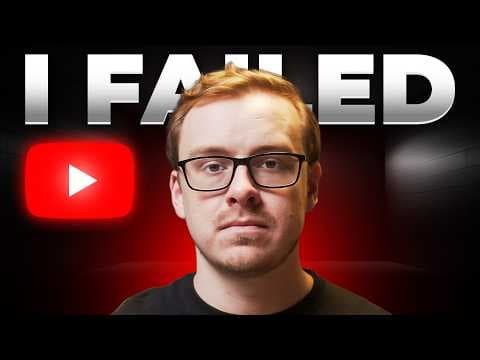
what's happening guys Shane here and every time I make a video about college degrees especially the bad ones people get really triggered but you know what's more triggering than hearing the truth being $300,000 in student loan debt with no job prospects so today I'm exposing the 10° guaranteed to keep you poor forever and I'm going to get a lot of ... Read More
Key Insights
- A college degree is financially risky when its full cost is disconnected from the employment opportunities and earnings it produces. Tuition is only part of that cost because student-loan interest, opportunity cost, and possible default can worsen the long-term financial outcome.
- Restaurant management is a weak degree investment when employers prioritize industry experience over academic credentials. Workers may reach management by advancing from entry-level restaurant positions, while managers can face long hours, significant responsibility, customer complaints, employee issues, and earnings that servers or bartenders may exceed.
- Photography is a portfolio-driven field in which a degree may carry little weight with clients or employers. The required skills can be developed through online classes, YouTube channels, repeated practice, and real work, while many better-paying opportunities are concentrated in expensive cities.
- Biology is a risky bachelor's degree when graduates expect immediate access to well-paid scientific careers. The transcript argues that many research, laboratory, and quality-control positions can require a master's degree or doctorate, adding more education costs before a graduate can establish a career.
- Communications is a broad degree that may not provide a clearly differentiated professional skill. Entry-level work in public relations, social media, and marketing can involve email communication, content posting, presentations, and administrative support, and the transcript argues that applicants can enter some of these roles without the degree.
- Psychology has a difficult supply-and-demand imbalance according to the transcript, with new bachelor's graduates competing against existing degree holders and people with graduate credentials. A bachelor's degree alone may therefore lead to unrelated administrative work instead of a desired counseling or therapy career.
- Passion is not sufficient evidence that a degree will be financially sustainable. A sound education decision also considers whether the resulting work can cover rent, basic living expenses, and student-loan payments without forcing the graduate into prolonged financial dependence.
- Adaptability is central to career planning because personal interests do not always align with available opportunities. The recommended approach is to identify fields with stronger prospects, evaluate realistic routes into them, and pivot when the original ambition is unlikely to support a stable living.
Install to Summarize YouTube Videos and Get Transcripts
Explore YouTube Video Summarizer or Get YouTube Transcript Extractor
Questions & Answers
Q: How can I identify a college degree with weak ROI?
A degree may have weak ROI when it is expensive, creates substantial student debt, and does not materially improve access to the target occupation. Warning signs include employers who do not care about the credential, low starting pay, jobs concentrated in expensive cities, intense competition among graduates, and careers requiring additional graduate education before meaningful advancement becomes possible.
Q: Why is restaurant management considered a risky degree?
Restaurant management is considered risky because practical industry experience may matter more to employers than a college credential. Someone can begin in an entry-level restaurant role and work upward without paying for the degree. Management can also involve long weeks, customer and employee complaints, operational problems, and heavy responsibility, while bartenders or servers may earn more with less stress.
Q: Do photographers need a college degree to find work?
The transcript argues that photography employers and clients generally care more about demonstrated ability than a degree. Aspiring photographers can learn through online classes, YouTube channels, practice, and portfolio development. A formal program becomes financially questionable when graduates still enter modestly paid junior or assistant roles, especially when desirable assignments are concentrated in expensive cities such as New York and Los Angeles.
Q: Why can a biology bachelor's degree have poor financial returns?
A biology bachelor's degree can have poor returns when it does not qualify the graduate for the scientific work they expected. The transcript says research assistant, laboratory technician, and quality-control roles may require a master's degree or doctorate. That creates a longer and more expensive education path, while graduates still compete for a limited pool of relevant positions.
Q: Why is a communications degree described as too general?
A communications degree is described as broad enough that it may not establish a distinctive, employer-required skill. Potential roles include public relations coordinator, social media coordinator, and marketing assistant, but the transcript argues that people can begin some of this work without the credential. The investment is harder to justify when tuition and debt lead to duties involving emails, presentations, posting, and administrative support.
Q: Why can psychology graduates struggle to enter their field?
Psychology graduates can struggle because many people complete psychology programs while the number of directly relevant jobs remains limited. Bachelor's graduates also compete with master's and doctoral graduates for opportunities. The transcript gives an example of a graduate working as a construction-company secretary while remaining far from her goal of becoming a teen therapist, illustrating how a degree may not create a direct career path.
Q: Should students choose a major based only on passion?
Students should not choose a major based only on passion if the associated career cannot reliably support basic living expenses and loan repayment. The transcript recommends balancing personal interest with finances, labor-market opportunity, and adaptability. A passion can become difficult to sustain when debt, rent, and weak employment prospects create persistent stress or force prolonged dependence on family.
Q: What should students compare before borrowing for college?
Students should compare the degree's total cost with the jobs it realistically unlocks. The relevant questions are whether employers require the credential, whether practical experience offers a cheaper route, where the jobs are located, whether starting pay can cover living costs and loan payments, how crowded the field is, and whether graduate school will be necessary afterward.
Summary & Key Takeaways
-
College should be evaluated as a financial investment rather than treated as automatically worthwhile. The analysis recommends comparing education costs, debt, opportunity cost, employer demand, starting salaries, job location, and further schooling requirements before choosing a major. Following an interest blindly can create lasting financial stress when the associated career cannot cover basic expenses.
-
Restaurant management and photography are presented as especially questionable degree choices because employers may value practical experience and demonstrated ability more than formal credentials. Restaurant workers can advance through operational roles, while photographers can learn through classes, online channels, and practice. Paying tuition provides limited value when the target occupation does not require the degree.
-
Biology, communications, and psychology are criticized for different labor-market problems. Biology and psychology may require advanced degrees while attracting more graduates than relevant jobs can absorb. Communications is described as overly general, with many entry-level duties accessible without the credential. In every case, prospective students should investigate actual job pathways before borrowing money.
Read in Other Languages (beta)
Share This Summary 📚
Summarize YouTube Videos and Get Video Transcripts with 1-Click
Try YouTube Summary with ChatGPT & Claude or YouTube Transcript Generator
Explore More Summaries from Shane Hummus 📚





Summarize YouTube Videos and Get Video Transcripts with 1-Click
Try YouTube Summary with ChatGPT & Claude or YouTube Transcript Generator