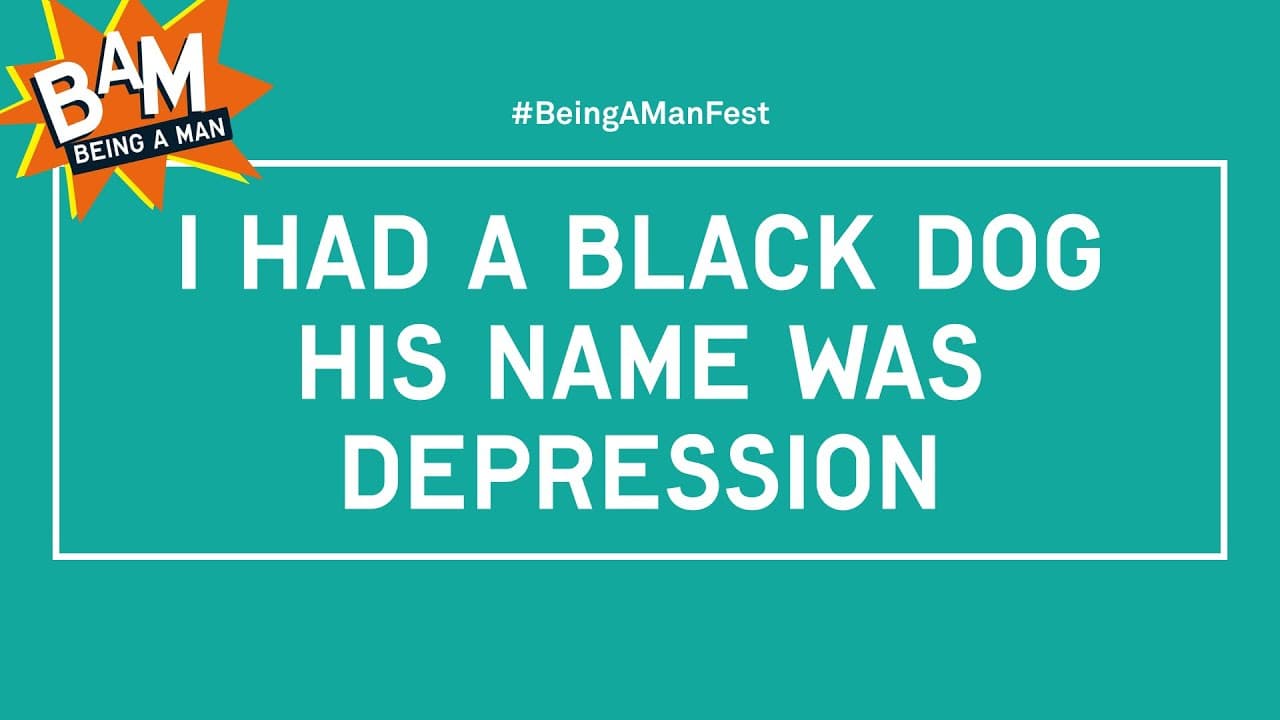
I Had A Black Dog, His Name Was Depression
TL;DR
Men struggling with depression need ways to recognize what is happening and speak openly rather than face it alone. Professor Steve Robertson leads a panel featuring David Baddiel, Jake Mills, Matt Haig, and CALM campaigner Jane Powell; Baddiel describes using therapy and antidepressants, while Mills recounts concealing his depression for about seven months before a suicide attempt. Read on for their firsthand experiences and reasons to normalize honest conversations.
Transcript
I'm used to being the funniest guy on it on a panel in the academic world so I'm guessing that's not gonna happen today and just to give you some background to myself I'm Steve Robertson I work as a professor of men gender and health that leaves back at University in the center for men's health there and it's a it's an honor and a pleasure to be he... Read More
Key Insights
- 😨 Men's mental health struggles are often influenced by societal expectations of masculinity and the fear of judgment.
- 🧑⚕️ Comedy can serve as a valuable tool in breaking down barriers and addressing serious mental health issues.
- 👩⚕️ Women can play a key role in supporting men's mental health by creating non-judgmental spaces for open conversations.
- 👨⚕️ Normalizing mental health discussions and offering support without stigma are essential in addressing men's mental health challenges.
Install to Summarize YouTube Videos and Get Transcripts
Explore YouTube Video Summarizer or Get YouTube Transcript Extractor
Questions & Answers
Q: Why can men find it difficult to talk about depression?
David Baddiel says some young men he met through CALM had no template for dealing with depression and did not understand what was happening to them. He stresses that men are not one uniform group: their background, understanding, and access to emotional tools all affect how they respond.
Q: How did David Baddiel deal with clinical depression?
Baddiel says he went into therapy and took antidepressants. He describes this as a straightforward way of addressing depression, while acknowledging that he still experiences it, though less severely.
Q: What happened when Jake Mills kept his depression to himself?
Mills says he concealed his depression and genuinely believed he could overcome it without anyone’s help. After experiencing depression for about seven months, possibly longer or shorter, he attempted suicide.
Q: What did Jake Mills learn after speaking publicly about his experience?
After Mills discussed his recovery on television and in newspapers, people contacted him to say they felt as he had described and thought they were alone. He realized that thousands of people could be experiencing similar feelings at the same time while each believed they were the only one.
Q: Who leads the panel on men’s mental health and well-being?
Steve Robertson introduces and leads the panel. He identifies himself as a professor of men, gender, and health at Leeds Beckett University’s Centre for Men’s Health.
Q: Who participates in the men’s mental health panel?
The panel includes David Baddiel, Jake Mills, writer Matt Haig, and campaigner Jane Powell, with Steve Robertson moderating. Robertson introduces their backgrounds in comedy, writing, mental health advocacy, and research.
Q: What is CALM, and how is Jane Powell connected to it?
Jane Powell established the Campaign Against Living Miserably, initially in 2000 and more extensively from 2006 onward. She developed CALM’s distinctive communications brand, including a website and a popular magazine.
Q: How did CALM shape David Baddiel’s understanding of men and depression?
Through CALM, Baddiel met young men from backgrounds different from his own who lacked a framework for understanding or handling depression. Their experiences led him to emphasize that support must account for differences among men rather than treating gender as the only explanation.
Summary & Key Takeaways
-
Professor and panel discuss men's mental health, challenging stereotypes and promoting open communication.
-
Panelists share personal experiences with mental health struggles and advocate for destigmatizing conversations.
-
Recommendations are made for normalizing discussions around mental health and providing support in a non-judgmental manner.
Read in Other Languages (beta)
Share This Summary 📚
Summarize YouTube Videos and Get Video Transcripts with 1-Click
Try YouTube Summary with ChatGPT & Claude or YouTube Transcript Generator
Explore More Summaries from Southbank Centre 📚





Summarize YouTube Videos and Get Video Transcripts with 1-Click
Try YouTube Summary with ChatGPT & Claude or YouTube Transcript Generator