How Can Cities Tackle Climate Change and Growth?

TL;DR
Cities are vital for addressing climate challenges, housing needs, and social equity, driving 80% of economic activity and consuming 70% of energy globally. Urban design directly influences sustainability, community ties, and economic opportunities. By embracing innovative urban planning, cities can lead in environmental stewardship while enhancing residents' quality of life.
Transcript
hello i'm stuart brand from the long now foundation and sort of at the long now foundation in the interval or a bar in san francisco pretty quiet right now because of the pandemic we're shooting in a very socially distancely responsible way so all the speaker tonight and i are both in the bar where some distance will just come together on the scree... Read More
Key Insights
- 🥹 Cities are where civilization thrives, and they hold immense potential for solving society's most pressing challenges, such as climate change, housing affordability, and social equity.
- 😒 Sustainable urban planning practices, including compact, mixed-use developments and efficient transportation systems, are crucial in creating livable cities while minimizing environmental impacts.
- 🥺 Cities can lead the way in adopting new technologies, such as autonomous vehicles, to enhance mobility and reduce congestion if implemented as part of a comprehensive system.
- 👳 Collaboration and coalition-building between stakeholders, including government, communities, and private sector, are essential to overcoming resistance to change and achieving sustainable urban development.
Install to Summarize YouTube Videos and Get Transcripts
Explore YouTube Video Summarizer or Get YouTube Transcript Extractor
Questions & Answers
Q: How can cities help mitigate the challenges posed by climate change?
Cities can play a key role in addressing climate change by adopting sustainable urban planning practices, such as promoting walkability, reducing car dependency, and implementing green infrastructure to mitigate floods and heatwaves.
Q: What are the benefits of compact, mixed-use developments in cities?
Compact, mixed-use developments enable people to live, work, and access amenities within close proximity, reducing the need for long commutes and car usage. This not only improves quality of life but also reduces energy consumption and greenhouse gas emissions.
Q: How can cities ensure affordable housing without causing displacement?
By incorporating diverse housing types and densities within neighborhoods, cities can provide affordable housing options and prevent gentrification. Additionally, tax increment financing can be used to fund community facilities and infrastructure when property values increase due to redevelopment.
Q: Can autonomous vehicles help solve congestion in cities?
While autonomous vehicles have the potential to increase congestion if used solely for private travel, if deployed as part of a transit system, they can significantly improve efficiency and reduce traffic. Dedicated lanes and intelligent routing systems can maximize their effectiveness.
Summary & Key Takeaways
-
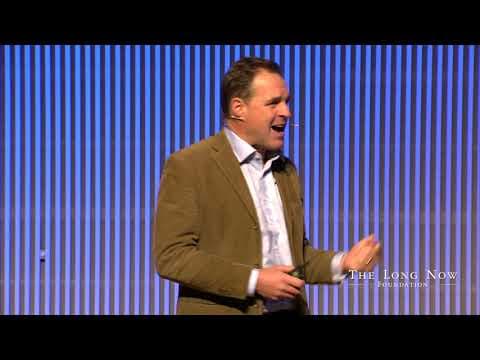
Peter Calthorpe, an expert on urban planning, discusses the importance of cities and how they can be designed to address climate change challenges and improve quality of life.
-
Cities are where civilization happens, with 80% of economic activity and 70% of energy usage taking place in urban areas.
-
The design of cities, including factors such as density, infrastructure, and transportation, can have a significant impact on sustainability, social equity, and economic growth.
Read in Other Languages (beta)
Share This Summary 📚
Summarize YouTube Videos and Get Video Transcripts with 1-Click
Try YouTube Summary with ChatGPT & Claude or YouTube Transcript Generator
Explore More Summaries from Long Now Seminars 📚





Summarize YouTube Videos and Get Video Transcripts with 1-Click
Try YouTube Summary with ChatGPT & Claude or YouTube Transcript Generator