High Speed photography 101 - Pre-Smarter Every Day

TL;DR
High-speed photography works by opening the camera shutter in darkness and using a precisely timed flash to expose the image at the critical moment. Dustin’s breadboard-mounted multi-T trigger detects a sharp sound, applies an adjustable delay, and fires the flash when a bullet reaches its target. At 1/128 power, his flash lasts about 160 microseconds, enabling exposures beyond a mechanical shutter’s capabilities. Read on for the complete setup and timing method.
Transcript
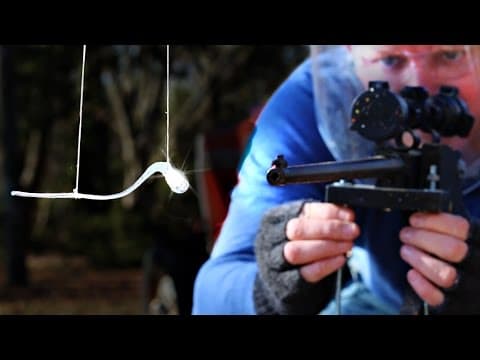
hey it's me Destin it is late the kids are in bed so it's time to work on the next project so this time around we're going to start trying to take photos of stuff being hit by bullets I think that moment that they're hit by bullets is called high-speed photography not like high-speed video like you've seen on TV but it's really within the reach of ... Read More
Key Insights
- 🚄 High-speed photography can be achieved with simple equipment and precise timing, making it accessible to most people.
- 📸 The process involves using a flash unit and a multi-trigger to synchronize the flash with the moment the bullet hits the target.
- 🚄 High-speed photography allows for capturing objects breaking or achieving faster shutter speeds.
- 🎮 Adjusting sensitivity and delays provides control over when the flash is triggered.
- 👻 The minimum power output of some flash units allows for extremely short durations, surpassing the capabilities of mechanical shutters.
- 🚄 High-speed photography can be used for artistic purposes or scientific analysis.
- 👻 Exploring and understanding the physical laws governing our world allows for creative exploration and discovery.
Install to Summarize YouTube Videos and Get Transcripts
Explore YouTube Video Summarizer or Get YouTube Transcript Extractor
Questions & Answers
Q: How can you take high-speed photographs of objects being hit by bullets?
Use a sound-sensitive trigger circuit to detect the rifle shot, wait for an adjustable delay, and then fire a flash when the bullet reaches the target. The method depends primarily on precise timing rather than extensive specialized equipment.
Q: What equipment is used for this high-speed photography setup?
The setup includes a flash unit, a breadboard circuit, a sound-sensitive transducer, and a multi-T trigger purchased from hiviz.com. The flash connects to the circuit through a PC connector.
Q: How does the multi-T trigger synchronize the flash with a bullet impact?
The multi-T trigger detects the sharp sound of the rifle shot and starts a configured delay. After that delay, such as 20 milliseconds or 2 milliseconds, the circuit fires the flash as the bullet reaches the target.
Q: How can the trigger timing be adjusted?
The circuit allows adjustments to its sound sensitivity, reset time, and delay before firing the flash. Coarse and fine potentiometers are used to set the desired delay.
Q: How do you photograph a bottle at the moment it breaks?
Turn off the lights, open the camera shutter, and drop the bottle. When the bottle hits the ground, the sound triggers the flash, which exposes the DSLR sensor and captures the break.
Q: Why is the flash more important than the camera shutter for freezing motion?
With the shutter open in darkness, the brief flash determines how long the sensor is exposed to the visible action. A sufficiently short flash can freeze motion more effectively than the camera’s mechanical shutter.
Q: How short is the flash duration at minimum power?
The flash used in the setup can be reduced to 1/128 of its full output. An oscilloscope measurement showed a duration of about 160 microseconds at that setting.
Q: Can the trigger be used for events other than rifle shots?
Yes. The multi-T trigger supports sound activation as well as other inputs, including photo gates. This makes it useful for timing photographs of events such as a bottle hitting the ground and breaking.
Summary & Key Takeaways
-
High-speed photography, capturing moments when objects are hit by bullets, is within reach for most people as it only requires precise timing and not necessarily special equipment.
-
The process involves using a flash unit and a breadboard circuit with a multi-trigger that can be set off by sound.
-
By adjusting sensitivity and delays, one can capture images of objects breaking or achieve faster shutter speeds than mechanical shutters allow.
Read in Other Languages (beta)
Share This Summary 📚
Summarize YouTube Videos and Get Video Transcripts with 1-Click
Try YouTube Summary with ChatGPT & Claude or YouTube Transcript Generator
Explore More Summaries from SmarterEveryDay 📚




Summarize YouTube Videos and Get Video Transcripts with 1-Click
Try YouTube Summary with ChatGPT & Claude or YouTube Transcript Generator