Why Taiwan's Status Could Spark a Global Conflict
TL;DR
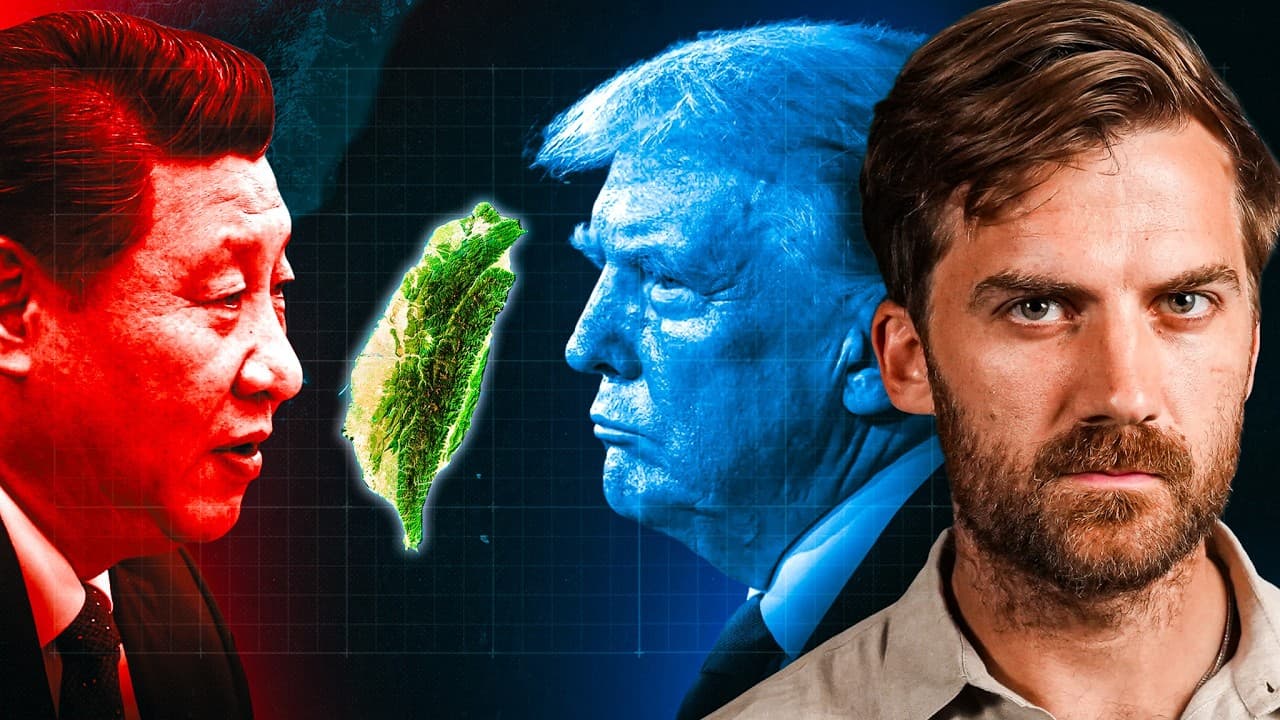
Taiwan's strategic position and complex history make it a potential flashpoint for global conflict. The island's ambiguous status, shaped by decades of geopolitical maneuvering, remains a critical issue between the US, China, and Taiwan. The US's strategic ambiguity policy keeps tensions high but stable, as Taiwan's semiconductor industry further complicates the stakes.
Transcript
(playful music) - [Johnny] It is the 1940s and China is ripping itself apart. (playful music) The ruling government is quickly losing the country to a rising communist revolution. It's a well-organized military movement supported by the Soviet Union, led by revolutionary Mao Zedong, and they're now marching across the country, driving out the rulin... Read More
Key Insights
- Taiwan's status is a legacy of the Chinese Civil War, with the Republic of China retreating to the island.
- The US policy of strategic ambiguity regarding Taiwan's status aims to deter conflict without making explicit commitments.
- Taiwan's semiconductor industry is a significant factor in its strategic importance to the US.
- China views Taiwan as a breakaway province, asserting that reunification is a national priority.
- The US's recognition of the People's Republic of China in the 1970s shifted the diplomatic landscape, isolating Taiwan.
- The Sino-Soviet split allowed the US to leverage relations with China against the Soviet Union.
- Taiwan's democratic evolution contrasts with China's authoritarian regime, influencing international perceptions.
- Military tensions in the Taiwan Strait remain high, with China conducting frequent military exercises near the island.
Install to Summarize YouTube Videos and Get Transcripts
Explore YouTube Video Summarizer or Get YouTube Transcript Extractor
Questions & Answers
Q: How did Taiwan become a point of conflict between China and the US?
Taiwan became a point of conflict after the Chinese Civil War, when the Republic of China retreated to the island as the Communist Party established control over the mainland. The US's strategic ambiguity policy regarding Taiwan's status aims to deter a Chinese invasion while avoiding a formal commitment to defend Taiwan, thus maintaining a delicate balance in US-China relations.
Q: What is the significance of Taiwan's semiconductor industry?
Taiwan's semiconductor industry is critical to the global tech economy, producing 90% of the world's advanced microchips. This industry is a strategic asset that increases Taiwan's importance to the US and its allies, as it provides leverage against China's ambitions and ensures continued US interest in Taiwan's security and stability.
Q: Why does China consider Taiwan a breakaway province?
China considers Taiwan a breakaway province because it views the island as an integral part of its territory, stemming from the outcome of the Chinese Civil War. The People's Republic of China sees reunification with Taiwan as essential to its national sovereignty and territorial integrity, and it has not ruled out the use of force to achieve this goal.
Q: What is the US policy of strategic ambiguity regarding Taiwan?
The US policy of strategic ambiguity involves deliberately not specifying whether it would defend Taiwan in the event of a Chinese attack. This approach is intended to deter Chinese aggression by maintaining uncertainty, while also avoiding a direct commitment that could provoke China. It aims to keep peace in the region by balancing deterrence with diplomatic flexibility.
Q: How did the Sino-Soviet split affect US-China relations?
The Sino-Soviet split in the 1960s allowed the US to improve relations with China as a counterbalance to the Soviet Union. This geopolitical realignment led to the US recognizing the People's Republic of China in the 1970s, which weakened the Soviet Union's influence and shifted the global balance of power. It also resulted in Taiwan's diplomatic isolation.
Q: What role does Taiwan's democracy play in its international relations?
Taiwan's democracy plays a significant role in its international relations by contrasting with China's authoritarian regime. This democratic evolution enhances Taiwan's appeal to Western nations and complicates China's reunification efforts, as it garners international support for Taiwan's self-governance and highlights the ideological differences between Taiwan and the mainland.
Q: What are the current military tensions in the Taiwan Strait?
Current military tensions in the Taiwan Strait involve frequent Chinese military exercises and displays of force near Taiwan, including missile tests and naval maneuvers. These actions are intended to intimidate Taiwan and deter any moves towards formal independence, while also testing US resolve and the international community's reaction to potential conflict in the region.
Q: Why is Taiwan's status considered undetermined by the US?
Taiwan's status is considered undetermined by the US as part of its strategic ambiguity policy, which avoids taking a definitive stance on Taiwan's sovereignty. This ambiguity helps maintain stability by deterring Chinese aggression while not provoking China with an explicit defense commitment. It allows the US to navigate complex diplomatic relations with both China and Taiwan.
Summary & Key Takeaways
-
Taiwan's geopolitical significance stems from its historical context as the refuge of the Republic of China after the Communist victory on the mainland. The island's ambiguous status has been maintained by US strategic ambiguity, which deters conflict while avoiding explicit commitments to defend Taiwan.
-
The US's diplomatic recognition of the People's Republic of China in the 1970s marked a significant shift, leaving Taiwan diplomatically isolated. Despite this, Taiwan has developed into a vibrant democracy with a crucial semiconductor industry, further complicating the geopolitical stakes.
-
China's insistence on reunification with Taiwan is a central tenet of its national policy, leading to ongoing military tensions in the region. The US continues to maintain a policy of strategic ambiguity, balancing deterrence with the need to avoid provoking China.
Read in Other Languages (beta)
Share This Summary 📚
Summarize YouTube Videos and Get Video Transcripts with 1-Click
Try YouTube Summary with ChatGPT & Claude or YouTube Transcript Generator
Explore More Summaries from Johnny Harris 📚





Summarize YouTube Videos and Get Video Transcripts with 1-Click
Try YouTube Summary with ChatGPT & Claude or YouTube Transcript Generator