What Are the Three Pillars of Stoicism?
TL;DR
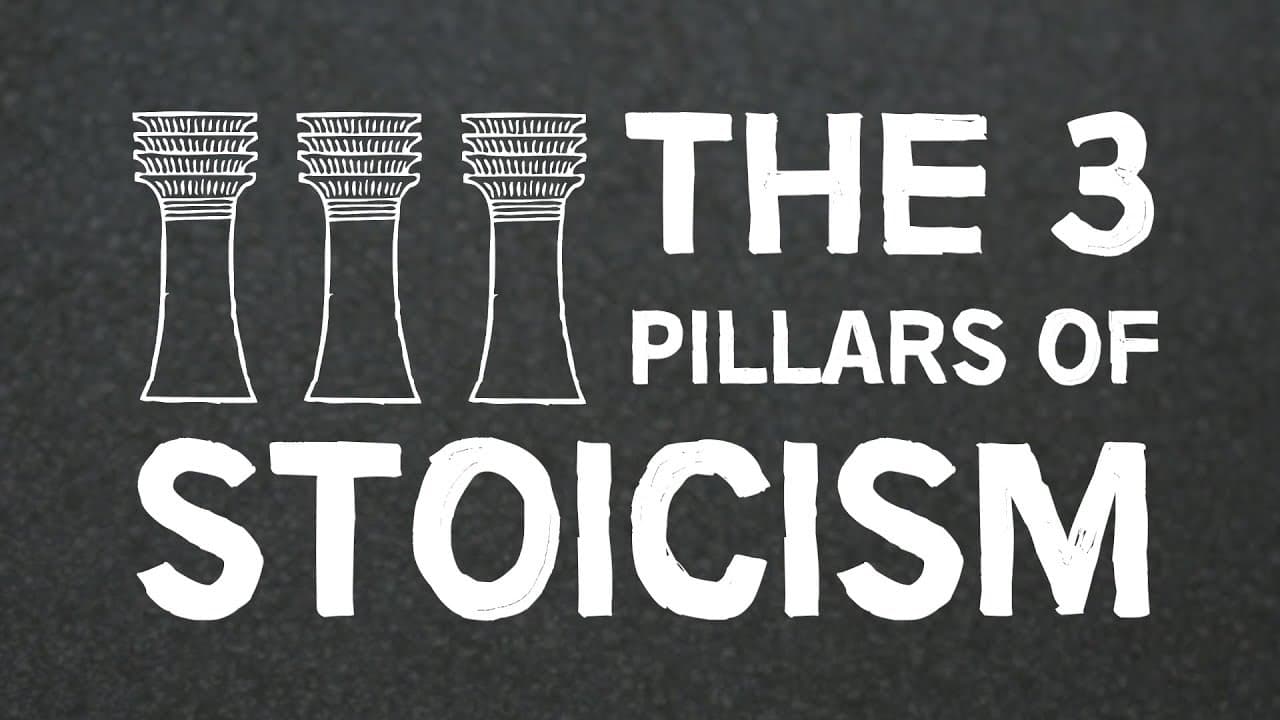
The three pillars of Stoicism are Ethics, Logic, and Physics. Ethics focuses on virtue and vice to guide moral actions, Logic provides the framework for rational thought, and Physics emphasizes understanding the universe and living in harmony with nature. These pillars are interdependent, forming a cohesive philosophical system.
Transcript
If we look at Stoicism as a philosophical system, we can divide it in three pillars: Ethics, Logic and Physics. Some scholars arrange these aspects of Stoicism in the form of an egg. The yolk represents the Physics; the white, the Ethics; and the shell the Logic. According to the scholars, Physics is at the core of Stoicism because without knowledg... Read More
Key Insights
- 🤔 Logic is the foundational pillar of Stoicism, enabling rational thinking and philosophical debate.
- 🦮 Ethics guides appropriate actions by distinguishing between virtue and vice, inculcating moral behavior.
- 🛟 Physics in Stoicism involves understanding the universe, including Logos as a rational force and pneuma as the life-sustaining element.
- 👻 The Stoic concept of indifferents allows for nuanced moral decision-making based on reasoning and context.
- 🫒 Stoic Ethics emphasize living in harmony with nature through the practice of virtue.
- ❓ The interdependence of Stoic pillars underscores the holistic nature of the philosophy.
- 🥶 Stoic Physics views the universe as governed by rational principles, reflecting determinism with room for free will.
Install to Summarize YouTube Videos and Get Transcripts
Explore YouTube Video Summarizer or Get YouTube Transcript Extractor
Questions & Answers
Q: What are the three main pillars of Stoicism?
The three main pillars of Stoicism are Ethics, Logic, and Physics, and they are interdependent components of a balanced philosophy.
Q: How does Logic relate to the other aspects of Stoicism?
Logic serves as the firm foundation that connects Ethics and Physics, providing the art of reasoning necessary to engage with Stoic philosophy.
Q: What distinguishes virtue from vice in Stoic Ethics?
Virtue, which leads to happiness, encompasses moderation, justice, courage, and wisdom, while vice, leading to misery, includes injustice, cowardice, intemperance, and foolishness.
Q: What is the Stoic concept of Physics?
Stoic Physics, focusing on understanding the universe, incorporates the belief in Logos as a force of reason and pneuma as the active, life-giving entity.
Summary & Key Takeaways
-
Stoicism is structured around three main pillars: Ethics, Logic, and Physics, represented by an egg analogy.
-
Logic forms the solid foundation of the Stoic philosophy, bridging Ethics and Physics.
-
Ethics defines appropriate actions through virtue and vice, while Physics emphasizes living in harmony with nature.
Read in Other Languages (beta)
Share This Summary 📚
Summarize YouTube Videos and Get Video Transcripts with 1-Click
Try YouTube Summary with ChatGPT & Claude or YouTube Transcript Generator
Explore More Summaries from Einzelgänger 📚




Summarize YouTube Videos and Get Video Transcripts with 1-Click
Try YouTube Summary with ChatGPT & Claude or YouTube Transcript Generator