How to Build Good Habits and Break Bad Ones
TL;DR
Build lasting habits by focusing on small actions you can control and combining many modest improvements into a reliable system. Goals can provide direction, but progress comes from repeated behaviors, patience, and attention to the process, while bad habits become easier to address when you stop depending on motivation alone.
Transcript
there's this interview with Michael Jordan where a journalist is kind of asking him like Hey you take all these big shots what happens if you try to take the game-winning shot and you miss and his reply was like why would I think about missing a shot I haven't taken yet and this is why one of the key things I talk about in Tomic cits is getting 1% ... Read More
Key Insights
- Small improvements are most powerful when many of them accumulate into a coherent system. Clear says the aim is not to find one transformative habit, but to make numerous modest changes and trust their combined effects to produce meaningful progress over time.
- Recovery is often a long process built from actions appropriate to each stage. Clear began with physical therapy and basic motor patterns, later returned to baseball skills, added strength training, and eventually worked on confidence and the mental side of competition.
- Controllable actions are more useful than speculation about uncertain outcomes. During his recovery, Clear focused on what he could do in the moment instead of predicting permanent damage or worrying about negative possibilities that might never occur.
- A positive environment can shape how someone responds to hardship. Clear credits his parents and grandparents with helping him avoid a victim mentality, notice daily improvement, and direct his attention toward the parts of his difficult situation that he could influence.
- Habits are a practical way to fulfill personal potential despite unfavorable circumstances. Clear did not become a professional baseball player, but he believes his gradual progress allowed him to make the most of the abilities and opportunities available to him.
- Systems are more dependable than an excessive focus on goals. Clear admits that he has procrastinated and concentrated too much on desired outcomes, so the ideas in Atomic Habits also serve as personal reminders to return his attention to repeatable processes.
- Motivation is not always the missing ingredient when a new habit fails to take hold. The discussion introduces the idea that people may interpret stalled progress as a motivation problem even though effective habit formation requires more than simply wanting an outcome.
- Experience can provide a useful foundation for explaining behavior change. Clear’s prolonged recovery gave him a personal lens for later writing about gradual improvement, although he did not yet use terms such as getting 1% better each day or focusing on systems.
Install to Summarize YouTube Videos and Get Transcripts
Explore YouTube Video Summarizer or Get YouTube Transcript Extractor
Questions & Answers
Q: How can small habits create meaningful long-term progress?
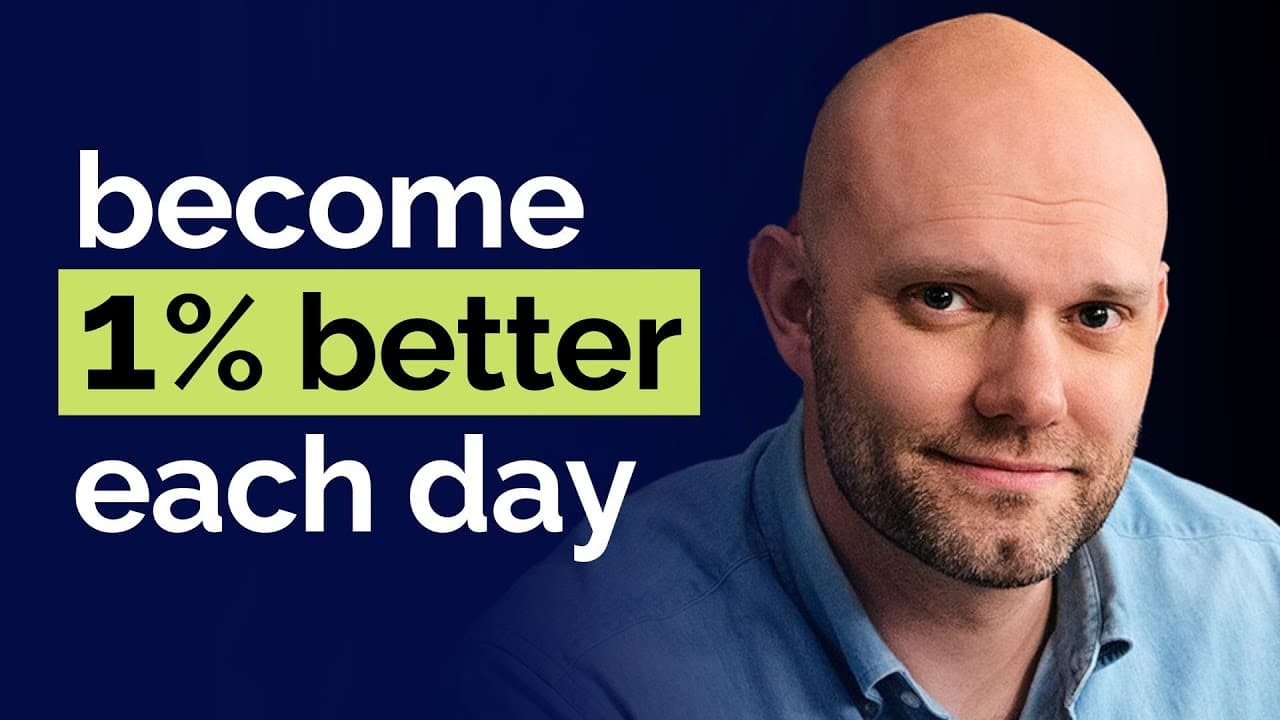
Small habits create meaningful progress when they accumulate as part of a larger system. James Clear argues that the important result does not come from one isolated 1% improvement or one supposedly transformative behavior. It comes from making many modest improvements, combining them, and continuing long enough for their collective effect to move life in a positive direction.
Q: Why should you focus on systems instead of only goals?
Goals describe an outcome, while systems consist of the repeated actions that move a person toward it. Clear acknowledges that he has often focused too much on goals and not enough on systems. His recovery illustrates the alternative: complete the appropriate action today, add other useful behaviors over time, and let the collection of habits support gradual progress.
Q: How did James Clear recover after his baseball injury?
Clear recovered through a long sequence of manageable actions rather than a single breakthrough. He first followed doctors’ and physical therapists’ instructions and practiced basic motor patterns such as walking straight. Later, he resumed driving, rebuilt baseball skills, trained consistently, developed physical strength, and addressed confidence and the mental side of competition over several years.
Q: What role did positive thinking play in James Clear’s recovery?
Positive thinking helped Clear direct attention toward useful actions without denying the seriousness of his injury. His parents and grandparents encouraged him to concentrate on improvement and on circumstances he could control. Instead of repeatedly asking why the accident happened or predicting permanent consequences, he tried to stay constructive, make progress in the present, and observe where those efforts led.
Q: What does getting 1% better each day mean?
Getting 1% better each day means maintaining a positive trajectory through modest, repeated gains. The value is not that one small improvement immediately changes everything. Clear’s account emphasizes collecting many improvements across physical therapy, studying, training, baseball skills, and confidence, then trusting that these behaviors can work together as a strong system over an extended period.
Q: Why is motivation alone not enough to build a habit?
Motivation alone is not presented as a complete explanation for successful habit formation. Clear notes that people often try to establish a behavior, struggle to gain momentum, and conclude that they lack motivation. His broader argument points toward building repeatable systems and taking manageable actions, because wanting a result does not by itself create the consistent behavior required to reach it.
Q: How can someone respond constructively to a major setback?
A constructive response begins by identifying what can be controlled now and choosing an action suited to the current stage. For Clear, that initially meant following medical guidance and completing physical therapy, not immediately returning to baseball. As his condition improved, the relevant actions changed. Patience, supportive people, and attention to present progress helped prevent uncertain fears from directing his behavior.
Q: What is the main lesson from James Clear’s baseball journey?
The main lesson is that fulfilling potential can matter even when the original dream is not achieved. Clear never became a professional baseball player, but he returned from a severe injury, joined a college team, became a starter and team captain, and received academic All America recognition. He attributes that development to years of accumulated habits and steady improvement.
Summary & Key Takeaways
-
James Clear’s serious high school injury forced him to rebuild his life through small, manageable steps. Physical therapy, studying, driving, baseball practice, strength training, and mental preparation arrived gradually. His recovery showed him that fulfilling personal potential depends less on one dramatic breakthrough than on consistent actions accumulated over time.
-
Clear’s path back to baseball took five or six years and involved many different habits rather than one decisive intervention. He progressed from basic motor exercises to playing college baseball, eventually becoming a starter, team captain, and academic All America selection. He considers fulfilling his available potential the meaningful outcome.
-
Atomic Habits reflects principles Clear has personally needed because he also procrastinates and sometimes focuses too heavily on goals. His central message is to build systems from many small improvements, concentrate on controllable actions, and avoid worrying about failures that have not occurred. Positive trajectories matter even when daily gains appear modest.
Read in Other Languages (beta)
Share This Summary 📚
Summarize YouTube Videos and Get Video Transcripts with 1-Click
Try YouTube Summary with ChatGPT & Claude or YouTube Transcript Generator
Explore More Summaries from Young and Profiting 📚





Summarize YouTube Videos and Get Video Transcripts with 1-Click
Try YouTube Summary with ChatGPT & Claude or YouTube Transcript Generator