Shopify President: How Can You Turn Boring Products Into Big Businesses?
TL;DR
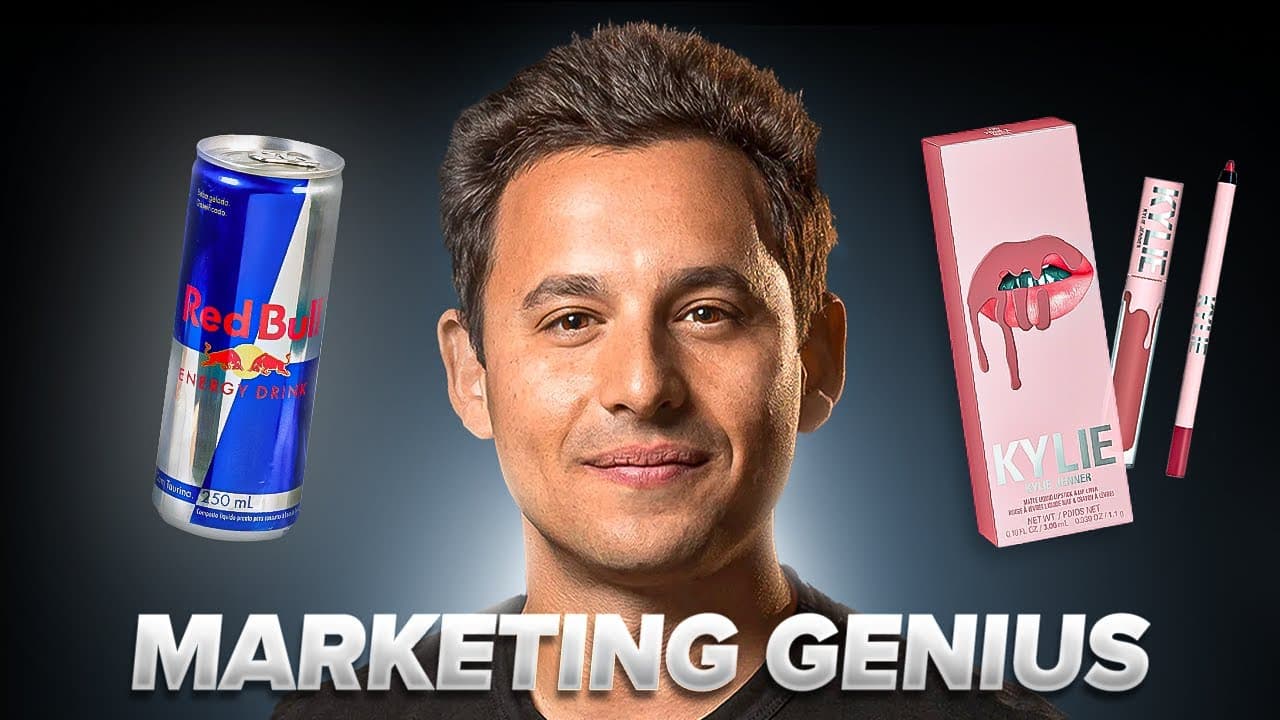
Entrepreneurs can turn boring products into big businesses by redesigning neglected utilities around appearance, performance, sensory appeal, branding, distribution, and storytelling. Touchland raised about $67,000 on Kickstarter, made hand sanitizer attractive and giftable, and was acquired for $880 million in 2025. Read on to see how Touchland, Dyson, Ember, and other examples reveal opportunities hidden in ordinary categories.
Transcript
This is serious podcasting over here. Sean, the last time I did this, actually, I literally pulled up the date of it. It was in 2020. I think you were in like a wife beater and then you went to the bathroom and I heard you flush the toilet. I'm serious, dude. That's how far we've come here. Hey, we haven't come that far. Still these things that tha... Read More
Key Insights
- Touchland is an example of converting a clinical commodity into a premium consumer product. The company made hand sanitizer smell better, look attractive, feel giftable, and support collaborations with brands such as Hello Kitty and Disney, distinguishing it from the hospital-like associations of conventional sanitizer.
- Touchland’s reported trajectory is evidence that category redesign can create substantial value. The founder raised about $67,000 on Kickstarter, reportedly generated roughly $1 million in first-year sales, and later built a business expected to produce $130 million in revenue and $55 million in EBITDA during 2025.
- The opportunity in boring products is often hidden in qualities that consumers have learned to tolerate. Clunky form factors, unattractive packaging, poor smells, inconvenient distribution, and weak presentation can become openings for a founder who treats the entire customer experience as a design problem.
- Dyson’s product strategy is based on taking ordinary appliances unusually seriously. Its PencilVac demonstration attracted millions of views on YouTube, illustrating how a technically improved vacuum can become compelling media when the founder clearly presents its design, engineering, and practical advantages.
- Modern media is a distribution advantage for product innovators. A concise YouTube demonstration can communicate why an apparently ordinary product is different, reach potential customers directly, and persuade some viewers to purchase from a brand they had not previously considered.
- A 10x product concept is a useful lens for exploring neglected categories. Fire logs, karaoke machines, household tools, heated mugs, and hand dryers are cited as products that may offer room for improvements in appearance, portability, convenience, performance, branding, or retail availability.
- Total addressable market is not necessarily a static number. Entrepreneurs can enlarge a market by creating new use cases, reaching different buyers, opening additional sales channels, and making a product attractive to people who would not have purchased the conventional version.
- Distribution can change the potential of an established product category. The Flint prototype prompted a question about why fire logs are mainly purchased from home-improvement stores instead of convenience stores, where customers might add them to weekend purchases such as beer.
Install to Summarize YouTube Videos and Get Transcripts
Explore YouTube Video Summarizer or Get YouTube Transcript Extractor
Questions & Answers
Q: How can entrepreneurs turn boring products into big businesses?
Start with a familiar utility product and identify compromises customers have learned to accept, such as poor smells, unattractive design, clunky construction, or inconvenient distribution. Improve several parts of the experience together, position the result as a distinct category, and use modern media to show customers why it is better.
Q: Why did Touchland stand out in the hand sanitizer market?
Touchland reimagined hand sanitizer as a luxury, sensory product rather than a purely clinical utility. It made the sanitizer smell and look better, used a clear and attractive case, and created collaborations with Hello Kitty and Disney. That positioning also made hand sanitizer something customers could display or give as a gift.
Q: How did Touchland grow from Kickstarter to an $880 million acquisition?
Touchland raised about $67,000 on Kickstarter to fund its first production run and reportedly made about $1 million in first-year sales. Demand then exploded when COVID increased interest in hand sanitizer. In 2025, the company was acquired for $880 million and was expected to produce $130 million in revenue and $55 million in EBITDA that year.
Q: What made Touchland different from Purell?
Purell was described as a utility product associated with hospitals, teachers, alcohol smells, and an unremarkable form factor. Touchland instead emphasized fragrance, visual design, collaborations, and gifting. The result was presented as a new premium category rather than another functional sanitizer.
Q: How can YouTube help sell an ordinary physical product?
YouTube lets founders demonstrate product improvements and explain the engineering or design behind them directly. Dyson’s roughly five-minute PencilVac demonstration attracted millions of views even though it featured a vacuum cleaner. The speakers believed the presentation could persuade some viewers to buy their first Dyson product.
Q: What ordinary product categories may be ready for reinvention?
The page identifies hand sanitizer, vacuum cleaners, hand dryers, heated mugs, fire logs, karaoke machines, and household tools as examples. These categories may offer opportunities to improve appearance, portability, convenience, performance, packaging, branding, or retail placement.
Q: Why is total addressable market not always fixed?
A conventional market estimate can treat demand as a fixed pool that competitors divide among themselves. The discussion argues that entrepreneurs can enlarge that pool by attracting new buyers, creating additional uses, improving distribution, and making a neglected category more desirable. Growth can therefore come from expanding demand rather than only taking sales from existing competitors.
Q: What should founders examine when searching for a boring-product opportunity?
Founders should study the compromises built into an ordinary product, including its form factor, smell, appearance, performance, packaging, and sales channels. They should also ask whether people would display, recommend, or gift a redesigned version. Touchland, Dyson, and Ember show how taking an overlooked utility unusually seriously can reveal a larger business opportunity.
Summary & Key Takeaways
-
Ordinary products can support valuable businesses when founders rethink qualities that established competitors ignore. Touchland transformed hand sanitizer from a clinical utility into an attractive, fragrant, giftable product. Its design, collaborations, and positioning allowed the company to sell a familiar item as a distinctive experience rather than another commodity.
-
The same opportunity appears across vacuums, mugs, fire logs, karaoke machines, and household tools. Founders can investigate categories consumers take for granted, identify recurring frustrations, and build substantially better alternatives. Modern media then helps them demonstrate improvements, tell the founder’s story, and reach buyers directly through online commerce.
-
Market size should not be treated as a fixed pie divided among existing competitors. Better products, new customers, additional retail channels, and stronger positioning can expand a category’s total demand. Shopify and AG1 are presented as examples of businesses whose growth exceeded what a conventional static market estimate might have predicted.
Read in Other Languages (beta)
Share This Summary 📚
Summarize YouTube Videos and Get Video Transcripts with 1-Click
Try YouTube Summary with ChatGPT & Claude or YouTube Transcript Generator
Explore More Summaries from My First Million 📚




Summarize YouTube Videos and Get Video Transcripts with 1-Click
Try YouTube Summary with ChatGPT & Claude or YouTube Transcript Generator