What Did Neil deGrasse Tyson Say About Terence Howard's Thesis?
TL;DR
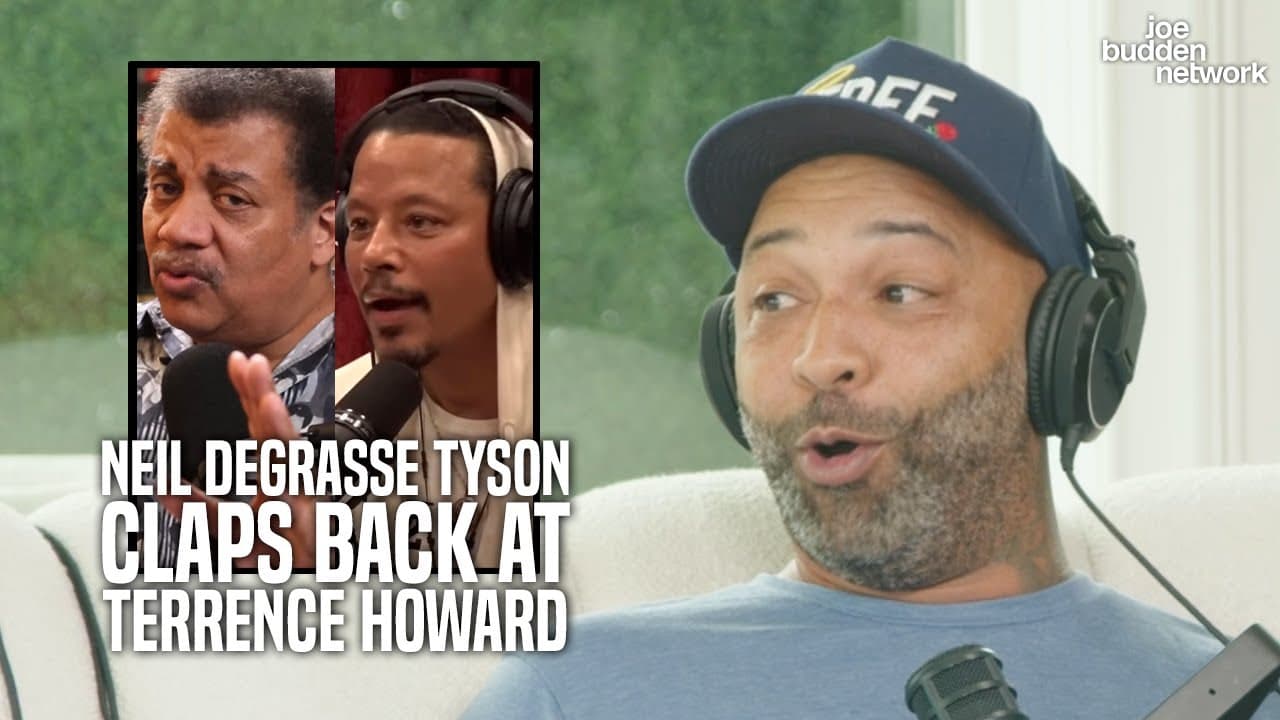
Neil deGrasse Tyson calmly critiques Terence Howard's thesis, emphasizing the importance of peer review in scientific discourse. While Howard offers artistic interpretations, Tyson maintains a focus on empirical evidence, showcasing a clear distinction between scientific rigor and speculative ideas. Their exchange highlights the need for effective communication between scientific principles and more metaphysical perspectives.
Transcript
oh you see Neil degrass Neil degrass Tyson's clapback yes I did that was hilarious at Terence hour he ether them real quick Neil degrass is [ __ ] and he didn't have to use no weird words he amazing he was very polite very polite very calm that's funny kill him soft just a nice 17 minutes yeah yeah of hey I'm going to do you do guys a favor and sho... Read More
Key Insights
- 👨🔬 Neil deGrasse Tyson advocates for scientific rigor and peer review as crucial elements of valid research.
- 💡 Terence Howard's approach blends artistic interpretation with scientific ideas, creating a more speculative discussion.
- 😒 The use of humor in Tyson's critique softens the tone, making complex scientific discussions more accessible.
- ❓ The importance of evolving scientific theories underscores the dynamic nature of knowledge and understanding.
- 🤑 A clear line exists between rigorous scientific methodology and more subjective, personal beliefs, which can lead to rich dialogue.
- 😀 The conversation reveals the challenges scientists face when confronting unconventional theories in public discourse.
- 🧑🔬 Effective communication between scientists and non-scientists is essential for bridging understanding and advancing knowledge.
- 🎙️ More videos with Terrence Howard:
Install to Summarize YouTube Videos and Get Transcripts
Explore YouTube Video Summarizer or Get YouTube Transcript Extractor
Questions & Answers
Q: What was the main topic of the debate between Neil deGrasse Tyson and Terence Howard?
The debate focused on Terence Howard's theories regarding science and the universe, which he presented in a lengthy thesis. Neil deGrasse Tyson critiqued these theories primarily by emphasizing the role of peer review in validating scientific ideas and the importance of grounding theories in empirical evidence.
Q: How did Neil deGrasse Tyson respond to Terence Howard's thesis?
Tyson responded to Howard's thesis by reviewing its content point-by-point, highlighting areas where he felt the theories were flawed or lacked rigorous scientific backing. He did this calmly and politely, aiming to educate rather than belittle, while ensuring that Howard understood the scientific method's nuances.
Q: What is the significance of peer review according to Tyson?
Peer review is significant because it ensures that a theory or research is assessed by those with expertise in the field. It serves to identify flaws or weaknesses and provides constructive criticism, which is essential for advancing scientific knowledge, ensuring that only well-supported ideas are taken seriously.
Q: How did the conversation address the tension between scientific evidence and personal beliefs?
The conversation illustrated the tension between Tyson's emphasis on empirical evidence and Howard's more speculative thinking, particularly on topics like astrology and life after death. Tyson's insistence on scientific reasoning highlighted how subjective beliefs can clash with scientific theories, creating a discussion that calls for respect for diverse perspectives.
Q: What did Tyson say about scientific theories and the evolving nature of knowledge?
Tyson discussed that scientific theories are not immutable and often change with new evidence and tools. He pointed out the importance of keeping an open mind as knowledge evolves, illustrating that even established ideas have the potential to be debunked or refined as new discoveries are made.
Q: How do the views of Tyson and Howard differ when it comes to unconventional theories like Flat Earth?
Tyson takes a fact-based, evidence-driven approach, firmly rejecting theories like Flat Earth as lacking scientific support. In contrast, Howard seems open to discussing and exploring unconventional ideas, illustrating a philosophical divide regarding the validity of ideas that deviate from established scientific consensus.
Summary & Key Takeaways
-
Neil deGrasse Tyson delivered a calm and polite critique of Terence Howard's 38-page thesis, emphasizing the importance of peer review in scientific work.
-
The conversation highlighted the differences between scientific thinking and more metaphysical or artistic viewpoints brought up by Howard, with Tyson maintaining a factual approach.
-
The discussion also touched on broader themes regarding scientific theories, evolving knowledge, and the distinction between speculative ideas and empirical evidence.
Read in Other Languages (beta)
Share This Summary 📚
Summarize YouTube Videos and Get Video Transcripts with 1-Click
Try YouTube Summary with ChatGPT & Claude or YouTube Transcript Generator
Explore More Summaries from Joe Budden TV 📚


Summarize YouTube Videos and Get Video Transcripts with 1-Click
Try YouTube Summary with ChatGPT & Claude or YouTube Transcript Generator