How to Improve Your Drawing with Lineweight Techniques
TL;DR
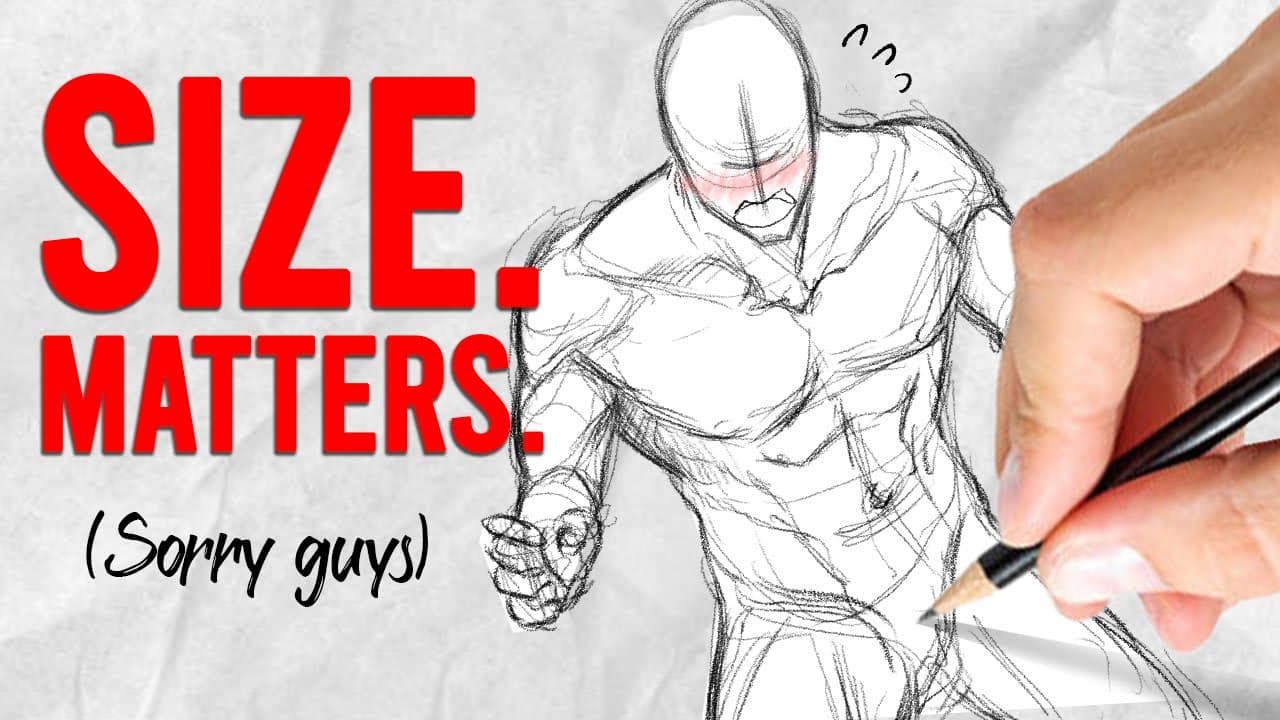
To enhance your drawing skills, focus on using appropriate lineweight and drawing at a larger scale. This allows for better detail and helps identify mistakes, leading to a more professional look. Begin by varying line thickness intentionally to add depth, and practice with simpler subjects to build confidence.
Transcript
Guuys ~ Guys, wake up! It's time for aNOTHER TUTORIALLL ~ Let's learn how to DRAAAW LIKE A SIR, ONCE AGAINNN ~
Yeah, I admit, if you're not really advanced when it comes to art.. today's topic can be … kinda painful-
In the last couple of months I traveled a lot! I visited a lot of conventions, held a lot of workshops, made a lot of... Read More
Key Insights
- 🥺 Many beginners struggle with artwork scale due to insecurity, leading to smaller drawings that hinder progress.
- 👻 Drawing larger allows for better detail work and helps in spotting and correcting mistakes, thus enhancing skill development.
- 👀 Varying lineweight is essential for creating a sophisticated look, transforming simple sketches into professional pieces.
- 🫥 Thickening lines should be done thoughtfully, using shading principles to enhance depth rather than arbitrarily.
- 👾 Online learning platforms like Skillshare offer vast resources for artists to learn at their own pace and across various subjects.
- 🆘 Understanding anatomy can significantly improve the realism and detail in human figures, helping to refine linework further.
- 🏛️ Practicing with simplified subjects can build confidence in applying lineweight techniques before tackling more complex drawings.
Install to Summarize YouTube Videos and Get Transcripts
Explore YouTube Video Summarizer or Get YouTube Transcript Extractor
Questions & Answers
Q: Why is drawing small considered a poor habit for beginners?
Drawing small often stems from insecurity, as it allows beginners to hide mistakes and avoid significant detail work. However, this is ultimately a hindrance to learning and improvement in art. Larger drawings encourage artists to confront and learn from their mistakes, allowing for growth and better artistic skills.
Q: How does lineweight affect the perception of an artwork?
Lineweight plays a crucial role in defining the character and professionalism of an artwork. A piece with varying line weights appears more sophisticated and lively, while uniform thickness can make it look amateurish. Emphasizing delicate lines and practicing with larger canvases allows artists to explore this element effectively.
Q: What is a recommended strategy for improving linework in drawings?
One effective strategy is to approach line thickening with intent, treating thicker lines as shadows influenced by a light source. This will help to develop a sense of depth and improve the overall look of the artwork. Practicing this technique can enhance the visual appeal and complexity of a drawing.
Q: What are some other areas covered in the online art classes mentioned?
The online classes available on Skillshare encompass various topics, including not just drawing, but also photography, painting, animation, and writing. Whether you are a beginner or looking to refine professional skills, these classes provide valuable insights and techniques across multiple creative fields.
Summary & Key Takeaways
-
The video emphasizes the importance of drawing at a larger scale to enhance accuracy and detail, as many beginners tend to draw small due to insecurity.
-
Lineweight is highlighted as a key element that can dramatically change the appearance of artwork, particularly in achieving a professional look.
-
The content includes practical tips on thickening lines strategically, comparing the visual impact of different line weights and how they contribute to a drawing's sophistication.
Read in Other Languages (beta)
Share This Summary 📚
Summarize YouTube Videos and Get Video Transcripts with 1-Click
Try YouTube Summary with ChatGPT & Claude or YouTube Transcript Generator
Explore More Summaries from Draw like a Sir 📚

Summarize YouTube Videos and Get Video Transcripts with 1-Click
Try YouTube Summary with ChatGPT & Claude or YouTube Transcript Generator