How to Make Glow Sticks Using Chemiluminescence
TL;DR
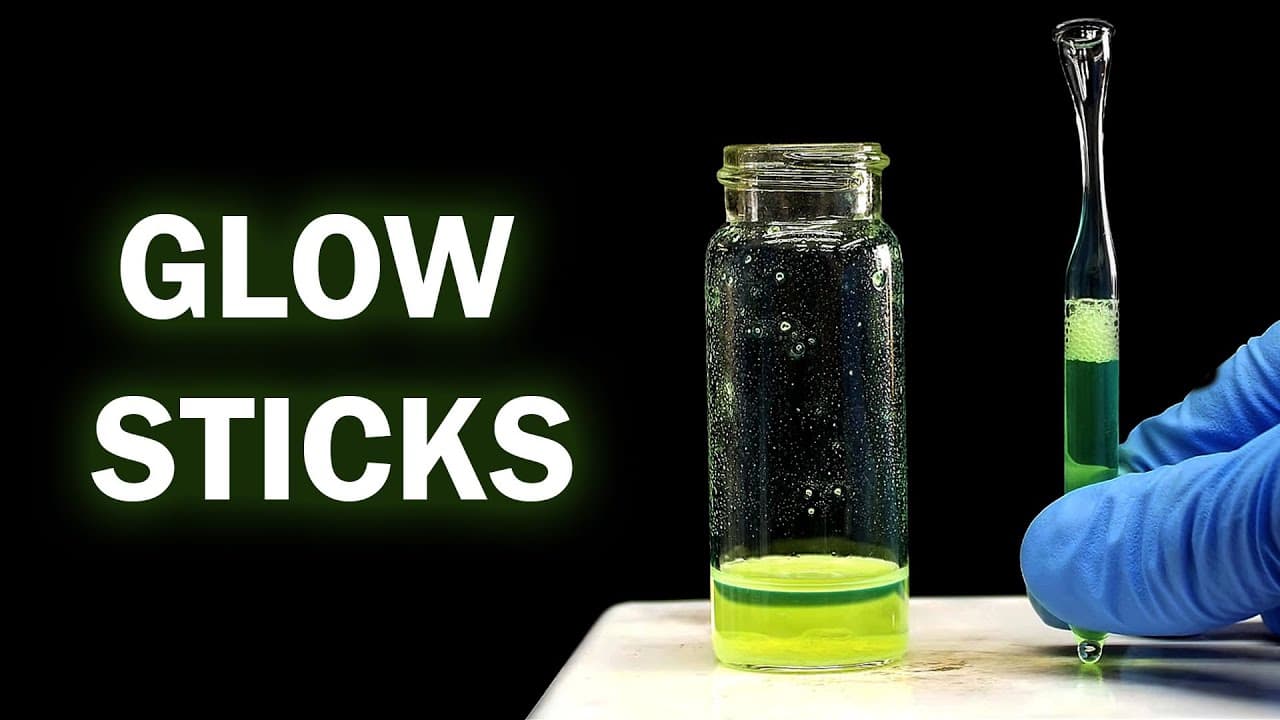
To make glow sticks, you combine Bis(2,4,6-trichlorophenyl) oxalate (TCPO) with a fluorescent dye and an oxidizing agent, like hydrogen peroxide. The glow occurs due to chemiluminescence, a chemical reaction where the excited dye molecules release light. The color of the glow depends on the specific dye used, allowing for customization by mixing different dyes.
Transcript
This video is sponsored by The Great Courses Plus, an excellent online learning service that offers high quality courses, in a wide range of topics. Today I'll be making some glow sticks, which are a good everyday example of chemiluminescence. In simple terms chemiluminescence is the release of light as a result of a chemical reaction. A f... Read More
Key Insights
- 🙂 Chemiluminescence is the process by which glow sticks produce light through a chemical reaction.
- 🌟 The color of the glow in glow sticks is determined by the fluorescent dye used.
- 💋 Glow sticks can be made using diphenyl oxalate esters as the core structure.
- 💋 Water sensitivity affects the yield of glow stick production.
- 💋 TCPO (Bis(2,4,6-trichlorophenyl)oxalate) is a common compound used in glow sticks.
- 🥶 Solvents and reagents used should be as water-free as possible for optimal glow stick production.
- 💋 Washing with water helps separate triethylamine hydrochloride from TCPO in glow stick production.
Install to Summarize YouTube Videos and Get Transcripts
Explore YouTube Video Summarizer or Get YouTube Transcript Extractor
Questions & Answers
Q: What is chemiluminescence?
Chemiluminescence is the release of light as a result of a chemical reaction. It is seen in everyday items like glow sticks.
Q: How do glow sticks work?
Glow sticks contain two separate chemicals that, when mixed, undergo a reaction that releases light. The color of the light depends on the fluorescent dye used.
Q: Can different colors be produced with glow sticks?
Yes, different colors can be achieved with glow sticks by using different fluorescent dyes. Mixing dyes together can also create new colors.
Q: What determines the duration of the glow in glow sticks?
The solvent used in glow sticks affects the duration of the glow. Ethyl acetate gives a glow that lasts for several minutes, while diethyl phthalate can make it last for several hours.
Summary & Key Takeaways
-
Glow sticks are everyday examples of chemiluminescence, where a chemical reaction produces light.
-
Glow sticks contain two chemical mixtures that are separated, and when mixed, a reaction occurs, leading to the release of light.
-
The color of glow sticks depends on the fluorescent dye used, and different dyes can be mixed to create new colors.
Read in Other Languages (beta)
Share This Summary 📚
Summarize YouTube Videos and Get Video Transcripts with 1-Click
Try YouTube Summary with ChatGPT & Claude or YouTube Transcript Generator
Explore More Summaries from NileRed 📚
Summarize YouTube Videos and Get Video Transcripts with 1-Click
Try YouTube Summary with ChatGPT & Claude or YouTube Transcript Generator