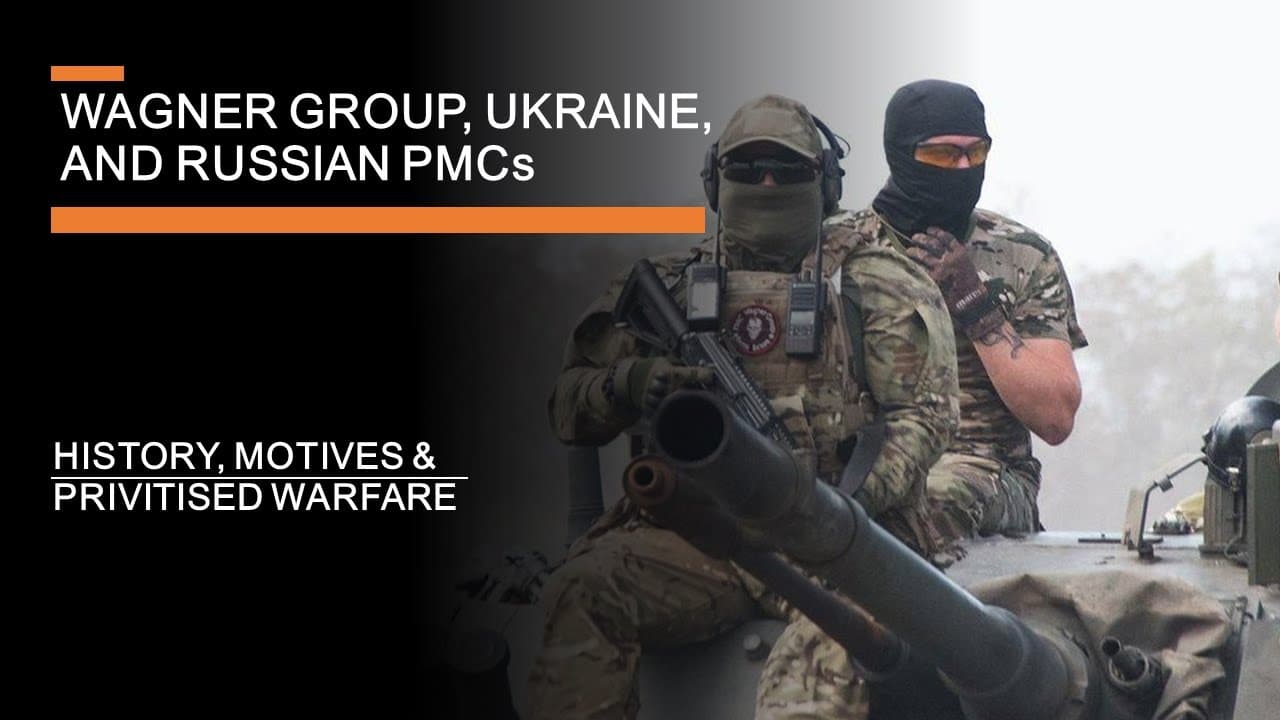
Wagner Group, Russian PMCs & Ukraine - History, motives & privatised warfare
TL;DR
Russian Private Military Companies (PMCs), like Wagner Group, have become powerful tools for the Russian government to achieve its objectives while maintaining deniability. They have been deployed in various conflicts worldwide and their involvement in Ukraine highlights their growing influence.
Transcript
While the details are lost to history, mercenary is probably one of humankind's oldest professions. Presumably at some point after humans figured out that using a spear to stab something was safer and more effective than using your hands, someone else would have pretty quickly figured out that it's even safer again to pay someone else to do th... Read More
Key Insights
- 🔨 Russian PMCs, particularly Wagner Group, have become significant tools for the Russian government to achieve its objectives while maintaining deniability.
- 💗 Wagner's deployments to conflicts in Ukraine, Syria, Libya, Sudan, and Mozambique highlight its growing influence and the connection between resource concessions and PMC involvement.
- 🤨 The success of PMCs like Wagner raises questions about the capabilities and effectiveness of the conventional Russian military.
- 🎖️ Wagner's involvement in Ukraine showcases the challenges and tensions between state-sponsored PMCs and the regular military.
Install to Summarize YouTube Videos and Get Transcripts
Explore YouTube Video Summarizer or Get YouTube Transcript Extractor
Questions & Answers
Q: What is the historical context of mercenary companies and PMCs?
Mercenary companies have a long history and were often employed when nations lacked a strong military or required specialized capabilities. However, national militaries became dominant over time due to changes in equipment, tactics, and logistics.
Q: How do Russian PMCs differ from their Western counterparts?
Russian PMCs, like Wagner Group, are often more willing to engage in direct combat and blur the line between PMC and conventional military. They are also closely tied to the Russian state, with evidence suggesting they operate in coordination with the Russian military.
Q: What are the main roles of Russian PMCs?
Russian PMCs fulfill a range of roles, including training, combat support, intelligence, and reconnaissance. They also provide protective services for government officials and are involved in site security, propaganda, and disinformation operations.
Q: What are the implications of Wagner's deployments to conflicts in Africa, Syria, and Ukraine?
Wagner's deployments serve multiple purposes. They allow Russia to project military power and influence events abroad, secure resource concessions, counter Western influence, and reward influential leaders or power blocks. However, their involvement often fails to achieve decisive victories and results in human rights abuses.
Summary & Key Takeaways
-
Mercenary companies and PMCs have been present throughout history, but national militaries replaced them as the primary military power.
-
Russian PMCs, like Wagner Group, have experienced a resurgence, primarily due to their ability to operate in a deniable manner and fulfill a range of roles.
-
Wagner Group has been involved in conflicts in Syria, Libya, Sudan, Mozambique, and Ukraine, often securing resource concessions for financial gain.
-
Their deployments in Ukraine highlight their increasing importance and the challenges they pose to conventional Russian military forces.
Read in Other Languages (beta)
Share This Summary 📚
Summarize YouTube Videos and Get Video Transcripts with 1-Click
Try YouTube Summary with ChatGPT & Claude or YouTube Transcript Generator
Explore More Summaries from Perun 📚
Summarize YouTube Videos and Get Video Transcripts with 1-Click
Try YouTube Summary with ChatGPT & Claude or YouTube Transcript Generator