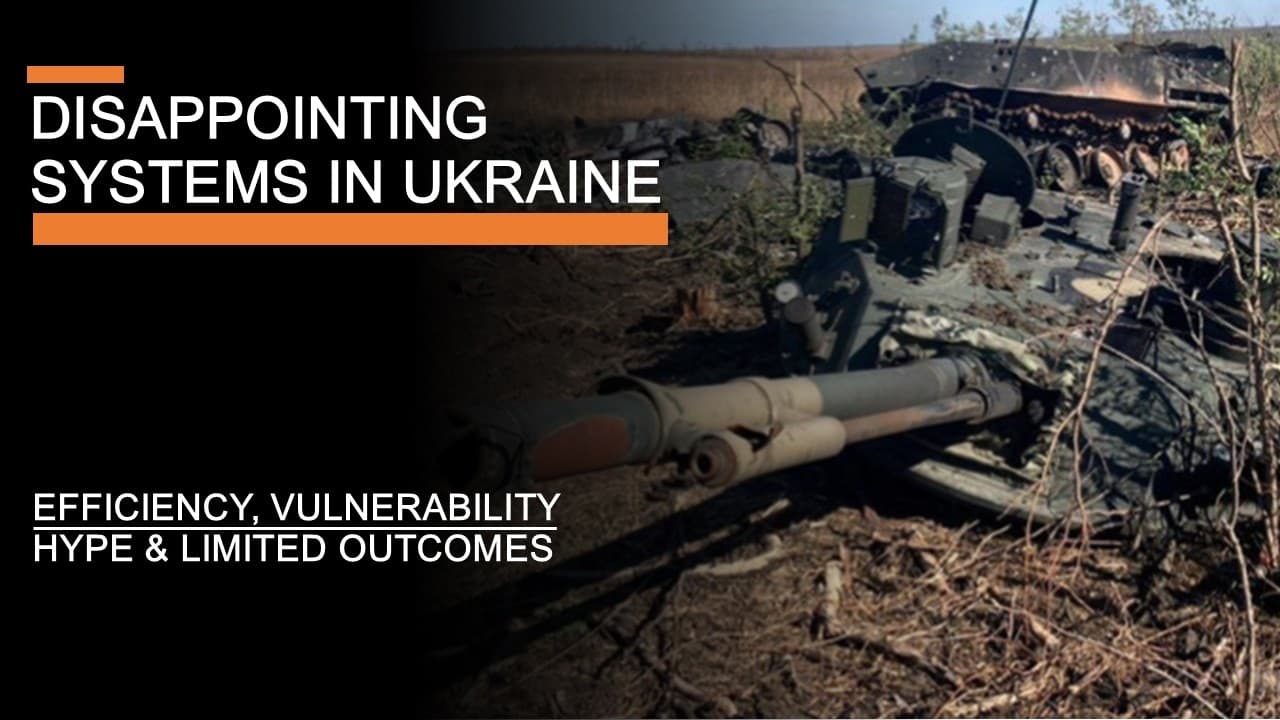
Disappointing Systems in Ukraine - From imprecise precision munitions to explosive IFVs
TL;DR
Some military systems in Ukraine are not meeting expectations.
Transcript
Over the course of more than 2.5 years in Ukraine, a lot of energy has been spent hyping up potential "game-changer" systems. And in two previous episodes we have looked at systems that have either attracted that label or might deserve it anyway. But while we've talked a lot about effective and efficient systems like ... Read More
Key Insights
- Precision weapons like Excalibur and GLSDB have struggled in Ukraine due to effective Russian electronic warfare, significantly reducing their effectiveness and increasing their operational costs.
- Russian airborne forces, specifically the VDV, face challenges with their specialized equipment like the BMD-4, which has proven vulnerable and costly in Ukraine's combat environment.
- Attack helicopters, despite their potential, have suffered high attrition rates and limited effectiveness in Ukraine, raising questions about their future role and cost-efficiency.
- The changing nature of warfare, with increased drone and electronic warfare capabilities, is challenging traditional military investments and prompting reevaluation of future defense strategies.
- Russia's adaptation to Western systems through electronic warfare has highlighted vulnerabilities in non-EW resistant precision-guided munitions, impacting their battlefield utility.
- The potential for large-scale airborne operations, such as paratrooper deployments, appears increasingly limited in modern peer conflicts, questioning the investment in specialized airborne capabilities.
- The financial and operational costs of maintaining a large fleet of attack helicopters are being scrutinized, especially when compared to alternative systems like fixed-wing aircraft and drones.
- The evolving threat landscape, including advanced MANPADS and drones, poses new challenges for traditional military assets like helicopters, necessitating strategic reassessment.
Install to Summarize YouTube Videos and Get Transcripts
Explore YouTube Video Summarizer or Get YouTube Transcript Extractor
Questions & Answers
Q: Why have precision weapons like Excalibur struggled in Ukraine?
Precision weapons such as Excalibur have faced challenges in Ukraine due to effective Russian electronic warfare. This has significantly reduced their accuracy and effectiveness, leading to increased operational costs as more munitions are needed to achieve successful strikes. The electronic interference disrupts the weapons' guidance systems, highlighting a vulnerability in non-EW resistant precision-guided munitions.
Q: What issues have Russian airborne forces encountered with their equipment?
Russian airborne forces, particularly the VDV, have encountered issues with their specialized equipment like the BMD-4. These vehicles, designed for parachute deployment, have proven vulnerable and costly in Ukraine's combat environment. The BMD-4's light armor and high explosive load make it susceptible to catastrophic destruction, raising questions about the viability of such specialized airborne capabilities in modern warfare.
Q: How have attack helicopters performed in the Ukrainian conflict?
Attack helicopters have faced significant challenges in Ukraine, suffering high attrition rates and limited effectiveness. The threat from advanced air defense systems and MANPADS has restricted their operational freedom, forcing them to adopt cautious tactics. Despite their potential for flexibility and firepower, the high costs and vulnerabilities have prompted a reevaluation of their role and investment in future military strategies.
Q: What impact has the changing nature of warfare had on military investments?
The changing nature of warfare, characterized by increased drone and electronic warfare capabilities, has challenged traditional military investments. Systems like precision-guided munitions and attack helicopters face new threats and vulnerabilities. This has prompted a strategic reassessment, focusing on adaptable and resilient systems that can operate effectively in modern peer conflicts, impacting future defense procurement and investment decisions.
Q: How has Russia adapted to Western military systems in Ukraine?
Russia has effectively adapted to Western military systems in Ukraine through the use of electronic warfare. This adaptation has exposed vulnerabilities in non-EW resistant precision-guided munitions, such as Excalibur and GLSDB, reducing their battlefield utility. By jamming navigation systems, Russia has increased the operational costs of these weapons, prompting a reevaluation of their effectiveness and future use.
Q: What are the limitations of large-scale airborne operations in modern conflicts?
Large-scale airborne operations, such as paratrooper deployments, face increasing limitations in modern conflicts. The vulnerability of slow, large transport aircraft to advanced air defenses and the specialized nature of airborne equipment make such operations risky and costly. The Ukrainian experience suggests that the investment in such capabilities may not be justified given the changing threat landscape and the availability of alternative strategies.
Q: Why is the investment in attack helicopters being scrutinized?
The investment in attack helicopters is being scrutinized due to their high financial and operational costs compared to alternative systems. In Ukraine, attack helicopters have faced high attrition rates and limited effectiveness against advanced air defenses. The availability of more cost-effective and versatile alternatives, such as fixed-wing aircraft and drones, is leading to questions about the future role and investment in attack helicopter fleets.
Q: What challenges do advanced MANPADS and drones pose to traditional military assets?
Advanced MANPADS and drones pose significant challenges to traditional military assets like helicopters. These systems increase the threat level on the battlefield, requiring helicopters to operate with caution or risk high losses. The evolving threat landscape necessitates strategic reassessment, focusing on systems that can effectively counter these new challenges and maintain operational effectiveness in peer or near-peer conflicts.
Summary & Key Takeaways
-
In Ukraine, certain military systems have underperformed, notably precision weapons and airborne vehicles, due to effective electronic warfare and battlefield conditions. This has prompted a reevaluation of their utility and cost-efficiency.
-
Russian airborne units and attack helicopters have faced significant challenges, with high losses and limited success, leading to questions about the future investment in such systems given the changing nature of warfare.
-
The experience in Ukraine highlights the need for adaptable and resilient military systems, as traditional assets face new threats from advanced electronic warfare and drone technology, impacting future defense strategies.
Read in Other Languages (beta)
Share This Summary 📚
Summarize YouTube Videos and Get Video Transcripts with 1-Click
Try YouTube Summary with ChatGPT & Claude or YouTube Transcript Generator
Explore More Summaries from Perun 📚



Summarize YouTube Videos and Get Video Transcripts with 1-Click
Try YouTube Summary with ChatGPT & Claude or YouTube Transcript Generator