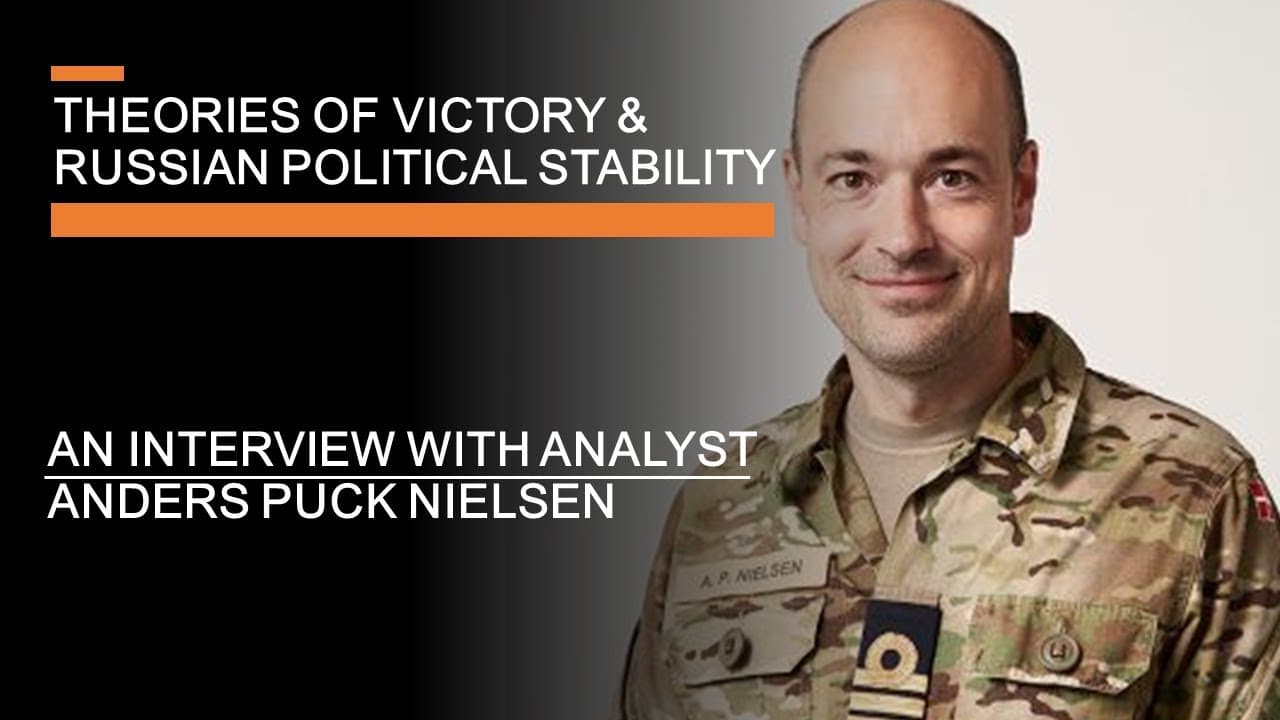
Theories of Victory & Russian Political Stability - Interviewing Anders Puck Nielsen
TL;DR
Understanding the theories of victory in the ongoing war in Ukraine is key to predicting the future progress of the conflict, along with considering the social and political factors that shape the way Russia and Ukraine choose to fight.
Transcript
[Perun] Trying to explain what is happening in an ongoing war can be difficult. Predicting what might happen next, that's even harder. One way we can attempt to determine that is to assess the theory of victories in play on each side. That is what is each side trying to achieve, and broadly speaking what is their theory on how to get there? Is... Read More
Key Insights
- 🙌 "Understanding the theory of victory is essential in assessing ongoing conflicts like the war in Ukraine. Each side has its own objectives and strategies to achieve them."
- 🛡️ "Material and quantitative factors are crucial in assessing the war effort, but social and political considerations cannot be overlooked. Government stability and the will to fight are equally important in determining victory."
- 👥 "Russia's theory of victory in Ukraine is centered around defending against a long-term threat from the West and restoring its place as a great power. Ukraine aims to regain all territory and secure political independence."
- 💪 "Ukraine is employing a slow and deliberate style of fighting, combining attrition and small deliberate advances to gradually grind Russia back to its original positions."
- ✨ "Ukraine's strategy also involves destabilizing the Russian government and increasing domestic pressure. Drones attacks in Moscow aim to undermine the war effort and force Russia to allocate air defense to its capital."
- ⚖️ "Political instability in Russia may come in the form of public protests, internal power struggles, or both. Signs to look for include crackdowns on protests, attempts to maintain control, and discussions about a post-Putin world."
- 🔍 "In creating instabilities, Ukraine can focus on highlighting corruption and incompetence within the Russian system, appealing to ultra-nationalists, and encouraging popular protests."
- 💡 "To effectively implement these strategies, Ukraine will need a combination of military capabilities, diplomatic efforts, and support from the Western partners. Building a capable air force and maintaining pressure on multiple fronts will be key."
Install to Summarize YouTube Videos and Get Transcripts
Explore YouTube Video Summarizer or Get YouTube Transcript Extractor
Questions & Answers
Q: How does Russia view the war in Ukraine in terms of its long-term goals?
From the Russian perspective, the war in Ukraine is seen as an existential struggle against the West, with Russia aiming to defend itself against a long-term threat and secure its place as a great power in the world order. Russia's theory of victory involves reversing the trend of Western influence and moving towards a multi-polar system.
Q: What are the potential consequences of Ukraine's slow and deliberate style of fighting?
Ukraine's slow and deliberate style of fighting aims to gradually regain territory and push Russian forces out. However, this approach relies on attrition, which is demanding in terms of resources. It remains to be seen whether the strategy will be sustainable as the conflict continues and whether Ukraine's military losses can be balanced by its long-term build-up of military capability.
Q: What are some signs of political instability in Russia to watch for?
Signs of political instability in Russia may include increased crackdowns on protests, efforts to control information flow, and visible shifts in the Russian political system, such as changes in leadership or divisions within the elite. Public protests and discussions about a future without Putin can also indicate growing instability.
Q: What strategies can Ukraine employ to create political instability in Russia?
Ukraine can employ strategies such as carrying out drone attacks to pressure the Russian government and divert air defense resources, undermining the perception that the war is under control. Destabilizing Russia politically, both through external pressures and by highlighting inadequacies in the Russian system, can also contribute to creating instabilities.
Summary & Key Takeaways
-
The war in Ukraine is driven by different theories of victory on both sides, with Russia viewing the conflict as an existential struggle against the West, while Ukraine aims to regain its territory and secure political independence and security guarantees from NATO.
-
Russia's theory of victory is undermined by limited resources and the potential for its political stability to be threatened by the war, while Ukraine relies on attritional warfare and destabilizing Russia politically to achieve its goals.
-
The Russian population is divided into anti-war liberals, ultra-nationalists, and the majority who are de-politicized, but political dynamics within the Russian system, including informal structures and competition between different groups, make it difficult to assess stability.
-
Ukraine's strategies include slowly grinding Russia back to its original positions and destabilizing Russia politically, with drone attacks as a means to pressure the Russian government and allocate air defense resources.
Read in Other Languages (beta)
Share This Summary 📚
Summarize YouTube Videos and Get Video Transcripts with 1-Click
Try YouTube Summary with ChatGPT & Claude or YouTube Transcript Generator
Explore More Summaries from Perun 📚
Summarize YouTube Videos and Get Video Transcripts with 1-Click
Try YouTube Summary with ChatGPT & Claude or YouTube Transcript Generator