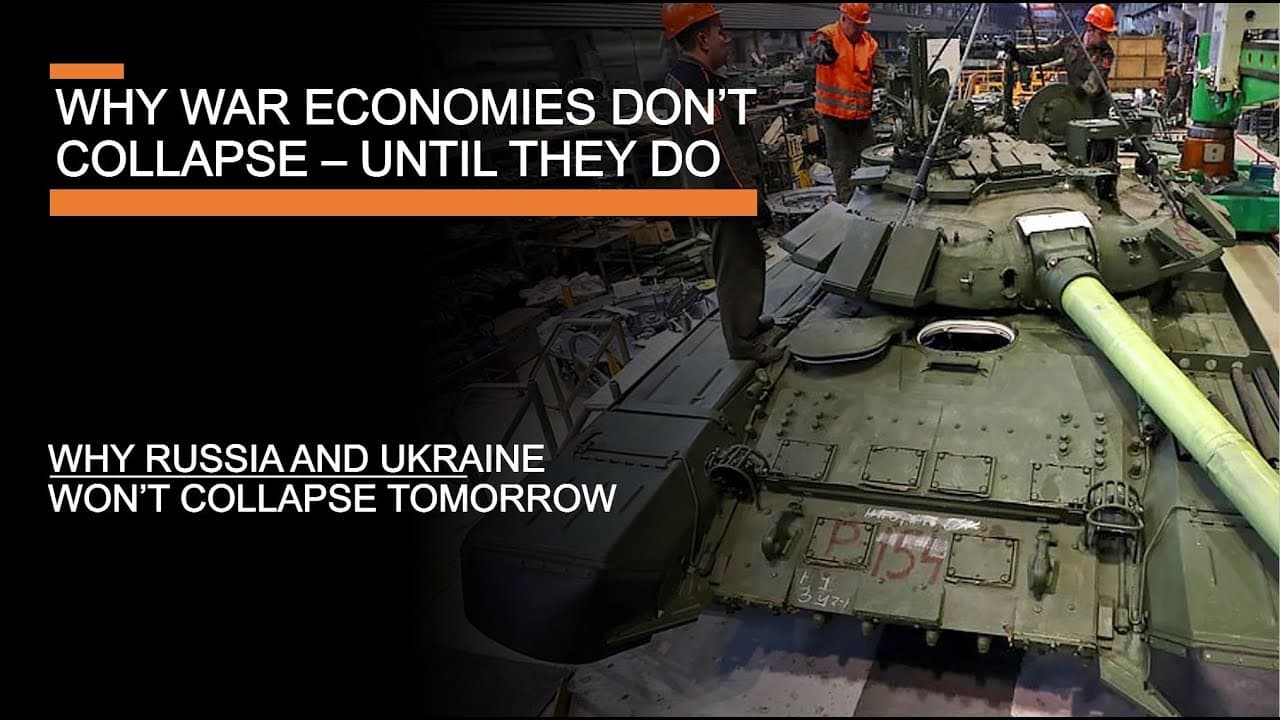
Why War Economies don't collapse (until they do) - why Russia and Ukraine won't collapse tomorrow
TL;DR
Despite the high costs and challenges of war, nations are able to endure and sustain their economies through various measures such as mobilization, resource allocation, and economic interventions.
Transcript
Throughout history, few things have been more commonly predicted (and more rarely eventuated) than a short war. Often that assumption is built on the idea that because war is so ruinously expensive, no state could possibly carry one on for long. Indeed it's reported that after the invasion commenced many officials at the Russian Central Bank qu... Read More
Key Insights
- 🫱 War economies are characterized by the conversion of peacetime resources and assets toward the production of war materials.
- 🧡 Governments employ a range of measures, including borrowing, resource allocation, labor mobilization, and price controls, to sustain war economies.
- 🫱 War economies can endure despite considerable economic strain by temporarily papering over challenges, deferring costs to the future, and adjusting resource allocation.
Install to Summarize YouTube Videos and Get Transcripts
Explore YouTube Video Summarizer or Get YouTube Transcript Extractor
Questions & Answers
Q: How do war economies manage to sustain themselves despite the high costs involved?
War economies endure through mobilization efforts, including the redirection of resources, capital, and labor towards the production of war materials. Governments may also resort to borrowing, monetary policies, and labor regulations to support their war efforts.
Q: What are some ways in which nations raise funds for war?
Nations can finance war through various means, including borrowing from foreign entities, issuing war bonds, appropriating assets, and implementing price controls. They may also rely on monetizing the war effort by printing more money.
Q: Do war economies impact the civilian population?
War economies often result in sacrifices and reduced living standards for the civilian population. Governments may implement measures such as rationing or production shifts to redirect resources towards the war effort, leading to shortages and changes in daily life for civilians.
Q: Can war economies collapse despite attempts to sustain them?
While war economies can endure through various interventions, collapses can occur if nations are overwhelmingly defeated, critical resources are depleted, or the population loses the will to carry on the war effort.
Key Insights:
- War economies are characterized by the conversion of peacetime resources and assets toward the production of war materials.
- Governments employ a range of measures, including borrowing, resource allocation, labor mobilization, and price controls, to sustain war economies.
- War economies can endure despite considerable economic strain by temporarily papering over challenges, deferring costs to the future, and adjusting resource allocation.
- Collapse of a war economy can occur due to military defeat, functional collapse, capitulation, or revolution when the population or government is no longer willing to sustain the war effort.
Summary & Key Takeaways
-
Throughout history, war economies have defied predictions of quick collapse, with nations like Russia and Ukraine sustaining their economies despite ongoing conflict.
-
War economies involve the conversion of peacetime resources and assets toward the production of war materials and combat power.
-
Governments employ various strategies, such as borrowing, monetary tools, and labor mobilization, to ensure the continuation of war efforts.
Read in Other Languages (beta)
Share This Summary 📚
Summarize YouTube Videos and Get Video Transcripts with 1-Click
Try YouTube Summary with ChatGPT & Claude or YouTube Transcript Generator
Explore More Summaries from Perun 📚

Summarize YouTube Videos and Get Video Transcripts with 1-Click
Try YouTube Summary with ChatGPT & Claude or YouTube Transcript Generator