Russia's attacks on Ukrainian infrastructure - does strategic bombing ever work?
TL;DR
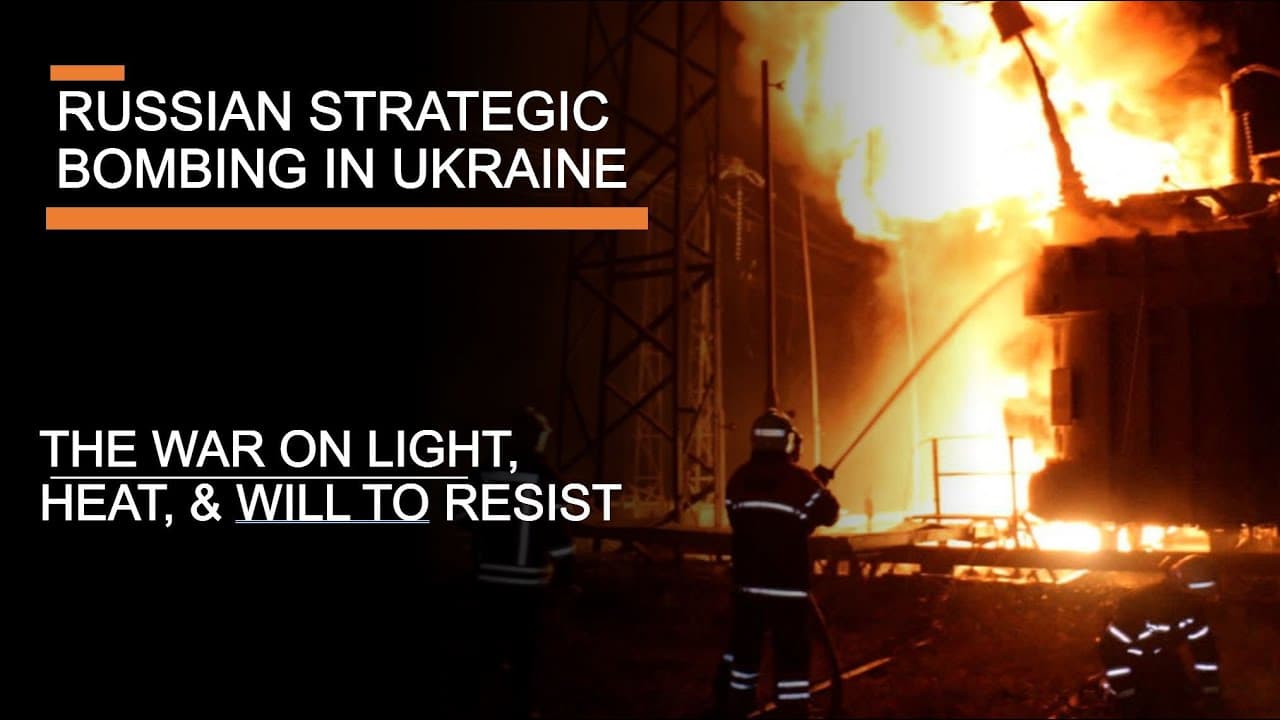
The Russian missile campaign in Ukraine has shifted towards targeting civilian infrastructure, but historically, strategic bombing has had limited success in disrupting a country's ability to fight and undermining civilian morale.
Transcript
In the opening stages of their invasion Russian missile systems hit a variety of Ukrainian target types, air bases, ground-based air defence installations, training bases, command and control facilities for the military, reserve and concentration bases, the list went on. There were hits on civilian structures, many of them. But generally speak... Read More
Key Insights
- 💣 Russian missile attacks in Ukraine have shifted from military to civilian infrastructure, particularly the power grid, in an attempt to destroy civilian morale and force a concession. However, historical evidence suggests that strategic bombing is unlikely to break civilian morale and make people surrender.
- 💥 Strategic bombing during World War II did not substantially affect the course of the German war production, and attacks on specific targets had little impact on German war production. There is no evidence to suggest that strategic bombing significantly disrupts industrial production in a sustained manner.
- 💥 Attacks on transportation infrastructure, such as rail centers, can impact mobility and hinder movement of military forces. However, historical evidence suggests that rail infrastructure can be quickly repaired, and alternative means of transportation can be used to overcome disruptions.
- 💡 Morale is difficult to destroy and people are generally resilient in the face of bombing. Despite extensive strategic bombing, civilian morale held in Germany, Japan, Korea, and Vietnam. Ukrainians remain confident in their ability to win the war, and bombing is unlikely to change that unless the Russians can convince them otherwise. ⏳ The sustainability of the Russian bombing campaign depends on the availability of missiles and the ability to repair and replace infrastructure and equipment. While Russia may deplete its missile stockpile over time, they can still sustain the attacks on a reduced scale. However, the sustainability of the Ukrainian defense efforts is also a factor, and their ability to repair infrastructure and receive support from the West will influence the outcome.
Install to Summarize YouTube Videos and Get Transcripts
Explore YouTube Video Summarizer or Get YouTube Transcript Extractor
Questions & Answers
Q: What are the main reasons behind the Russian shift towards targeting civilian infrastructure in Ukraine?
The Russian targeting of civilian infrastructure in Ukraine may have been driven by domestic politics, military aims to disrupt Ukrainian troop movements, strategic objectives to break civilian morale, or to divert Ukrainian air defense assets from the front line.
Q: How does strategic bombing impact a country's industrial production during wartime?
Strategic bombing can disrupt industrial production, but the impact depends on various factors such as the type of target, dispersed sites, production dependencies, and the hardness of production materials. It requires sustained attacks and precise targeting to significantly impact a country's productive capacity.
Q: Does strategic bombing effectively inhibit a country's military potential?
Strategic bombing has limited success in inhibiting military potential as targets can be repaired and alternative modes of transportation can be used. Defending against air attacks can also be expensive for a country, diverting resources from the front line.
Q: How does strategic bombing impact civilian morale during war?
Civilian morale is difficult to destroy, and historical examples show that populations tend to become more resilient and determined in the face of bombing. Ukrainians have shown a strong belief in victory, and strategic bombing is unlikely to change that as long as they remain confident in their ability to win.
Summary & Key Takeaways
-
The Russian missile campaign in Ukraine has initially targeted military installations but has shifted towards the destruction of civilian infrastructure, particularly the power grid.
-
Strategic bombing, aimed at destroying a country's ability and willingness to fight, has a long history and mixed success.
-
While strategic bombing can disrupt industrial production, it is difficult to completely eliminate a country's productive capacity.
-
Strategic bombing has had limited success in inhibiting military potential as targets can be repaired or alternative modes of transportation can be used.
-
Civilian morale is difficult to destroy, and historical examples, such as World War II, Korea, and Vietnam, show that populations are resilient and continue to fight.
-
The sustainability of the Russian bombing campaign and Ukraine's defense efforts is uncertain, but the belief in victory among Ukrainians remains strong.
Read in Other Languages (beta)
Share This Summary 📚
Summarize YouTube Videos and Get Video Transcripts with 1-Click
Try YouTube Summary with ChatGPT & Claude or YouTube Transcript Generator
Explore More Summaries from Perun 📚





Summarize YouTube Videos and Get Video Transcripts with 1-Click
Try YouTube Summary with ChatGPT & Claude or YouTube Transcript Generator