The Naval War in Ukraine - The Moskva, Missiles & Lessons
TL;DR
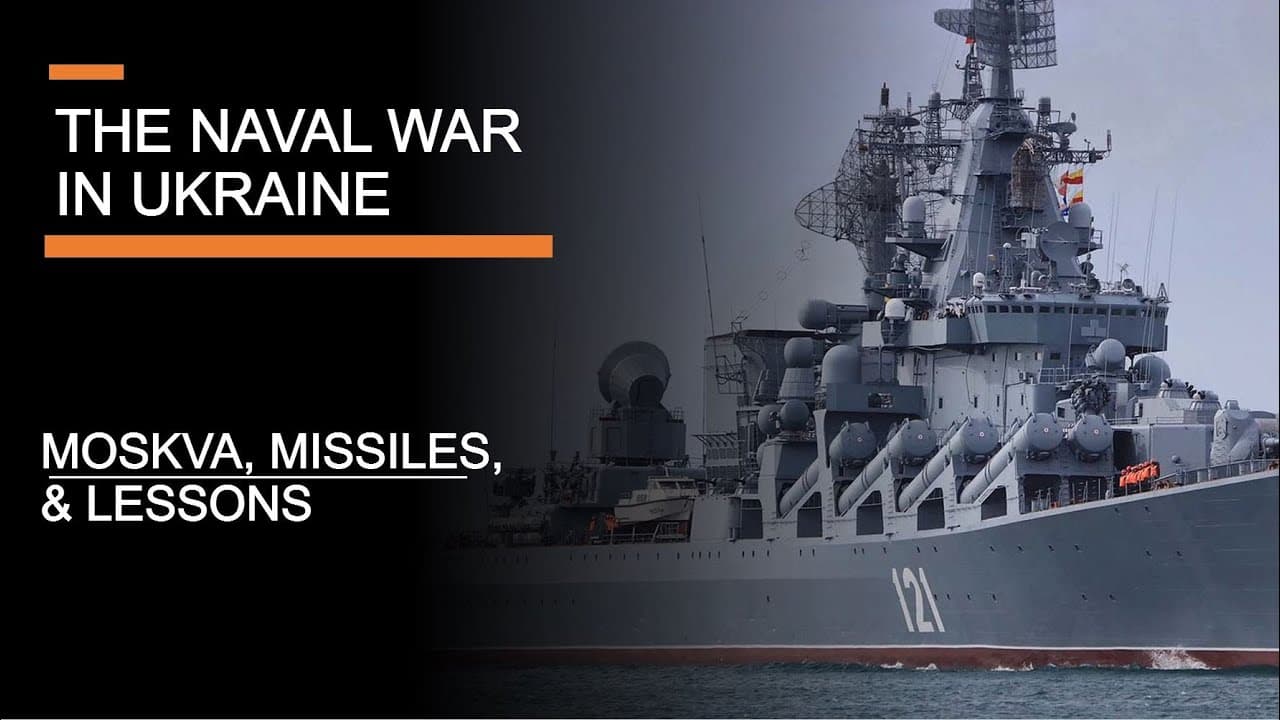
The Russian Navy's superiority in the Black Sea was challenged by Ukraine, resulting in the sinking of the Moskva and a more conservative approach by the Russian Navy.
Transcript
Having spoken extensively about the war on land and also the conflict in the air in Ukraine, I thought it was finally time to turn my attention to the war at sea. Because as much as Russia enjoyed a material superiority both on land and in the air at the start of the conflict, at sea the gap between Russian capabilities and the Ukrainians was ... Read More
Key Insights
- 👱 The sinking of the Moskva weakened the Black Sea Fleet's air defense capabilities and made them more cautious in their operations.
- 🛝 Ground-based anti-ship missiles and drones became significant threats to warships in the conflict.
- 🙃 The conflict highlighted the importance of Crimea for both sides, as it provides a strategic foothold and allows for greater control over the Black Sea.
- 🥺 The Russian Navy's weaknesses and vulnerabilities were exposed, which will likely lead to efforts to improve training and address technical issues.
Install to Summarize YouTube Videos and Get Transcripts
Explore YouTube Video Summarizer or Get YouTube Transcript Extractor
Questions & Answers
Q: Why did the Black Sea Fleet retreat from the Ukrainian coastline?
The sinking of the Moskva, the flagship of the Black Sea Fleet, weakened their capabilities and made them more cautious in their operations.
Q: What lessons can be learned from the conflict in the Black Sea?
The conflict showed the effectiveness of anti-ship missiles and drones in denying areas to the enemy, as well as the importance of modernizing naval capabilities.
Q: How did the war in Ukraine affect the Russian Navy's strategy?
The war prompted the Russian Navy to focus on long-range missile attacks and adopt a more stand-off role, avoiding close proximity to the Ukrainian coastline.
Q: How did the Ukrainian Navy fare in the conflict?
The Ukrainian Navy suffered significant losses, with many of their ships captured or scuttled. However, they adapted their strategy by using anti-ship missiles and unmanned systems.
Key Insights:
- The sinking of the Moskva weakened the Black Sea Fleet's air defense capabilities and made them more cautious in their operations.
- Ground-based anti-ship missiles and drones became significant threats to warships in the conflict.
- The conflict highlighted the importance of Crimea for both sides, as it provides a strategic foothold and allows for greater control over the Black Sea.
- The Russian Navy's weaknesses and vulnerabilities were exposed, which will likely lead to efforts to improve training and address technical issues.
- The conflict demonstrated the effectiveness of long-range missile attacks and the need to adapt naval capabilities to counter emerging threats.
Summary & Key Takeaways
-
The Black Sea Fleet initially had superior capabilities, launching missile strikes and threatening naval landings in Ukraine.
-
The sinking of the Moskva changed the dynamics, causing the Russian Navy to become more conservative and avoid the Ukrainian coastline.
-
The conflict highlighted the vulnerability of Russian warships to anti-ship missiles and drones.
Read in Other Languages (beta)
Share This Summary 📚
Summarize YouTube Videos and Get Video Transcripts with 1-Click
Try YouTube Summary with ChatGPT & Claude or YouTube Transcript Generator
Explore More Summaries from Perun 📚



Summarize YouTube Videos and Get Video Transcripts with 1-Click
Try YouTube Summary with ChatGPT & Claude or YouTube Transcript Generator