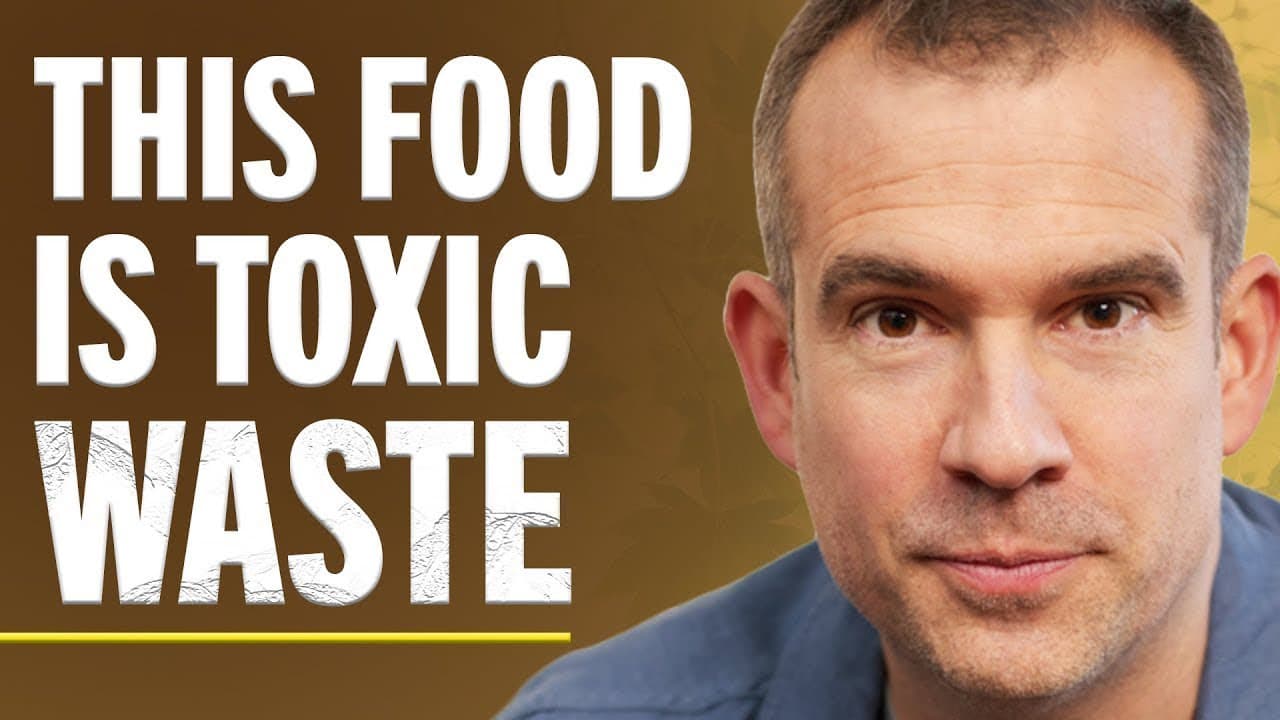
Why Is Ultra-Processed Food the #1 Cause of Early Death?
TL;DR
Ultra-processed food is now the leading cause of early death on Earth, ahead of or level with tobacco, and it harms health independently of weight. Across roughly 2,000 studies, even people at a normal weight who eat a UPF-heavy diet face raised risks of heart disease, cancer, dementia, and depression. The problem is the food environment, not personal willpower.
Transcript
I wanted to start off by asking you to lay it out why should anyone who stumbled across this podcast or video care about ultr processed foods and how much they're consuming because they are most of what we eat and because we have really good data that they drive a huge number of what we kind of euphemistically call negative Health outcomes which is... Read More
Key Insights
- Ultra-processed food is now the leading cause of early death on planet Earth, ahead of tobacco according to some data sets, though in the UK tobacco may still be slightly ahead. It is also the leading cause of diet-related disease and environmental destruction.
- UPF harms health independently of weight. Most studies on cardiometabolic disease, dementia, anxiety, depression, inflammatory bowel disease, cancers, and early death adjust for weight gain, meaning even people at a normal weight remain vulnerable to these harms.
- The average person in Britain eats about 60% of their calories from ultra-processed food, exposing them to a full range of health harms regardless of how their body weight appears.
- New weight-loss drugs like Mounjaro or Wegovy may prevent weight gain, but a person continuing a UPF diet while taking them is still exposed to all the other harms of the food beyond weight.
- The evidence meets causation criteria, not just association. Studies show a dose-dependent relationship, biological plausibility, prospective timing where effect follows cause, and experimental evidence, the same standards used to prove tobacco causes lung cancer.
- Cardiometabolic disease has even more supporting evidence than obesity when controlled for weight, and obesity was actually one of the later outcomes to meet the causation threshold despite being the most studied effect.
- Population weight gain in the United States began in the mid-1970s across all groups simultaneously, black, white, and Hispanic men and women of all ages, coinciding with a change in the food environment rather than a change in individual willpower.
- Mixtures of fat and sugar drive excess consumption. Rats fed cheesecake, a 50/50 fat-sugar mix, gained lots of weight, and products like the perfectly balanced glazed donut ring exploit this combination to make food irresistibly delicious.
Install to Summarize YouTube Videos and Get Transcripts
Explore YouTube Video Summarizer or Get YouTube Transcript Extractor
Questions & Answers
Q: Why is ultra-processed food considered the leading cause of early death?
According to some data sets, ultra-processed food has overtaken tobacco as the leading cause of early death on planet Earth, though in the UK tobacco may still be slightly ahead. Because UPF makes up most of what people eat and there is strong data linking it to cardiovascular disease, metabolic disease, and early death, it is described as the leading cause of diet-related disease. It is also the leading cause of environmental destruction and the second leading cause of carbon emissions.
Q: Can ultra-processed food harm you even if you are a normal weight?
Yes. Ultra-processed food consumption is harmful irrespective of its impact on weight. Most studies on outcomes like cardiometabolic disease, dementia, anxiety, depression, inflammatory bowel disease, cancers, and early death adjust for weight gain. This means even someone who lives at a healthy weight but eats an average of around 60% of their calories from UPF, as most people in Britain do, remains vulnerable to all those harms.
Q: Do weight-loss drugs protect you from the harms of ultra-processed food?
No. If you continue eating an ultra-processed diet while taking new weight-loss drugs such as Mounjaro or Wegovy, you might not gain weight, but you will still be exposed to all the other harms of the food. The drugs address weight but not the many other disease-driving mechanisms of ultra-processed food, so the underlying health risks beyond weight remain in place.
Q: How do scientists know ultra-processed food causes disease rather than just being associated with it?
Researchers apply a set of causation criteria similar to those used to prove tobacco causes lung cancer. They check whether there is a dose-dependent relationship where more consumption worsens effects, whether the harm is biologically plausible given known mechanisms of additives and processing, whether the effect follows the cause over time in prospective studies, and whether other experimental evidence exists. UPF has now met this threshold for multiple health problems.
Q: What role does willpower play in obesity according to Chris van Tulleken?
He argues willpower is not the cause and spends a whole chapter demolishing the idea. Population weight gain in the United States started in the mid-1970s across all groups, black, white, and Hispanic men and women of all ages, simultaneously as the food environment changed. People feel they are making choices, but for many the only affordable or available food is ultra-processed, so it reflects the environment rather than personal failing.
Q: What did the 2014 fat versus sugar experiment reveal about weight gain?
In 2014, Chris and his brother made a Horizon program eating a very high-fat and very high-sugar diet respectively to find the difference. They visited researcher Paul Kenny in New York, who found that feeding rats cheesecake, a 50/50 mix of fat and sugar, made them put on lots of weight. The conclusion was that mixtures of fat and sugar, like a perfectly balanced glazed donut, drive excess consumption.
Q: Why does Chris van Tulleken use language like 'living with obesity' rather than 'obese'?
He deliberately frames conditions as things people live with rather than identities, saying obesity is not an identity but something a patient can pick up or put down. Just as medicine now says people living with HIV or diabetes rather than diabetics, this language aims to reduce stigma. He notes much harm to people with excess weight comes from bad treatment by the medical profession, who give them fewer investigations and less time.
Q: What is ultra-processed food and how much of our diet does it make up?
Ultra-processed food is essentially a way of describing the industrial food that makes up most of what we eat. The definition was developed by a team in Brazil in 2009. It is now the dominant part of the modern diet, with the average person in Britain eating around 60% of their calories from it. It is found everywhere, at every petrol station, food court, and train station, forming the core of the current food culture.
Summary & Key Takeaways
-
Ultra-processed food is described as the industrial food making up most of what people eat, and it is now considered the leading cause of early death on Earth, ahead of tobacco in some data sets. It also drives diet-related disease, environmental destruction, biodiversity loss, and carbon emissions.
-
The harms extend far beyond weight. Drawing on roughly 2,000 peer-reviewed publications including 70 prospective clinical studies, most health outcomes are adjusted for weight gain, so even people at a normal weight eating a UPF-heavy diet face raised risks of disease, dementia, and mental health problems.
-
Willpower is dismissed as an explanation. Weight gain began across all demographic groups at once in the mid-1970s as the food environment changed, and for many people ultra-processed food is the only affordable and available option, making it a matter of environment rather than personal failing.
Read in Other Languages (beta)
Share This Summary 📚
Summarize YouTube Videos and Get Video Transcripts with 1-Click
Try YouTube Summary with ChatGPT & Claude or YouTube Transcript Generator
Explore More Summaries from Dr Rangan Chatterjee 📚




Summarize YouTube Videos and Get Video Transcripts with 1-Click
Try YouTube Summary with ChatGPT & Claude or YouTube Transcript Generator