How to Effectively Tune Hyperparameters for Deep Learning
TL;DR
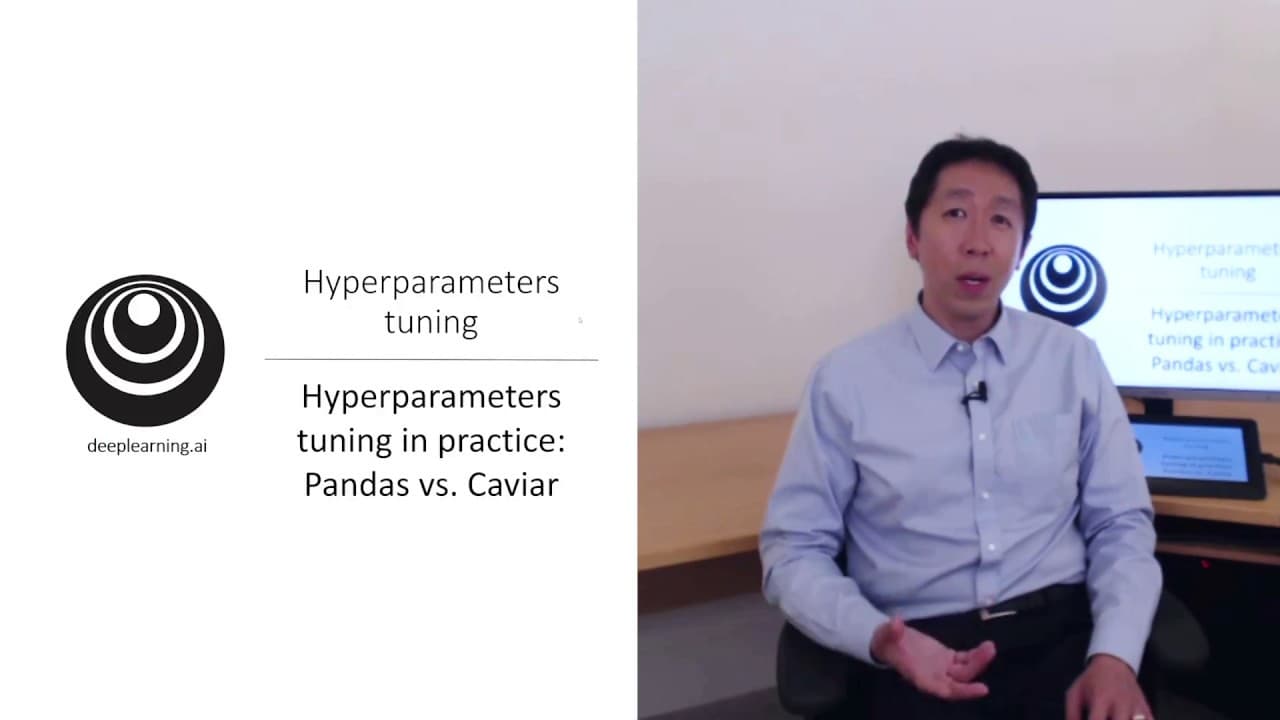
To effectively tune hyperparameters, regularly reevaluate settings to adapt to changes in data and resources. Two main strategies are available: the 'babysitting' approach, where you iteratively adjust a single model's parameters, and the 'caviar' approach, which involves training multiple models in parallel to quickly identify the best settings.
Transcript
you've not heard a lot about how to search for good hyper parameters before wrapping up our discussion on hyper parameter search I want to share with you just a couple final tips and tricks for how to organize your hyper Frances search process deep learning today is applied to many different application areas and that intuitions about hyper paramet... Read More
Key Insights
- ❓ Hyperparameter settings must be periodically reviewed for optimal deep learning performance.
- 💡 Ideas from one application domain can inspire successful hyperparameter settings in another.
- 👨🔬 Two main hyperparameter search approaches: babysitting one model or training many models in parallel.
Install to Summarize YouTube Videos and Get Transcripts
Explore YouTube Video Summarizer or Get YouTube Transcript Extractor
Questions & Answers
Q: Why is it important to revisit hyperparameter settings periodically?
It is crucial to ensure that changing data or system upgrades haven't made your current hyperparameter settings suboptimal, maintaining peak performance.
Q: What are the two major approaches to hyperparameter search processes?
The two approaches are babysitting one model, adjusting parameters gradually, and training many models in parallel to explore multiple hyperparameter settings simultaneously.
Q: How do different application domains benefit from cross-domain research in hyperparameter settings?
Ideas from one domain can be successfully applied in another domain, leading to cross-fertilization, inspiring researchers to explore settings from different areas for optimal performance.
Q: How should one choose between the "panda" and "caviar" approaches in hyperparameter search?
The choice depends on computational resources; the "panda" approach is suited for limited resources, while the "caviar" approach is ideal for parallel training with ample resources.
Summary & Key Takeaways
-
Hyperparameters vary across applications.
-
Regularly evaluate hyperparameter settings.
-
Two approaches for hyperparameter search: Babysitting one model vs. training many models in parallel.
Read in Other Languages (beta)
Share This Summary 📚
Summarize YouTube Videos and Get Video Transcripts with 1-Click
Try YouTube Summary with ChatGPT & Claude or YouTube Transcript Generator
Explore More Summaries from DeepLearningAI 📚




Summarize YouTube Videos and Get Video Transcripts with 1-Click
Try YouTube Summary with ChatGPT & Claude or YouTube Transcript Generator