How Can You Build a Book Lead Funnel to Reach $20K/Month in Profit?
TL;DR
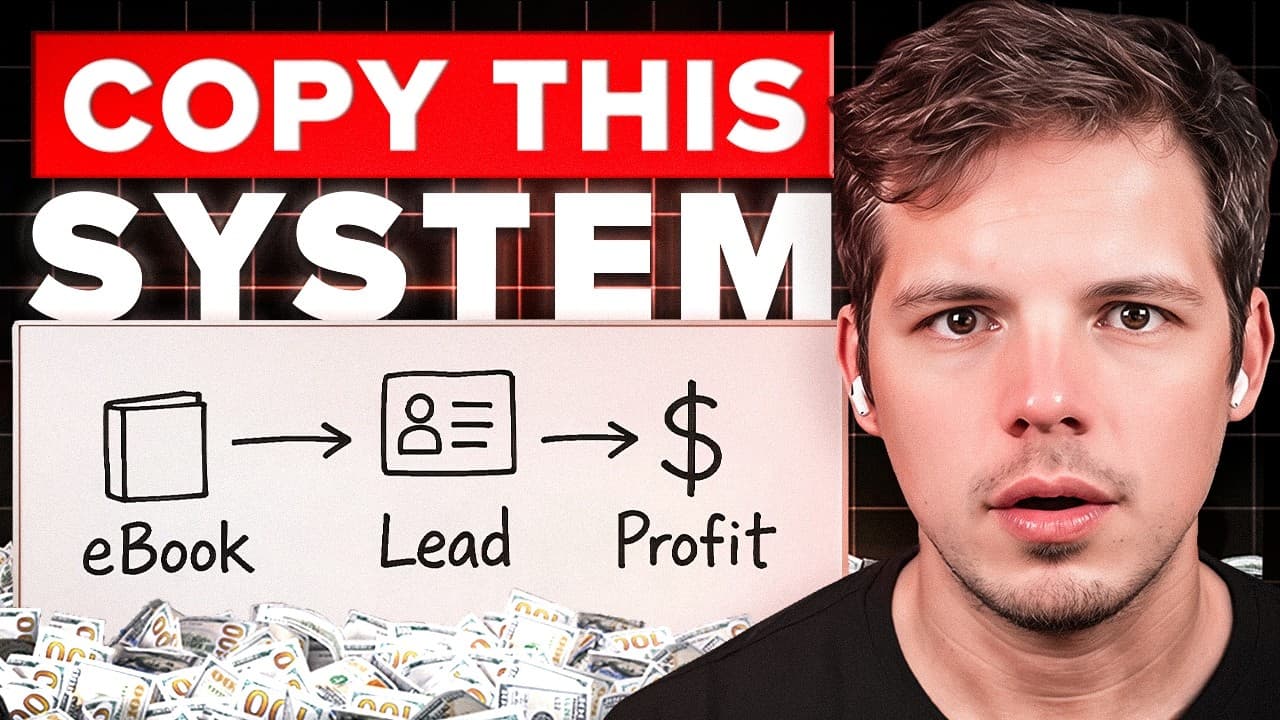
A profitable book lead funnel uses a focused, low-priced product to identify qualified buyers, then improves the economics with closely related add-ons or downstream services. The initial $29 divorce ebook cost roughly $40 per customer, but a $17 negotiation toolkit lifted average order value to around $42. Read on to see how rapid validation, broad ads, physical fulfillment, platform restrictions, and legal limits affect the model.
Transcript
Let's say someone's listening and they want to get to 20K a month profit. To me, these are easy oneperson businesses that can go and print that degree of money. It's not a complicated thing. If you're the average American working for somebody, stressed out on the clock, no freedom, no real road map to making more money, now is like the best time to... Read More
Key Insights
- A painful and expensive problem can support a focused information product because customers place meaningful value on guidance that may improve an emotionally or financially important outcome. The divorce concept emerged by examining the underserved side of the much larger wedding market.
- Fast validation is more useful than waiting for a polished first version. The initial digital book and landing page were created quickly, then tested with paid traffic to determine whether strangers would purchase before substantial time and money were committed.
- Average order value and customer acquisition cost are the core funnel economics. The initial $29 digital book cost roughly $40 to acquire a buyer, but a $17 negotiation toolkit increased average order value to around $42 and moved the funnel toward break even.
- An order bump can improve revenue without requiring another customer acquisition. Buyers saw the related negotiation toolkit before entering payment details, and about 70% accepted it, showing that a closely matched add-on can materially strengthen a front-end offer.
- Physical products can increase perceived legitimacy and satisfy customer expectations, but they introduce printing, shipping, and inventory risk. After customers asked when the digital book would ship, the creator improved it to 200 pages and ordered 300 printed copies.
- Advertising platforms can disrupt an otherwise workable funnel. Meta classified the divorce offer as targeting personal hardship, preventing purchase attribution to the pixel and weakening optimization, which made it difficult to maintain an acceptable customer acquisition cost.
- A break-even book funnel can function as lead generation for higher-value services. Buyers identify themselves as people actively dealing with the underlying problem, creating a potential path toward lawyers or other relevant providers whose services carry much greater economic value.
- Referral revenue requires careful legal structuring rather than casual assumptions. The discussion notes that rules can differ between states and that some arrangements may require lawyer status, so any consulting or referral model must account for applicable restrictions before implementation.
Install to Summarize YouTube Videos and Get Transcripts
Explore YouTube Video Summarizer or Get YouTube Transcript Extractor
Questions & Answers
Q: How can a book lead funnel help generate $20K per month in profit?
A book can identify buyers who are actively seeking help with a painful, expensive problem. If its sales cover most or all customer acquisition costs, profit can come from relevant order bumps, services, consulting, or legally permitted referrals. The episode works backward from a goal of $20K per month in net profit for a one-person business without employees or a large upfront investment.
Q: How should a new information product be validated?
Create a basic product and sales page, then use paid traffic to see whether strangers will buy before investing heavily. The divorce ebook was launched quickly at $29, and about $500 to $700 was spent on ads during the first week. Roughly $400 in sales was not profitable, but it demonstrated demand.
Q: Why do average order value and customer acquisition cost matter?
Average order value measures revenue from a typical purchase, while customer acquisition cost measures the expense of obtaining that buyer. The initial $29 ebook cost roughly $40 per purchase, so the front-end offer lost money. Adding another relevant purchase raised average order value to around $42 and moved the funnel closer to break even.
Q: How can an order bump improve a paid advertising funnel?
An order bump adds revenue from someone who is already purchasing, avoiding the cost of acquiring a separate customer. A $17 negotiation toolkit was paired with the divorce book, and about 70% of buyers accepted it. That closely related add-on materially improved the funnel's economics.
Q: How were the Facebook ads configured for the initial test?
The campaign used broad targeting and automatic placements rather than specifying a narrow audience or medium. It optimized for purchases and used a pixel on the thank-you page to track conversion events. The approach relied on Facebook to allocate spending based on the purchase objective.
Q: When should a digital book become a physical product?
Customer expectations can reveal demand for a printed edition, as happened when buyers asked when the digital book would ship. The creator then expanded the material into a 200-page book and ordered 300 printed copies. Physical fulfillment added printing, shipping, and inventory exposure.
Q: Why did Meta advertising become difficult for the divorce offer?
Meta classified the divorce offer as targeting personal hardship. That restriction prevented purchases from being attributed to the pixel, weakening campaign optimization and visibility. Sales could still occur, but maintaining an acceptable acquisition cost became difficult.
Q: What risks should be checked before launching a book referral funnel?
Check advertising restrictions, attribution limits, product quality, fulfillment costs, and inventory exposure before scaling. Referral arrangements also require legal scrutiny because the discussion says rules may vary by state and may depend on whether the referring party is a lawyer. Renaming an arrangement as consulting does not automatically resolve those constraints.
Summary & Key Takeaways
-
A practical one-person business can begin with a painful, expensive problem and a focused information product. The divorce experiment started as a quickly produced digital book sold through a simple landing page. Early sales did not generate profit, but they provided enough market signal to justify improving the offer and funnel economics.
-
The funnel became more viable after adding a negotiation toolkit as an order bump. Many customers accepted the additional offer, lifting average order value close to customer acquisition cost. The central lesson is to judge paid acquisition through unit economics, then refine the offer, creative, conversion path, and product quality using actual purchasing behavior.
-
Customer questions about shipping revealed demand for a physical book, prompting a rewrite and a print order. Physical fulfillment increased costs and inventory exposure, while Meta later restricted purchase attribution because the topic involved personal hardship. The broader opportunity is using books to attract qualified prospects for valuable downstream services, subject to platform and legal constraints.
Read in Other Languages (beta)
Share This Summary 📚
Summarize YouTube Videos and Get Video Transcripts with 1-Click
Try YouTube Summary with ChatGPT & Claude or YouTube Transcript Generator
Explore More Summaries from Chris Koerner on The Koerner Office Podcast 📚






Summarize YouTube Videos and Get Video Transcripts with 1-Click
Try YouTube Summary with ChatGPT & Claude or YouTube Transcript Generator