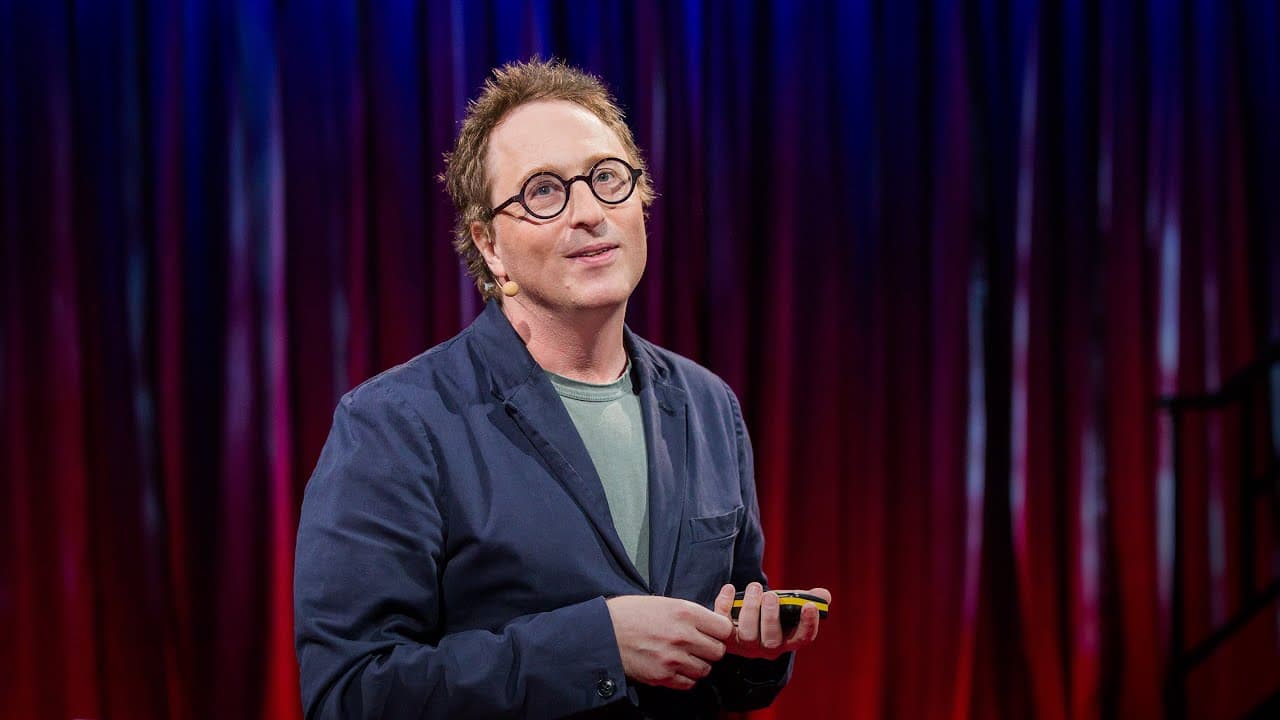
How one tweet can ruin your life | Jon Ronson
TL;DR
A single tweet can drastically alter a person's life by triggering a public shaming cascade on social media, often leading to severe mental health issues like depression and anxiety. The initial empowerment that platforms like Twitter offered has turned into a mechanism for accountability that can be misused, causing irreversible damage to individuals perceived as having misused their privilege.
Transcript
In the early days of Twitter, it was like a place of radical de-shaming. People would admit shameful secrets about themselves, and other people would say, "Oh my God, I'm exactly the same." Voiceless people realized that they had a voice, and it was powerful and eloquent. If a newspaper ran some racist or homophobic column, we realized we could do ... Read More
Key Insights
- 💔 Twitter in the early days was a place of empowerment, where voiceless people found a powerful and eloquent voice
- 💻 The rise of social media shaming led to a democratization of justice, where people had the power to hold powerful individuals and organizations accountable
- 📣 Social media shaming can be used as a weapon to shame and destroy individuals, often based on misinterpretations and misjudgments
- 🌍 The desire to be seen as compassionate can lead to a lack of empathy and understanding, causing people to participate in acts of public shaming
- 💭 Social media platforms create a bubble of like-minded individuals who approve each other, but this is the opposite of democracy as it encourages the exclusion of differing opinions
- 🔄 The power dynamics of shaming shift quickly, with individuals who were once the targets becoming the shaming voices
- 🚫 The misuse of the term "misuse of privilege" has led to the devaluing of the phrase, causing a loss of empathy and an inability to distinguish between serious and unserious transgressions
- 😥 Social media shaming can have damaging effects on individuals' mental health, leading to depression, anxiety, and suicidal thoughts
Install to Summarize YouTube Videos and Get Transcripts
Explore YouTube Video Summarizer or Get YouTube Transcript Extractor
Questions & Answers
Q: How did Twitter initially empower people?
In the early days of Twitter, it allowed people to admit shameful secrets about themselves and connect with others who could relate to their experiences, giving voice to voiceless individuals and creating a sense of empowerment.
Q: What was the power of social media shaming?
Social media shaming allowed people to hold others accountable, especially when they misused their privilege or engaged in harmful behavior. It gave ordinary individuals the ability to take action, such as boycotting advertisers or publicly shaming offenders, thus democratizing justice.
Q: What was the impact of social media shaming on individuals like Jonah Lehrer?
Social media shaming can have a profound impact on individuals who are publicly shamed. In Jonah Lehrer's case, he experienced a humiliating moment when he publicly apologized at a foundation lunch, with a giant screen Twitter feed displaying negative comments about him. This demonstrated the increasingly dark and brutal reality of social media shaming.
Q: How did the case of Justine Sacco demonstrate the destructive power of social media shaming?
Justine Sacco's case exemplified how social media shaming can quickly escalate and dismantle someone's life. After sending a poorly received tweet, she became the target of intense public shaming, leading to the loss of her job and widespread internet harassment. The negative impact on her mental health and well-being was immense.
Q: What does the author believe is the consequence of social media shaming?
The author argues that social media shaming has significant societal consequences. It can devalue the misuse of privilege as a valid reason for public shaming, making it more challenging to distinguish between serious offenses and minor transgressions. This leads to a loss of empathy and a reduction in our ability to see people as complex individuals.
Q: How does the author view the current state of social media and shaming?
The author believes that social media has become a judgmental platform where people seek mutual approval and screen out those who disagree with their views. This creates an absence of democratic discussion and fosters an environment where constant, artificial high dramas prevail. The author warns against succumbing to this dynamic and encourages maintaining a space for dialogue and empathy.
Summary
In this video, Jon Ronson discusses the rise of social media shaming and its detrimental effects on individuals. He tells stories of individuals like Jonah Lehrer and Justine Sacco who faced public shaming and how it affected their lives. Ronson explores the power dynamics and lack of empathy that emerge on Twitter, where people are quick to condemn and destroy others without understanding the full context or intent behind their actions. He highlights the need for a more balanced and considerate approach to online shaming and the potential consequences it can have on individuals' mental well-being.
Questions & Answers
Q: How did Twitter initially empower individuals and democratize justice?
In the early days of Twitter, people found solace in the platform as they admitted shameful secrets about themselves. It provided an opportunity for voiceless individuals to realize their power and unite against injustice, such as holding newspapers accountable for publishing racist or homophobic content. Through social media shaming, they could mobilize advertisers to withdraw support, effectively leveling the playing field against those who misused their privilege.
Q: What happened to Jonah Lehrer during his public apology speech?
During Jonah Lehrer's public apology speech, he faced an unexpected challenge. The foundation hosting the event had set up Twitter feeds on large screens surrounding him, amplifying the live comments and reactions from Twitter users. Lehrer, already mired in shame and regret due to his plagiarism and fabrication scandal, could see tweets criticizing and mocking him as he attempted to apologize. The incident highlighted the clash between the naivety of Twitter's early days and the increasing brutality of online shaming.
Q: How did social media users shame Justine Sacco for her tweets?
Justine Sacco, a PR woman with a small following on Twitter, became the target of intense shaming after posting a controversial tweet. Initially, her wry joke about body odor on an airplane went unnoticed, but when she tweeted a second joke satirizing white privilege and Africa, someone shared it with a journalist who had a larger following. From there, her tweet went viral, leading to a torrent of condemnations, calls for her to be fired, and even threats of physical harm and rape. Her reputation and life were dismantled piece by piece as internet users orchestrated a campaign against her.
Q: How did corporations and individuals profit from Justine Sacco's shaming?
While Justine Sacco faced severe consequences, others exploited her downfall for personal and monetary gains. Advertisers and corporations hijacked the situation to enhance their own public image by supporting charitable causes related to her tweet. Furthermore, Justine's online humiliation became a lucrative opportunity for Google, as her name was widely searched during the incident. However, those who engaged in the shaming received no compensation, leading to a questioning of the ethics and fairness of this dynamic.
Q: What negative effects did public shaming have on the individuals involved?
The consequences of public shaming can be devastating to the individuals on the receiving end. Jon Ronson encountered numerous people who had been shamed and discovered that many of them suffered from depression, anxiety, insomnia, and even suicidal thoughts. Justine Sacco, in particular, experienced a profound loss of self-identity and struggled with memory loss and disorientation due to the overwhelming backlash. The toll of public shaming on mental health is significant and should not be dismissed.
Q: Why did people partake in the shaming of Justine Sacco?
Jon Ronson argues that people engage in public shaming on social media because it allows them to seek approval from like-minded individuals. Twitter functions as a mutual approval machine, where individuals surround themselves with people who share their viewpoints. Those who deviate or express dissenting opinions are often ignored or marginalized. The desire to be seen as compassionate and virtuous can lead to the participation in acts of shaming, which ultimately lacks true empathy and understanding.
Q: How can we mitigate the harms caused by public shaming on social media?
One way to address the negative effects of public shaming is through open dialogue and discussion. When facing a shaming incident, it is crucial for a variety of voices and perspectives to be heard and considered. This democratic approach allows for a fair assessment of the situation, rather than a one-sided condemnation. By cultivating empathy and understanding, we can create a more balanced and compassionate online culture that considers the nuances and complexities of human behavior.
Q: How did Justine Sacco's online shaming follow her beyond social media?
Justine Sacco's online shaming had long-lasting effects, as evidenced by the fact that her story dominated Google search results for pages and pages. Despite efforts by a reputation management firm to push down negative content and replace it with benign information, the negative coverage eventually resurfaced and persisted. This highlights the difficulty of escaping the consequences of public shaming in the digital age, with the potential for reputations to be irreparably tarnished.
Q: How did assumptions and exaggerations about Justine Sacco's background worsen the impact of her shaming?
One aspect of Justine Sacco's shaming was the false narrative that emerged surrounding her identity and background. Social media users spread rumors that she was the daughter of a wealthy mining billionaire, Desmond Sacco, which exacerbated the perception that she was an entitled and out-of-touch individual. However, this turned out to be untrue, as Justine's father was actually in the carpet business. The distortion of her personal history showcased the speed and ease with which misinformation can spread on social media, perpetuating a false narrative that further demonized her.
Q: How does the current culture of online shaming hinder our capacity for empathy?
The current culture of online shaming is built on a binary framework of heroes and villains, leaving little room for the complexities and nuances of human behavior. This simplistic approach to judgment impedes our capacity for empathy, as it eliminates the possibility of understanding others' perspectives and experiences. The emphasis on ideology over human connection fosters an environment where compassion and empathy are sacrificed in favor of a self-serving desire to proclaim moral superiority. Embracing the grey areas and recognizing our own fallibility is crucial for reestablishing empathy in online interactions.
Takeaways
Public shaming on social media platforms like Twitter can have severe and lasting effects on individuals' well-being, causing depression, anxiety, and suicidal thoughts. The power dynamics of online shaming often disregard the full context or intent behind an individual's actions, leading to a lack of empathy. The pursuit of social approval and virtue signaling can overshadow the need for a fair assessment of the situation and hinder meaningful dialogue. It is crucial to approach online interactions with empathy, actively engage in discussions, and resist participating blindly in shaming campaigns. By fostering inclusivity and understanding, we can create a more compassionate and balanced online culture.
Summary & Key Takeaways
-
In the early days of Twitter, it was a platform for people to admit their shameful secrets and find others who could relate.
-
Twitter became a powerful tool for social media shaming, where people could hold institutions and individuals accountable for their actions.
-
However, this power has been misused and has led to the destruction of people's lives, causing depression, anxiety, and other mental health issues.
Read in Other Languages (beta)
Share This Summary 📚
Summarize YouTube Videos and Get Video Transcripts with 1-Click
Try YouTube Summary with ChatGPT & Claude or YouTube Transcript Generator
Explore More Summaries from TED 📚




Summarize YouTube Videos and Get Video Transcripts with 1-Click
Try YouTube Summary with ChatGPT & Claude or YouTube Transcript Generator