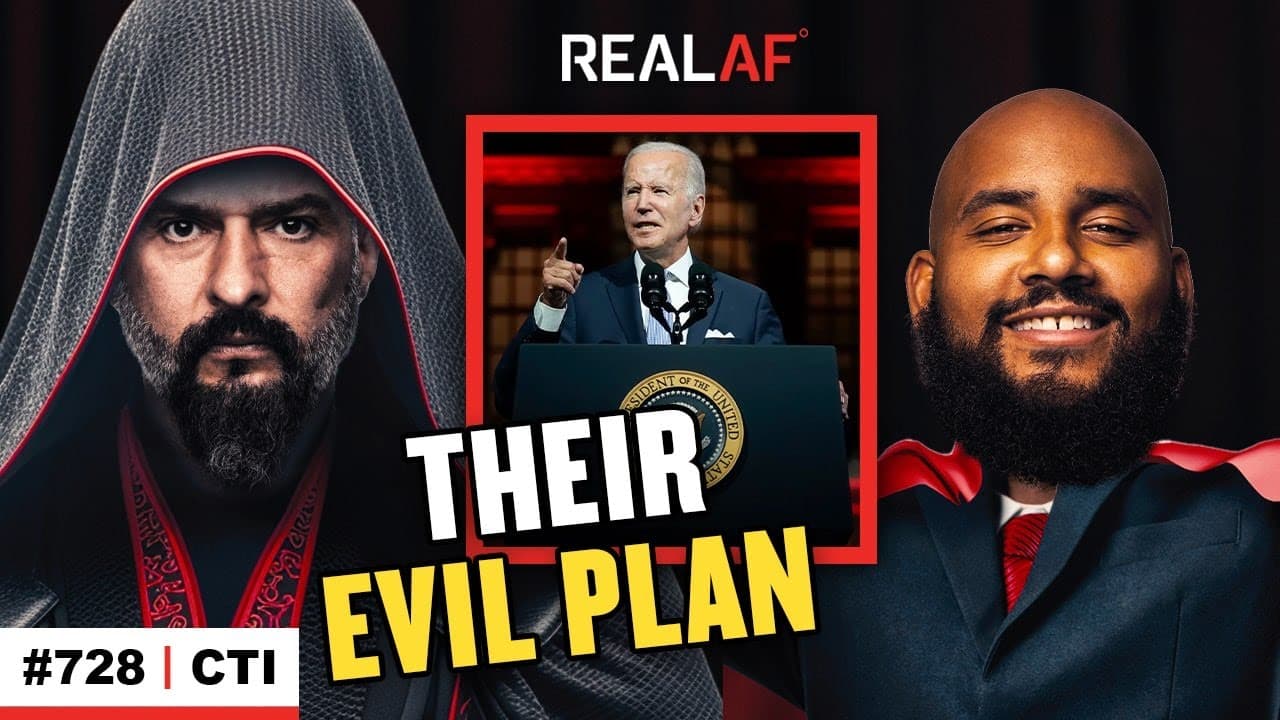
How Would They Try to Eliminate the Population?, Ep. 728 CTI
TL;DR
The hosts speculate that a population-reduction scheme would target people who are easily manipulated and dependent on government, while preserving critical thinkers to rebuild society. In Episode 728 of CTI, Andy Frisella and DJ Cruz also discuss media censorship, public activism, economic narratives, and skepticism about COVID-19 vaccines. Read on for the episode’s arguments about manipulation, accountability, and public awareness.
Transcript
if we want to put on our Dr Evil hats right and we say okay let's just take it from their position and we say you know all right we've got about seven billion extra people on the planet okay so we got to reduce it down to about a billion or less the first part of the conversation is who do we want to get rid of we have to make that decision right i... Read More
Key Insights
- The podcast discusses hypothetical strategies for global population control, emphasizing the elimination of easily manipulated individuals.
- Hosts speculate on societal rebuilding post-population reduction, focusing on retaining critical thinkers.
- The conversation critiques modern society's dependence on government and lack of critical thinking skills.
- The hosts highlight issues with media censorship and the need for people to share alternative viewpoints.
- The discussion touches on political manipulation and the influence of elite groups on societal norms.
- The podcast critiques the economic narrative presented by current political leaders, questioning the authenticity of reported growth.
- Hosts express skepticism about the COVID-19 vaccine, discussing potential long-term health impacts and corporate accountability.
- The podcast suggests a divide between governmental actions and public interest, emphasizing the need for public awareness and activism.
Install to Summarize YouTube Videos and Get Transcripts
Explore YouTube Video Summarizer or Get YouTube Transcript Extractor
Questions & Answers
Q: What population-control scenario do the hosts discuss in Episode 728 of CTI?
The hosts consider a hypothetical scenario in which about seven billion people are deemed “extra” and the population is reduced to about one billion or fewer. They speculate that the people behind such a plan might target those who are easiest to manipulate and most dependent on government.
Q: Why do the hosts think critical thinkers might be spared in this hypothetical scenario?
They reason that people capable of critical thought would be more useful after a drastic population reduction. According to their hypothetical argument, those people could contribute to rebuilding civilization and society globally.
Q: What does CTI stand for in the episode?
CTI stands for “Cruise the Internet.” Andy Frisella and DJ Cruz describe the format as putting topics on the screen, discussing current events, speculating about what is true, and considering how ordinary people can help solve problems.
Q: How do the hosts view society’s dependence on government and media?
The hosts portray dependence on government and media as making people easier to manipulate. They argue that stronger critical-thinking skills and greater public awareness are needed to question prevailing claims and narratives.
Q: What do the hosts say about media censorship?
The hosts say their show is censored, shadow-banned, and subjected to traffic throttling. They ask listeners to share the show and advocate circulating alternative viewpoints to counter limits on their reach.
Q: What concerns do the hosts raise about COVID-19 vaccines?
The hosts express skepticism about COVID-19 vaccines and discuss possible long-term health effects. They also question pharmaceutical-company transparency and call for corporate accountability and public scrutiny of vaccine information.
Q: How do the hosts assess the economic narrative presented by political leaders?
They question whether reported economic growth reflects the real economic situation. The hosts urge listeners to scrutinize official statistics and political narratives instead of accepting positive claims without examination.
Q: Why do the hosts emphasize public activism and sharing information?
They believe ordinary people must help address government overreach, censorship, and misinformation. Speaking up and sharing alternative viewpoints are presented as ways to raise awareness, influence change, and hold leaders accountable.
Summary & Key Takeaways
-
The podcast explores hypothetical scenarios where global elites might attempt to reduce the population by targeting the most easily manipulated individuals. The conversation suggests retaining critical thinkers for societal rebuilding.
-
The hosts critique modern society's reliance on government and media, advocating for increased public awareness and sharing of alternative viewpoints to combat censorship and misinformation.
-
Discussion includes skepticism about the COVID-19 vaccine, potential long-term health impacts, and the need for corporate accountability. The hosts question the economic narrative presented by current political leaders, urging public scrutiny.
Read in Other Languages (beta)
Share This Summary 📚
Summarize YouTube Videos and Get Video Transcripts with 1-Click
Try YouTube Summary with ChatGPT & Claude or YouTube Transcript Generator
Explore More Summaries from Andy Frisella 📚



Summarize YouTube Videos and Get Video Transcripts with 1-Click
Try YouTube Summary with ChatGPT & Claude or YouTube Transcript Generator