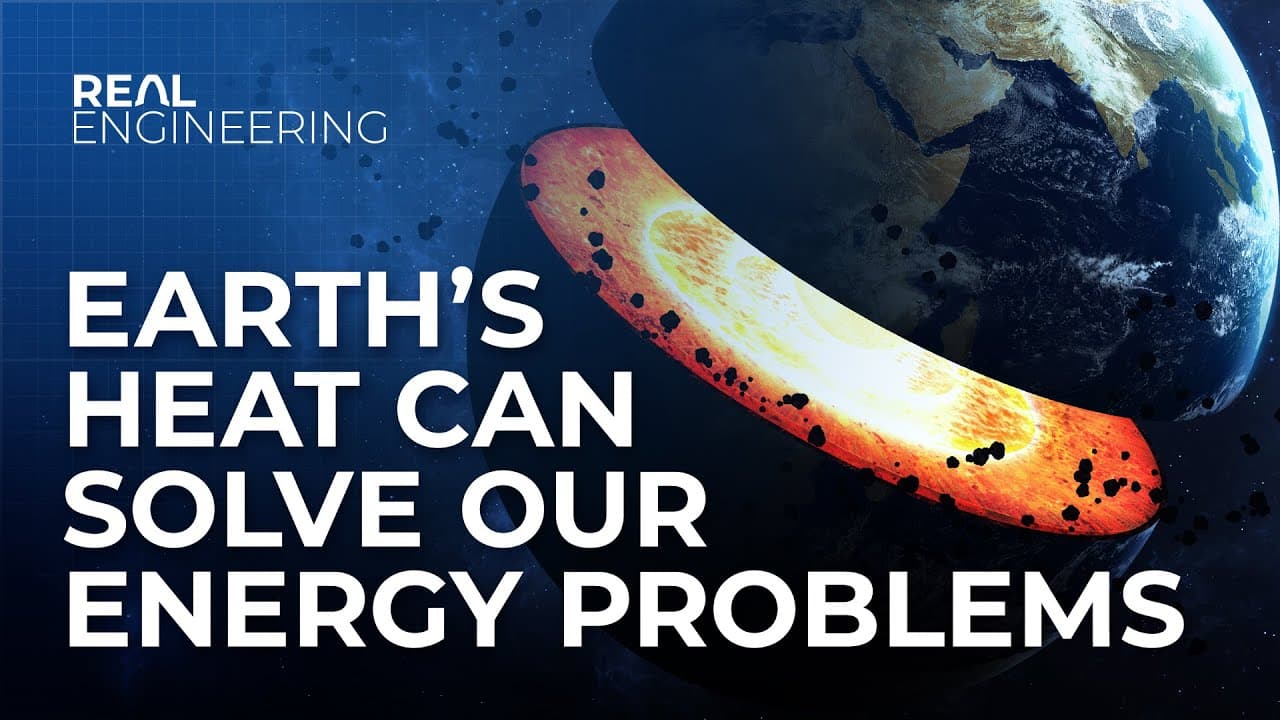
Could Earth's Heat Solve Our Energy Problems?
TL;DR
Geothermal energy could solve energy issues but faces challenges.
Transcript
This episode of Real Engineering is brought to you by Brilliant, a problem solving website that teaches you to think like an engineer. One of the biggest challenges facing mankind today is our quest to transition to renewable energy. Overhauling our entire electricity grid requires drastic changes to be made in the way we produce, transport, use an... Read More
Key Insights
- Geothermal energy is a clean, renewable energy source that remains largely untapped, with less than 1% of global electricity capacity coming from it.
- Geothermal energy is generated from the Earth's heat, originating from gravitational forces and radioactive decay, offering a virtually limitless energy source.
- The potential for geothermal energy is enormous, with heat within 10km of Earth's surface containing 50,000 times more energy than all fossil fuel resources.
- Enhanced Geothermal Systems (EGS) could expand geothermal energy use, but they face challenges like induced seismic activity and high drilling costs.
- Geothermal energy faces regulatory hurdles, with more paperwork required than for oil drilling, and limited tax incentives compared to solar and wind energy.
- Binary cycle systems can utilize lower temperature geothermal sources, allowing countries without shallow geothermal resources to harness this energy.
- Geothermal energy projects can be risky investments due to high initial costs and uncertain returns, making it less attractive compared to solar and wind.
- Despite challenges, advancements in drilling technology and increased interest could boost geothermal energy's role in the global energy transition.
Install to Summarize YouTube Videos and Get Transcripts
Explore YouTube Video Summarizer or Get YouTube Transcript Extractor
Questions & Answers
Q: What is the main source of geothermal energy?
Geothermal energy primarily comes from the Earth's internal heat, which originates from gravitational forces during the planet's formation and the decay of radioactive isotopes in the upper mantle and crust. This heat is transferred through convection, warming the outer layers and creating geothermal phenomena like hot springs and geysers.
Q: Why is geothermal energy underutilized despite its potential?
Geothermal energy's underutilization stems from regulatory challenges, high drilling costs, and seismic risks associated with accessing deep heat sources. Additionally, geothermal projects require significant upfront investment with uncertain returns, making them less attractive compared to more established renewable sources like solar and wind energy.
Q: What are Enhanced Geothermal Systems (EGS)?
Enhanced Geothermal Systems (EGS) involve drilling into hot rock formations and injecting fluid at high pressure to create or enlarge fractures, increasing the area for heat exchange. This technology allows for geothermal energy extraction in regions without naturally occurring hydrothermal reservoirs, potentially expanding its use globally.
Q: What challenges do geothermal energy projects face?
Geothermal energy projects face challenges such as regulatory hurdles, with more paperwork required than for oil drilling, and limited tax incentives compared to solar and wind. High drilling costs and the risk of induced seismic activity also pose significant obstacles, making these projects risky investments.
Q: How does a binary cycle system work in geothermal energy?
A binary cycle system uses warm water from a geothermal source to heat a secondary fluid with a low boiling point, like pentane, in a heat exchanger. The secondary fluid vaporizes at a lower temperature, driving a turbine to generate electricity. This system allows for the use of lower temperature geothermal sources.
Q: What is the potential of geothermal energy compared to fossil fuels?
Geothermal energy has immense potential, with heat within 10km of Earth's surface containing roughly 50,000 times more energy than all fossil fuel resources worldwide. This vast energy reservoir could significantly contribute to global electricity needs if effectively harnessed, offering a clean and renewable alternative to fossil fuels.
Q: What are the environmental impacts of geothermal energy extraction?
Geothermal energy extraction has minimal environmental impact compared to fossil fuels, as it produces virtually no carbon emissions. However, the process can induce seismic activity, as seen in past incidents in South Korea and Switzerland. Engineers are developing protocols to monitor and mitigate these risks during geothermal projects.
Q: How can geothermal energy contribute to the global energy transition?
Geothermal energy can play a crucial role in the global energy transition by providing a stable, renewable energy source that complements intermittent renewables like solar and wind. Advancements in drilling technology and increased interest in clean energy could enhance geothermal's viability, helping to reduce reliance on fossil fuels.
Summary & Key Takeaways
-
Geothermal energy, derived from Earth's internal heat, offers a clean, renewable solution to global energy challenges. Despite its vast potential, it remains underutilized due to regulatory hurdles, high costs, and seismic risks. Enhanced Geothermal Systems (EGS) and binary cycle systems could expand its use beyond geothermally active regions.
-
The Earth's heat, generated by gravitational forces and radioactive decay, presents a virtually limitless energy source. With heat within 10km of the surface containing 50,000 times more energy than all fossil fuels, geothermal energy could significantly contribute to global electricity needs if effectively harnessed.
-
Geothermal energy faces significant challenges, including high drilling costs, regulatory barriers, and seismic risks. However, advancements in drilling technology and increased interest in clean energy could enhance its viability. EGS and binary cycle systems offer promising solutions for expanding geothermal energy use globally.
Read in Other Languages (beta)
Share This Summary 📚
Summarize YouTube Videos and Get Video Transcripts with 1-Click
Try YouTube Summary with ChatGPT & Claude or YouTube Transcript Generator
Explore More Summaries from Real Engineering 📚





Summarize YouTube Videos and Get Video Transcripts with 1-Click
Try YouTube Summary with ChatGPT & Claude or YouTube Transcript Generator