Why Are Sephora and Ulta Competing for Makeup Dominance?
TL;DR
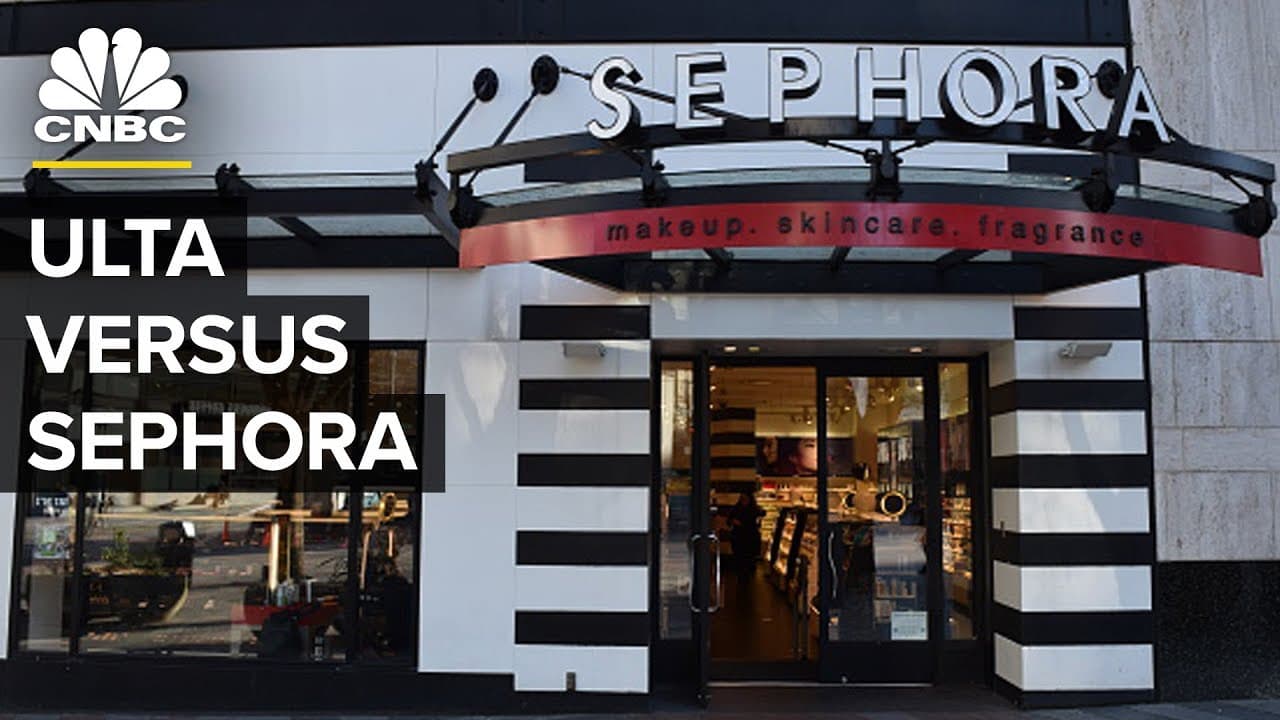
Sephora and Ulta are competing by diversifying their product offerings to cater to shifting consumer preferences, with Ulta expanding its selection of prestige brands and Sephora appealing to millennial consumers. Both retailers must adapt to a trend towards greater affordability and natural aesthetics, as the growth of the cosmetics market slows and customers seek more personalized beauty options.
Transcript
in 1998 the French cosmetics retailer Sephora migrated across the Atlantic and opened its first store in the United States Sephora had cultivated a particular style of cosmetic shopping 9,000 square feet full of 11,000 products from many brands free for touching and testing this heralded a seismic shift in how cosmetics were sold in the United Stat... Read More
Key Insights
- 💆 Sephora's entry into the US market disrupted the traditional divide between mass-market and prestige cosmetics retail.
- 💆 Ulta initially focused on mass-market brands but has expanded its offerings to include more prestige cosmetics.
- 👶 Both Sephora and Ulta are competing in a rapidly changing cosmetics market and are adapting by incorporating popular new brands.
- 👀 The growth of the cosmetics industry has slowed, and consumers are prioritizing affordability and natural-looking makeup.
- 🪡 Sephora and Ulta need to adjust their strategies to cater to these shifting consumer preferences.
- 🥺 Ulta's aggressive expansion into prestige cosmetics has led to double-digit sales growth since 2015.
- 🧔♀️ Sephora's collaboration with popular brands like Fenty Beauty has contributed to its success among millennial women.
Install to Summarize YouTube Videos and Get Transcripts
Explore YouTube Video Summarizer or Get YouTube Transcript Extractor
Questions & Answers
Q: How did Sephora revolutionize the cosmetics industry in the US?
Sephora brought together various prestige brands in one store, challenging the traditional divide between mass-market and prestige cosmetics. This allowed consumers to have access to a wider range of options and the ability to test products freely.
Q: What distinguishes Ulta Beauty from Sephora?
Ulta Beauty primarily focused on mass-market brands and catered to middle-class suburban consumers. However, in recent years, it has incorporated more prestige brands, even opening a store in Manhattan.
Q: How are Sephora and Ulta adapting to changing consumer trends?
Sephora has introduced popular new brands like Fenty Beauty, appealing to millennial women. Ulta has aggressively added over 100 new brands, especially in the prestige cosmetics category, to cater to changing consumer preferences.
Q: What challenges do Sephora and Ulta face in the current market?
The growth of the cosmetics industry has slowed, and consumers are gravitating towards less expensive makeup and a more natural look. Sephora and Ulta need to adapt their offerings to meet these changing trends.
Summary & Key Takeaways
-
In 1998, Sephora introduced a new style of cosmetic shopping in the US with a wide selection of products from various prestige brands all under one roof.
-
Ulta Beauty, a suburban alternative to Sephora, initially focused on mass-market brands but has since incorporated more prestige cosmetics.
-
Both Sephora and Ulta are adapting to changing consumer trends, with Sephora adding brands popular among millennial women and Ulta introducing over 100 new prestige brands.
Read in Other Languages (beta)
Share This Summary 📚
Summarize YouTube Videos and Get Video Transcripts with 1-Click
Try YouTube Summary with ChatGPT & Claude or YouTube Transcript Generator
Explore More Summaries from CNBC 📚





Summarize YouTube Videos and Get Video Transcripts with 1-Click
Try YouTube Summary with ChatGPT & Claude or YouTube Transcript Generator