The Future of Work and the New High-Income Skill Stack: How Can Creatives Stay Valuable With AI?
TL;DR
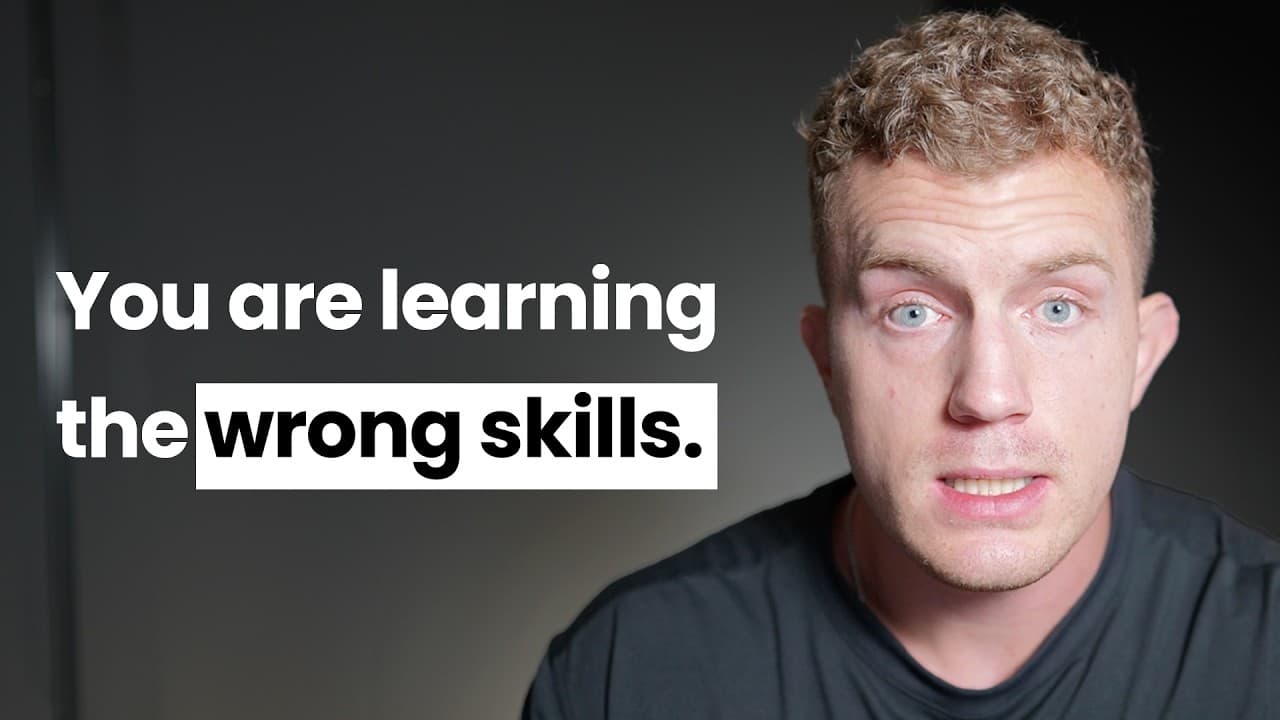
The vCoGfisdS8Y transcript argues that creatives can remain valuable as AI commoditizes information by developing their taste, perspective and story. It contrasts repetitive work with creative work, which synthesizes reality through a personal lens and exchanges contributions for money or other value. Read on to understand why the speaker calls creatives society’s meaning architects.
Transcript
I want to ask you a question. That may sound weird at first. And that question is, why are you watching this? Why are you watching this video specifically? Because you have access to ChatGPT. You have access to Claude. You have access to all of these AI tools that are supposed to get rid of information, make craters obsolete, make writers obsolete,... Read More
Key Insights
- AI is transforming job markets by automating repetitive tasks, but creative work retains value due to its unique human elements.
- Meaning in work has evolved from being assigned by external sources to being generated internally by individuals.
- The future economy will prioritize creative and meaning-driven roles over mundane, repetitive jobs.
- Attention is a scarce resource, and creators who can capture and deliver value will thrive.
- The post-labor economy may require broader capital participation, with more individuals owning income-generating assets.
- Human skills like agency, taste, perspective, and persuasion will be crucial in the future job market.
- AI cannot replicate human perspective, energy signature, sense-making, trajectory, or evolving taste.
- The creator economy is becoming the primary source of information, offering opportunities for those with unique insights and expertise.
Install to Summarize YouTube Videos and Get Transcripts
Explore YouTube Video Summarizer or Get YouTube Transcript Extractor
Questions & Answers
Q: What does the vCoGfisdS8Y transcript say about the future of creative work?
The transcript says creative work can remain valuable even when AI makes information and many capabilities into commodities. Creatives become scarce resources through their taste, perspective, story and ability to synthesize reality through a personal lens.
Q: Why are people still watching creators when they have access to ChatGPT and Claude?
The speaker uses this question to suggest that information alone does not explain why audiences choose particular creators. A creator’s perspective, taste and story contribute value that a quick AI summary does not fully capture.
Q: How can a creative become a scarce resource that people will pay for?
The speaker says scarcity comes from a creative’s taste, perspective, story and other human skills. These qualities help distinguish personal creative work when AI can perform many tasks well.
Q: How could AI affect meaning and purpose in work?
The transcript argues that AI may threaten more than jobs because work often provides purpose, identity, status and a sense of mattering. If work disappears, people may need to generate meaning from within rather than receive it through employment.
Q: What are the four acts in the history of meaning?
In act one, meaning was assigned by gods, kings, elders and scriptures. In act two, meaning shifted toward productivity, progress and work during the Industrial Revolution. Act three deconstructs meaning into nothing, while act four requires people to generate meaning from within.
Q: What is the difference between mundane work and creative work?
Mundane work is described as repetitive, mechanical and similar to industrial assembly-line activity. Creative work involves seeing reality through a personal lens, synthesizing ideas, creating something and sharing it in exchange for money, currency or another form of value.
Q: Why does the speaker call creatives meaning architects?
The speaker says humans find meaning by creating and sharing work shaped by their own perspective. As meaning becomes something individuals must create for themselves, creatives help construct meaning within society.
Q: How does AI break the traditional economic loop described in the transcript?
The traditional loop connects jobs, wages, spending, company profits and the creation or funding of more jobs. The speaker argues that if AI performs the jobs, wages and spending could collapse, threatening the wider economic system.
Summary & Key Takeaways
-
AI is reshaping the job market by automating repetitive tasks, but creative work remains valuable due to its unique human elements like perspective and meaning. As AI commoditizes tasks, humans must focus on developing skills that emphasize creativity, taste, and personal agency. The future will reward those who can generate meaning and cultivate unique perspectives, making them indispensable in an AI-driven world.
-
The evolution of meaning in work has shifted from being assigned by external entities to being generated internally by individuals. This shift highlights the importance of creative and meaning-driven roles in the future economy, as mundane and repetitive jobs become obsolete. Attention is a scarce resource, and creators who can capture and deliver value will thrive.
-
The post-labor economy may require broader capital participation, with more individuals owning income-generating assets. Human skills like agency, taste, perspective, and persuasion will be crucial in the future job market. AI cannot replicate human perspective, energy signature, sense-making, trajectory, or evolving taste, making these uniquely human traits indispensable.
Read in Other Languages (beta)
Share This Summary 📚
Summarize YouTube Videos and Get Video Transcripts with 1-Click
Try YouTube Summary with ChatGPT & Claude or YouTube Transcript Generator
Explore More Summaries from Dan Koe 📚

Summarize YouTube Videos and Get Video Transcripts with 1-Click
Try YouTube Summary with ChatGPT & Claude or YouTube Transcript Generator