How to Stop Striving and Simply Be Present
TL;DR
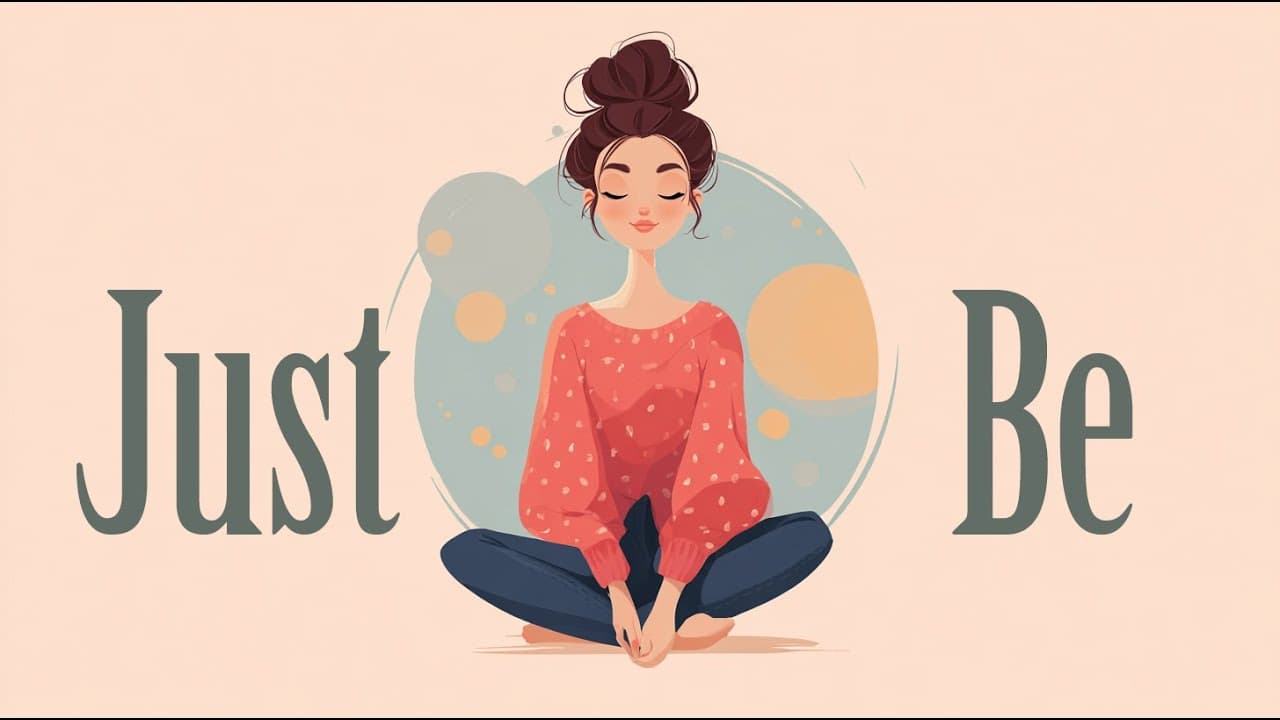
Settle into a comfortable position, close your eyes, and let your breath flow naturally while relaxing each part of your body. Allow gravity and the resting surface to support you, then release the need to act, fix, or prove anything. Rest in the pleasant feeling of simply being and recognize that you are already enough.
Transcript
For this practice, take your time getting into an extra comfortable position, whatever that looks and feels like to you right now, hitting pause if you need to and coming back once you feel extra cozy. When you're ready, lovingly close your eyes and begin to allow your awareness to drift inwards. Tuning in to breath, inviting it to flow freely and ... Read More
Key Insights
- Comfort is the starting point of the practice, with permission to pause the recording and adjust your position until you feel especially cozy. This removes the need to rush and establishes a supportive physical setting before attention turns inward.
- Natural breathing is the central anchor, and the breath is invited to flow freely without being forced or controlled. Awareness follows the expansion of each inhale and the release of each exhale while the muscles are allowed to relax.
- A body scan is used to deepen relaxation by moving awareness through the body and noticing where further release is possible. The practice treats relaxation as an invitation, allowing the body to soften gradually instead of demanding a particular result.
- Gravity is presented as a source of physical support, along with the surface beneath the body. Remembering that these forces are already holding you encourages the release of unnecessary muscular effort and the feeling that you must actively maintain your presence.
- The pleasure of simply being is explored through curiosity about where it is felt and what it feels like. Rather than pursuing an external achievement, the meditation invites attention toward an immediate pleasant sensation that can be experienced while resting.
- Simply being is described as a natural feeling that resembles returning home or remembering something familiar. Relaxation creates space to reconnect with this experience without needing to fix, perform, strive, or produce proof of personal worth.
- Enoughness is connected to remaining present with a pleasant internal feeling. The meditation states that there is nothing to do or prove, then invites relaxation into that recognition with gratitude for everything that has contributed to the present moment.
- The return to ordinary awareness is gradual and physical, beginning with a full inhale that expands the stomach and rib cage. After holding briefly and exhaling with a sigh, the practice concludes with shoulder rolls, finger and toe movements, and opening the eyes.
Install to Summarize YouTube Videos and Get Transcripts
Explore YouTube Video Summarizer or Get YouTube Transcript Extractor
Questions & Answers
Q: How do you begin this guided meditation?
Begin by taking enough time to find an especially comfortable position that feels right for you. Pause the recording if you need more time to settle. When ready, gently close your eyes and let your awareness move inward. Notice your breath and invite it to flow freely and naturally, without trying to force or manage its rhythm.
Q: How should you breathe during the meditation?
Allow your breath to remain easy, free, and natural. Notice a sense of expansion as you inhale and release as you exhale, while letting your muscles relax. Near the end, take one large breath that fully expands the stomach and rib cage, hold it at the top when ready, and then exhale with an audible sigh.
Q: How does the body scan support the practice?
The body scan directs awareness through the body while inviting each area to relax more deeply. It follows the initial connection with natural breathing and helps you notice where effort may still be present. The approach is gentle rather than forceful, with relaxation treated as something the body is allowed to experience while resting comfortably.
Q: Why does the meditation focus on gravity?
The focus on gravity reminds you that you do not need to hold yourself up during the practice. The surface beneath you prevents you from falling through the earth, while gravity keeps you from flying toward the sky. This image supports the invitation to release physical effort and trust that you can remain safely supported while simply being.
Q: What does the pleasure of simply being mean in this meditation?
The pleasure of simply being is the pleasant sensation discovered when effort, striving, and the need to prove something are set aside. The practice asks you to become curious about where this pleasure lives within you and exactly how it feels. You are encouraged to let your body enjoy it and recognize the feeling as natural and familiar.
Q: How does the meditation address the feeling of not being enough?
The meditation connects enoughness with the experience of simply being. It states that there is nothing you need to do and nothing you need to prove. By staying connected to the pleasant feeling of existence, you are invited to feel that you are enough in the present moment and to relax into that recognition with gratitude and appreciation.
Q: What role does gratitude play in the meditation?
Gratitude appears after the practice establishes relaxation, pleasant awareness, and a sense of enoughness. You are invited to relax into this knowing with gratitude in your heart and appreciation for everything that has led you to the present moment. It supports the closing phase by connecting simple presence with acknowledgment of the path that brought you there.
Q: How do you safely finish the guided meditation?
Finish gradually rather than opening your eyes immediately. Take a full breath into the stomach and rib cage, hold it at the top when you are ready, and exhale with a sigh. Let your breathing return to its regular pattern, slowly roll your shoulders, wiggle your fingers and toes, and then open your eyes to the surrounding world.
Summary & Key Takeaways
-
The practice begins by encouraging you to find an especially comfortable position, pausing if necessary until you feel settled. With your eyes gently closed, awareness turns inward toward natural breathing. Each inhale brings a sense of expansion, while each exhale supports release as the muscles gradually relax and effort begins to soften.
-
Attention then moves through the body in a relaxing scan. You are invited to trust gravity and the surface beneath you, recognizing that you do not need to hold yourself up. This physical support becomes a foundation for releasing effort, exploring the pleasure of existence, and reconnecting with the natural experience of simply being.
-
The meditation closes by reinforcing that nothing needs to be done or proved. Staying connected to the pleasant sensation of being supports a feeling of enoughness, gratitude, and appreciation. A deep inhale, a held breath, and a sighing exhale lead into shoulder rolls, moving the fingers and toes, and reopening the eyes.
Read in Other Languages (beta)
Share This Summary 📚
Summarize YouTube Videos and Get Video Transcripts with 1-Click
Try YouTube Summary with ChatGPT & Claude or YouTube Transcript Generator
Explore More Summaries from Great Meditation 📚



Summarize YouTube Videos and Get Video Transcripts with 1-Click
Try YouTube Summary with ChatGPT & Claude or YouTube Transcript Generator