Will Bitcoin Drop to the 200-Week Moving Average?
TL;DR
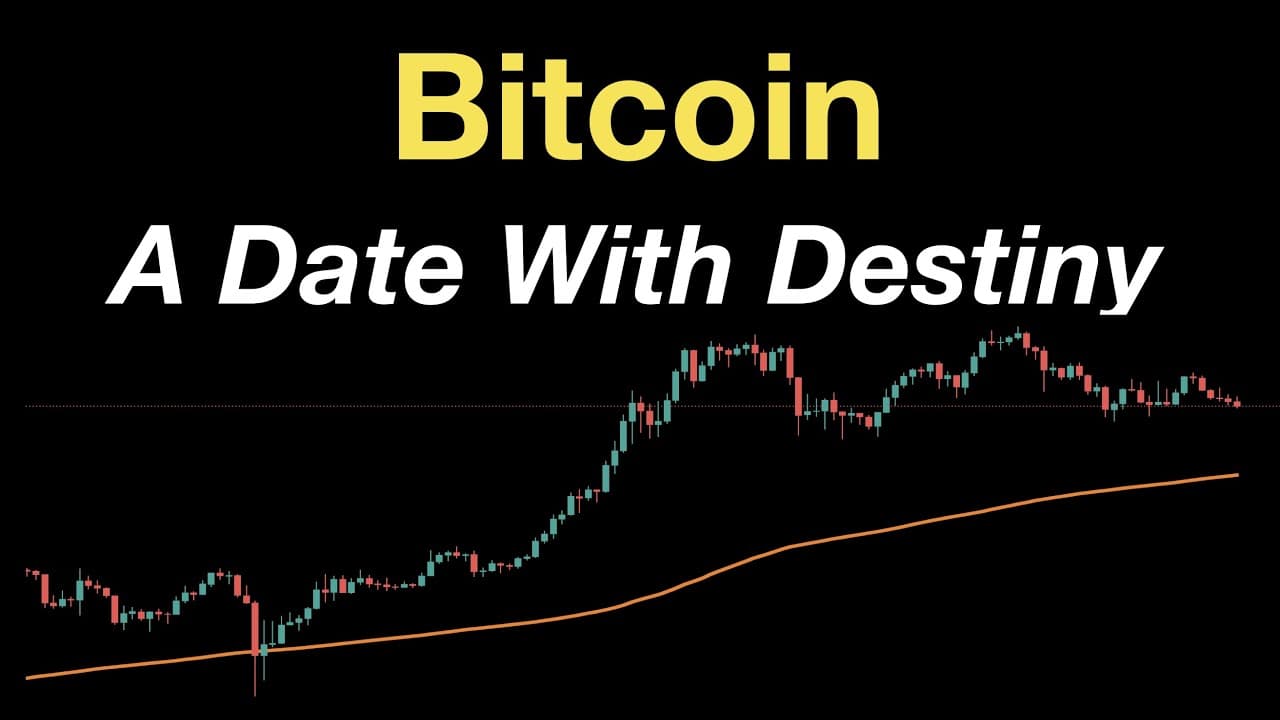
Bitcoin is likely to drop to the 200-week simple moving average if risk-off conditions persist, according to the speaker’s historical analysis. Every prior move below the 50-week average led to consolidation near the 100-week and capitulation toward the 200-week, then around $21.7K. The hawkish Fed and parabolic dollar reinforce this bearish outlook, while a Fed pivot could change it. Read on for the key levels, signals, and defensive strategy.
Transcript
hey everyone and thanks for jumping back into the cryptoverse today we're going to talk about bitcoin a date with destiny if you guys like the content make sure you subscribe to the channel give the video a thumbs up and also check out into the cryptoverse premium at into the cryptoverse.com now you guys know i've been pretty bearish over the last ... Read More
Key Insights
- Bitcoin is in a bear market despite putting in higher lows, because higher lows are meaningless when markets are risk off. The same pattern appeared in 2018, when people refused to call it a bear market until capitulation had already ended.
- The 200-week SMA is the key downside target, sitting at 20k back in February and now around 21.7k. This average will continue rising over time, so the eventual target level will keep increasing.
- Historically, every single time Bitcoin drops below the 50-week moving average, it consolidates around the 100-week and eventually capitulates to the 200-week. This held true even during the 2020 pandemic crash.
- The Fed being hawkish is the main reason to stay bearish. The speaker will remain bearish until the Fed pivots, or at least until markets start pricing in a pivot, before assuming risk-on assets will do well.
- The dollar is in a parabolic uptrend and likely to extend its rally past the March 2020 and late 2016 highs, potentially reaching around 112, which pressures risk assets like Bitcoin lower.
- A defensive strategy for this phase is being light on altcoins and holding a cash position. If Bitcoin reaches the 200-week moving average it would be a buying opportunity, and a wick to the 300-week would be as well.
- Traditional markets confirm the bearish backdrop, with the Nasdaq down more than 20 percent from its all-time high, making it hard to justify calling the current environment a bull market.
- Cycle theory suggests Bitcoin could move higher in 2023, but 2022 and at least the next several months are expected to remain bearish. Nothing turns bullish until price reclaims the bull market support band.
Install to Summarize YouTube Videos and Get Transcripts
Explore YouTube Video Summarizer or Get YouTube Transcript Extractor
Questions & Answers
Q: Will Bitcoin drop to the 200-week moving average?
The speaker believes Bitcoin will eventually fall to the 200-week moving average if the market remains risk off. He does not expect an immediate move there and says Bitcoin could first spend time near the summer lows.
Q: What was Bitcoin’s 200-week moving average at the time?
The 200-week simple moving average was around $21.7K at the time of the discussion, up from approximately $20K in February. The speaker notes that this average will continue to rise over time.
Q: Why is the 200-week moving average considered Bitcoin’s key downside target?
The speaker says every previous Bitcoin move below the 50-week moving average eventually led back to the 200-week average. In this pattern, Bitcoin drops below the 50-week, consolidates around the 100-week, and then capitulates toward the 200-week.
Q: Is Bitcoin in a bear market?
Yes, the speaker considers Bitcoin to be in a bear market and expects the next several months to remain bearish. He points to falling traditional markets, a parabolic dollar, and Bitcoin’s historical behavior below the 50-week moving average.
Q: Why does the Federal Reserve matter for Bitcoin’s outlook?
The speaker identifies the hawkish Fed as the main reason for maintaining a bearish outlook. He plans to remain bearish until the Fed pivots or markets begin pricing in a pivot, because he does not expect risk-on assets to perform well before then.
Q: Why don’t Bitcoin’s higher lows prove that the market is bullish?
The speaker argues that higher lows do not mean much when the broader market is risk off. He says Bitcoin can form higher lows or bounce from the 200-day moving average while still following a historical bear-market structure.
Q: How does the US dollar support the bearish Bitcoin thesis?
The dollar was in a parabolic uptrend and could potentially rally to around 112, according to the speaker. He views that strength, alongside declining traditional markets, as evidence that the environment is not a bull market for risk assets.
Q: What strategy does the speaker suggest during this Bitcoin bear market?
The speaker recommends staying light on altcoins and maintaining a cash position. He views a Bitcoin move to the 200-week moving average as a buying opportunity and says a wick to the 300-week average could also present one.
Summary & Key Takeaways
-
The speaker reiterates a bearish stance held over several months, arguing Bitcoin is in a bear market. Although the price is unchanged at 37k from two and a half months earlier, higher lows do not signal strength when the broader market is risk off.
-
Historical pattern analysis shows Bitcoin always capitulates to the 200-week SMA after dropping below the 50-week and consolidating near the 100-week. That 200-week average was 20k in February and is now roughly 21.7k, and continues to climb.
-
The macro picture keeps the outlook bearish: a hawkish Fed raising rates 50 basis points and a parabolic dollar heading toward 112. The advice is to stay light on altcoins, hold cash, and wait for the Fed to pivot before expecting a turnaround.
Read in Other Languages (beta)
Share This Summary 📚
Summarize YouTube Videos and Get Video Transcripts with 1-Click
Try YouTube Summary with ChatGPT & Claude or YouTube Transcript Generator
Explore More Summaries from Benjamin Cowen 📚





Summarize YouTube Videos and Get Video Transcripts with 1-Click
Try YouTube Summary with ChatGPT & Claude or YouTube Transcript Generator