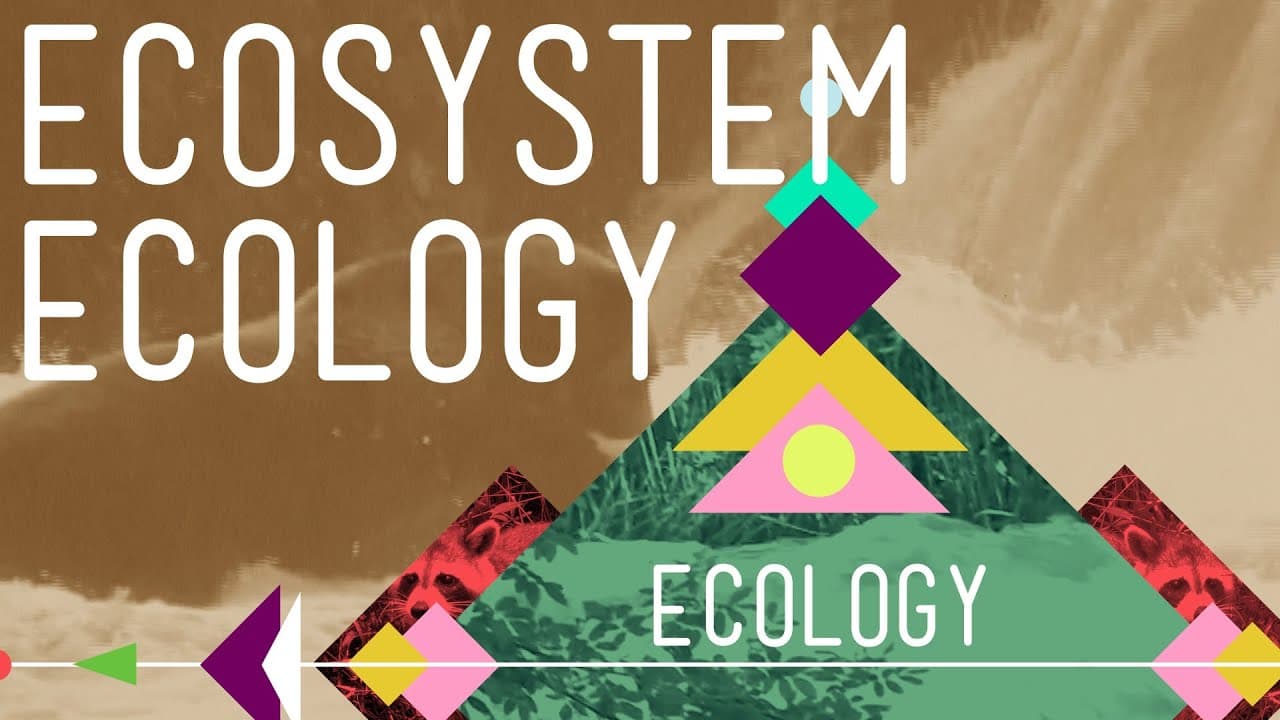
Ecosystem Ecology: Links in the Chain - Crash Course Ecology #7
TL;DR
Ecosystem ecology explores energy and nutrient flow in ecosystems.
Transcript
There's a lot of ideas that we just assume that we know a lot about because we hear about them all the time. For instance, I know what pop music is, but if you were to corner me at a party and say, "Hank, what is pop music?", I'd be like, "It's, uh...it's like, uh...the music that plays on the pop station?" Just because we're familiar with a concep... Read More
Key Insights
- Ecosystem ecology examines how energy and materials flow through ecosystems, unlike population or community ecology, which focus on interactions among species.
- Ecosystems lack defined boundaries, often blending into neighboring ecosystems, making their definition dependent on the research focus.
- Energy in ecosystems primarily originates from the sun, with autotrophs like plants converting solar energy into chemical energy.
- Trophic structures in ecosystems describe the hierarchy of energy transfer, from primary producers to tertiary consumers and detritivores.
- Food webs, rather than food chains, better represent the complex interactions and energy transfers in ecosystems.
- Ecosystem efficiency is low, with only 10% of energy transferred between trophic levels, leading to significant energy loss.
- Bioaccumulation results in the concentration of toxins like mercury increasing at higher trophic levels, posing risks to top predators, including humans.
- Consuming lower on the food chain is safer due to lower toxin accumulation, highlighting the importance of dietary choices in ecosystem health.
Install to Summarize YouTube Videos and Get Transcripts
Explore YouTube Video Summarizer or Get YouTube Transcript Extractor
Questions & Answers
Q: What is the primary focus of ecosystem ecology?
Ecosystem ecology primarily focuses on how energy, nutrients, and materials move through ecosystems. It examines the interactions between living and nonliving components, exploring the flow of energy from primary producers to various consumers and detritivores. This field of study highlights the complex web of relationships and transfers within ecosystems.
Q: How does the concept of trophic structures relate to ecosystem ecology?
Trophic structures are a key concept in ecosystem ecology, illustrating the hierarchy of energy transfer within ecosystems. Starting with primary producers that convert solar energy into chemical energy, trophic structures include primary consumers (herbivores), secondary consumers (carnivores), tertiary consumers, and detritivores. These structures help ecologists understand the flow of energy and nutrients through different levels of the ecosystem.
Q: Why are food webs considered more accurate than food chains in ecosystem studies?
Food webs are considered more accurate than food chains because they account for the complex and interconnected nature of ecosystems. While food chains present a linear sequence of who eats whom, food webs illustrate the multiple feeding relationships and interactions among organisms. This complexity better represents the reality of energy and nutrient flow within ecosystems, capturing the dynamic nature of ecological interactions.
Q: What is bioaccumulation, and why is it significant in ecosystem ecology?
Bioaccumulation refers to the increasing concentration of toxins, such as mercury, at higher trophic levels in an ecosystem. As organisms consume others, they retain 100% of the toxins, leading to higher concentrations in top predators. This phenomenon is significant because it poses health risks to animals at the top of the food chain, including humans, highlighting the importance of monitoring and managing toxin levels in ecosystems.
Q: How does energy transfer efficiency impact ecosystems?
Energy transfer efficiency in ecosystems is low, with only about 10% of energy moving from one trophic level to the next. This inefficiency results in significant energy loss, primarily used for metabolic processes. Consequently, organisms at higher trophic levels must consume more biomass to sustain themselves, influencing the structure and dynamics of ecosystems, as well as the availability of resources for different species.
Q: What role do autotrophs play in ecosystems?
Autotrophs, such as plants, play a crucial role in ecosystems as primary producers. They convert solar energy into chemical energy through photosynthesis, forming the foundation of the trophic structure. Autotrophs provide the essential energy and nutrients needed by primary consumers and, subsequently, higher trophic levels. Their productivity directly impacts the overall health and sustainability of ecosystems.
Q: Why is it important to consider ecosystem boundaries in ecological studies?
Considering ecosystem boundaries is important because ecosystems often lack clear edges and blend into neighboring systems. Defining these boundaries depends on the study's focus, as energy and nutrient flows can cross into adjacent ecosystems. Understanding these interactions is crucial for accurately assessing ecosystem dynamics, resource distribution, and the impact of environmental changes on interconnected systems.
Q: What are the implications of bioaccumulation for human dietary choices?
Bioaccumulation has significant implications for human dietary choices, as toxins like mercury become more concentrated at higher trophic levels. Consuming top predators, such as large fish, increases the risk of toxin exposure. Therefore, it is safer to eat lower on the food chain, such as primary producers or primary consumers, to minimize health risks associated with bioaccumulation, emphasizing the need for informed dietary decisions.
Summary & Key Takeaways
-
Ecosystem ecology focuses on the movement of energy, nutrients, and materials within ecosystems, looking at who eats whom and how these elements are transferred. Unlike other ecological studies, it does not have rigid boundaries, as ecosystems often blend into one another, making their definition dependent on the study's focus.
-
Energy primarily comes from the sun, with autotrophs converting it into chemical energy. Trophic structures illustrate energy transfer, with primary producers at the base and various consumer levels above. Food webs provide a more accurate depiction of these interactions than simple food chains.
-
The efficiency of energy transfer is low, with only 10% of energy moving to the next trophic level. However, toxins like mercury accumulate at each level, increasing in concentration. This bioaccumulation poses risks to top predators, including humans, emphasizing the importance of understanding and managing ecosystem interactions.
Read in Other Languages (beta)
Share This Summary 📚
Summarize YouTube Videos and Get Video Transcripts with 1-Click
Try YouTube Summary with ChatGPT & Claude or YouTube Transcript Generator
Explore More Summaries from CrashCourse 📚


Summarize YouTube Videos and Get Video Transcripts with 1-Click
Try YouTube Summary with ChatGPT & Claude or YouTube Transcript Generator