How Is AI Transforming Software and Industry?
TL;DR
AI creates the most value when people measure saved time and final output instead of token consumption. Experienced users can extract greater leverage because models amplify their judgment, taste, and domain knowledge, while improving agents increasingly plan work, compare tradeoffs, and direct humans toward the physical access, capital, or credentials needed to complete a task.
Transcript
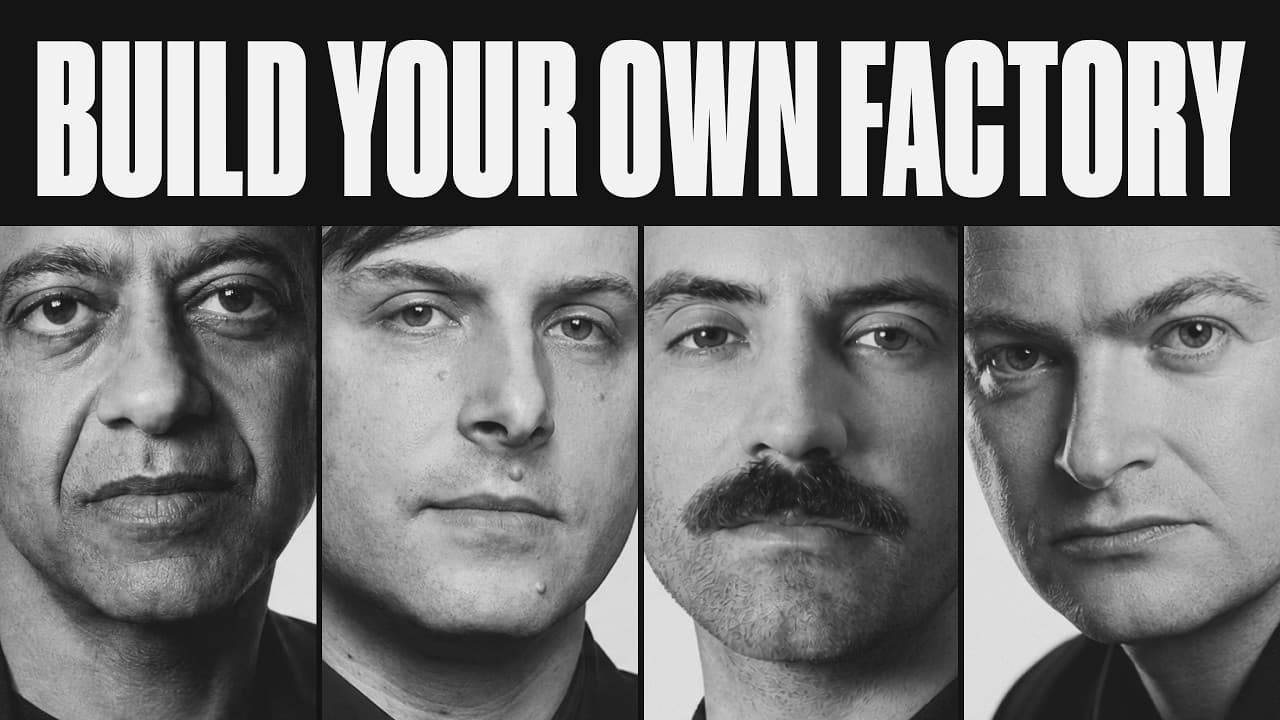
Welcome. You're listening to the Naval podcast, your authoritative source for new knowledge. We're trying something new today. Uh I have three frontier founders with us. Three good-looking guys actually, and a fourth good-looking guy, Naval. And let me just introduce everybody. Gumo the G Roush. Um he's building Versel into an AI cloud for the worl... Read More
Key Insights
- AI software factories shift engineering from producing individual features to creating systems that generate many useful outputs. Under this model, the engineer's value increasingly comes from designing a productive factory, supervising its operation, and improving the process that produces subsequent software.
- Token consumption is a poor proxy for engineering productivity because it resembles measuring software by lines of code. The more useful measures are how much human time an AI system saves and whether its final output meets the actual objective.
- AI models amplify the user's existing ability within a domain. Capable developers can obtain especially powerful results because they provide timely corrections, recognize tradeoffs, and steer architecture, while less experienced users may receive outputs shaped by their more limited judgment.
- Experienced architects may gain more leverage than junior engineers because model output still benefits from taste and technical judgment. Choosing databases, message queues, and system designs requires feedback that goes beyond generating an implementation for a predefined feature.
- Modern models increasingly act like intellectual peers by identifying multiple approaches and presenting their tradeoffs before implementation. Their estimates can still be wrong, but this planning behavior makes them resemble principal engineers more than tools that merely continue a prompt.
- Humans are becoming verifiers as models take on more implementation, planning, and technology selection. People still need to evaluate correctness, supply missing context, reject inappropriate decisions, and determine whether the proposed result is suitable for production or the physical world.
- Autonomous agents remain dependent on human-controlled resources such as API keys, capital, permissions, and physical action. Text-based command-line tools, direct service interfaces, and machine-accessible payment mechanisms could reduce that dependency and let agents obtain more of what their work requires.
- Pure software may become less defensible as models learn to communicate through ordinary language and generate code. The discussion therefore turns toward hardware, vertically integrated production, biological interfaces, regulation, infrastructure, art, and small teams as important frontiers for AI-enabled companies.
Install to Summarize YouTube Videos and Get Transcripts
Explore YouTube Video Summarizer or Get YouTube Transcript Extractor
Questions & Answers
Q: How should companies measure the return on AI coding tools?
Companies should measure AI coding tools by the human time they save and the quality of the completed result, not by how many tokens they consume or how many lines of code they produce. Token volume can rise because a user tries several models, requests revisions, or asks for production improvements. Those extra calls remain worthwhile when they reduce expensive human effort and lead to an acceptable final output.
Q: Why do experienced developers often get better results from AI?
Experienced developers bring judgment that helps them recognize bad assumptions, compare architectural tradeoffs, and provide precise corrections at important moments. The models can generate code and suggest technologies, but small pieces of feedback may substantially change the result. A capable developer therefore uses AI as leverage on existing expertise, while a junior developer may not notice when an apparently sophisticated recommendation is inappropriate for the system being built.
Q: What is an AI software factory?
An AI software factory is a system that produces many software outputs instead of requiring an engineer to implement each output directly. The engineer's work moves toward designing, prompting, supervising, and improving the production process. This changes evaluation from asking how well one person shipped a particular feature to asking whether that person created a mechanism capable of producing many useful features or solutions with multiplicative leverage.
Q: Why is token consumption a weak measure of AI productivity?
Token consumption measures model activity rather than useful business results. The discussion compares it with counting lines of code, since a larger quantity does not prove that the software is better or that the correct problem was solved. A person may deliberately spend more tokens by running Codex, Claude, and Gemini repeatedly, yet still create value if that approach saves time and produces a result worth shipping.
Q: How are AI models changing from junior to principal engineers?
Earlier models often continued a request directly and ran with the user's initial idea. Newer models can pause, identify several possible routes, and describe the tradeoffs associated with each one. That behavior resembles a principal engineer participating in an architectural discussion. The comparison remains imperfect because models can make poor forecasts about effort and timing, but their ability to plan and challenge technical assumptions has clearly increased.
Q: What role do taste and judgment play in AI-assisted engineering?
Taste and judgment guide choices that cannot be settled merely by generating more code. They help a developer decide which problem matters, whether a proposed architecture fits the workload, and which database or messaging technology should be selected. Models can explain options and sometimes warn against a poor choice, but human feedback still shapes the output. The user's ability to verify those recommendations remains a central source of leverage.
Q: What prevents AI agents from operating companies autonomously?
AI agents still depend on humans for resources and actions they cannot directly obtain, including API keys, capital, permissions, and access to parts of the physical world. The discussion suggests that service providers could expose command-line or API interfaces that agents can use directly. Text-based systems may even let an agent construct its own interface, while machine-accessible payments could allow it to purchase resources needed for its assigned work.
Q: Is pure software engineering becoming obsolete because of AI?
Pure software engineering faces pressure because models can understand ordinary, imperfect English and translate requests into code. That reduces the need for people to learn programming solely as a language for instructing computers. The discussion does not claim that all software work has already disappeared. Humans still provide architecture, verification, production standards, physical execution, and decisions about what to build, while hardware and vertically integrated systems may offer stronger differentiation.
Summary & Key Takeaways
-
AI is changing software engineering from manually producing each output to building systems that can generate many outputs. The discussion rejects token consumption as a meaningful productivity measure. Instead, teams should evaluate saved human time and final results, using additional model calls whenever their cost remains lower than the labor they replace.
-
Model performance depends partly on the judgment supplied by the user. Skilled developers can correct architectural choices, select appropriate technologies, and recognize weak output, while junior developers still gain access to code beyond their unaided abilities. As models improve, humans increasingly contribute taste, verification, context, and decisions about what deserves to be built.
-
The broader AI industrial revolution extends beyond pure software into hardware, biotechnology, aviation, infrastructure, regulation, and autonomous companies. Software agents still need human hands, permissions, capital, and interfaces to affect the physical world. The episode connects these constraints with vertical integration, healthcare innovation, artistic creation, and a future of numerous small teams.
Read in Other Languages (beta)
Share This Summary 📚
Summarize YouTube Videos and Get Video Transcripts with 1-Click
Try YouTube Summary with ChatGPT & Claude or YouTube Transcript Generator
Explore More Summaries from Naval 📚






Summarize YouTube Videos and Get Video Transcripts with 1-Click
Try YouTube Summary with ChatGPT & Claude or YouTube Transcript Generator