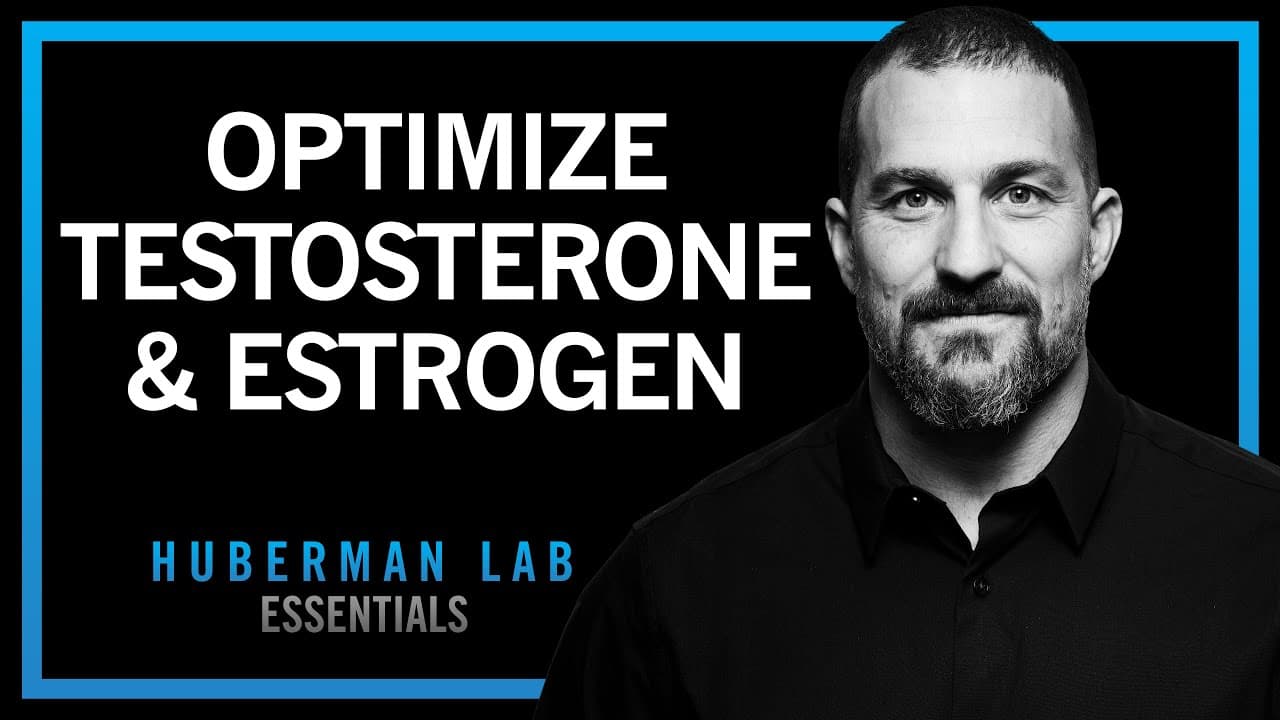
How to Optimize Hormone Levels for Health
TL;DR
Optimizing testosterone and estrogen levels involves understanding their sources, fluctuations with age, and the impact of behaviors like exercise, light exposure, and breathing patterns. Supplements and hormone therapies can help, but it's vital to consider safety precautions and individual health conditions. Proper sleep and stress management are also crucial for maintaining balanced hormone levels.
Transcript
welcome to hubman Labb Essentials where we revisit past episodes for the most potent and actionable science-based tools for mental health physical health and performance I'm Andrew huberman and I'm a professor of neurobiology and Opthalmology at Stanford school of medicine this podcast is separate from my teaching and research roles at Stanford bef... Read More
Key Insights
- Testosterone and estrogen are sex steroids present in both males and females, with ratios determining their effects.
- Ovaries and testes are the primary sources of estrogen and testosterone, respectively, with adrenals also contributing.
- Exercise, particularly heavy weight training, can increase testosterone levels, while endurance activities can decrease them if done first.
- Cold exposure can modulate sex steroid hormones through indirect mechanisms like increased blood flow.
- Proper breathing, especially nasal breathing, supports better sleep and hormone production by reducing sleep apnea.
- Light exposure, particularly in the morning, influences dopamine and hormone levels, impacting fertility and overall health.
- Supplements like Tongkat Ali and Fadogia Agrestis may increase free testosterone and luteinizing hormone, but caution is advised.
- Hormone therapies and supplements should be monitored with blood tests to ensure safety and effectiveness.
Install to Summarize YouTube Videos and Get Transcripts
Explore YouTube Video Summarizer or Get YouTube Transcript Extractor
Questions & Answers
Q: How do testosterone and estrogen fluctuate with age?
Testosterone and estrogen levels fluctuate significantly with age. In males, testosterone is low before puberty, spikes during puberty, and gradually declines at about 1% per year. In females, estrogen is low pre-puberty, surges during puberty, varies with menstrual cycles, and decreases significantly post-menopause. Understanding these patterns is crucial for hormone optimization.
Q: What behaviors can increase testosterone levels?
Behaviors that can increase testosterone levels include engaging in competitive activities, performing heavy weight training, and exposure to cold environments. These activities stimulate testosterone production through various mechanisms, such as increased dopamine release and improved blood flow. It's important to balance these activities with proper rest and stress management for optimal hormone health.
Q: Why is nasal breathing important for hormone health?
Nasal breathing is important for hormone health because it reduces sleep apnea and improves sleep quality, which are crucial for hormone production. Proper breathing during sleep enhances oxygen intake and carbon dioxide offloading, supporting the function of the gonads and the production of testosterone and estrogen. Daytime nasal breathing during exercise also helps improve lung capacity and overall respiratory efficiency.
Q: How does light exposure affect hormone levels?
Light exposure, especially in the morning, affects hormone levels by increasing dopamine release, which in turn stimulates the production of testosterone and estrogen. Morning light exposure helps regulate circadian rhythms, optimizing cortisol release and supporting overall endocrine health. Avoiding bright light at night prevents dopamine suppression and maintains healthy hormone levels.
Q: What role does exercise play in hormone optimization?
Exercise plays a significant role in hormone optimization by influencing testosterone and estrogen levels. Heavy weight training increases testosterone, while endurance activities, if done before weight training, can decrease it. High-intensity interval training can boost testosterone, while prolonged endurance exercise may lead to cortisol-induced testosterone reductions. Proper exercise order and intensity are key for hormone balance.
Q: What supplements can aid in hormone optimization?
Supplements such as Tongkat Ali and Fadogia Agrestis may aid in hormone optimization by increasing free testosterone and luteinizing hormone levels. However, it's essential to approach supplementation with caution, considering possible side effects and interactions. Regular blood tests are recommended to monitor hormone levels and ensure the safety and effectiveness of any supplementation regimen.
Q: How does cold exposure influence hormone levels?
Cold exposure influences hormone levels by causing vasoconstriction followed by vasodilation, which increases blood flow to the gonads. This process may indirectly support testosterone and estrogen production. While the exact mechanisms are not fully understood, cold exposure is believed to enhance hormone levels through improved circulation and stress resilience.
Q: Why is monitoring hormone levels important when using supplements?
Monitoring hormone levels is crucial when using supplements because it helps ensure safety and effectiveness. Hormone levels can be sensitive to changes, and improper supplementation can lead to imbalances or adverse effects. Regular blood tests provide valuable insights into how supplements are affecting hormone production and help guide adjustments to achieve optimal health outcomes.
Summary & Key Takeaways
-
Testosterone and estrogen are crucial sex steroids influencing fertility and well-being. Their production is mainly from the ovaries, testes, and adrenals. Exercise, particularly weight training, enhances testosterone, while cold exposure and nasal breathing improve hormone balance. Proper light exposure regulates dopamine, impacting hormone levels and fertility.
-
Hormone optimization involves understanding age-related fluctuations and behavioral impacts. Supplements like Tongkat Ali can boost testosterone, but safety precautions are essential. Light exposure, especially in the morning, enhances hormone production by increasing dopamine. Nasal breathing during sleep reduces apnea, supporting hormone health.
-
Managing hormone levels requires a comprehensive approach, including exercise, light exposure, and proper breathing. Supplements and hormone therapies can aid optimization but should be used cautiously. Regular blood tests are crucial for monitoring hormone levels and ensuring safe and effective treatment outcomes.
Read in Other Languages (beta)
Share This Summary 📚
Summarize YouTube Videos and Get Video Transcripts with 1-Click
Try YouTube Summary with ChatGPT & Claude or YouTube Transcript Generator
Explore More Summaries from Andrew Huberman 📚
Summarize YouTube Videos and Get Video Transcripts with 1-Click
Try YouTube Summary with ChatGPT & Claude or YouTube Transcript Generator