Top 5 LLM Fine-Tuning Use Cases You Need to Know
TL;DR
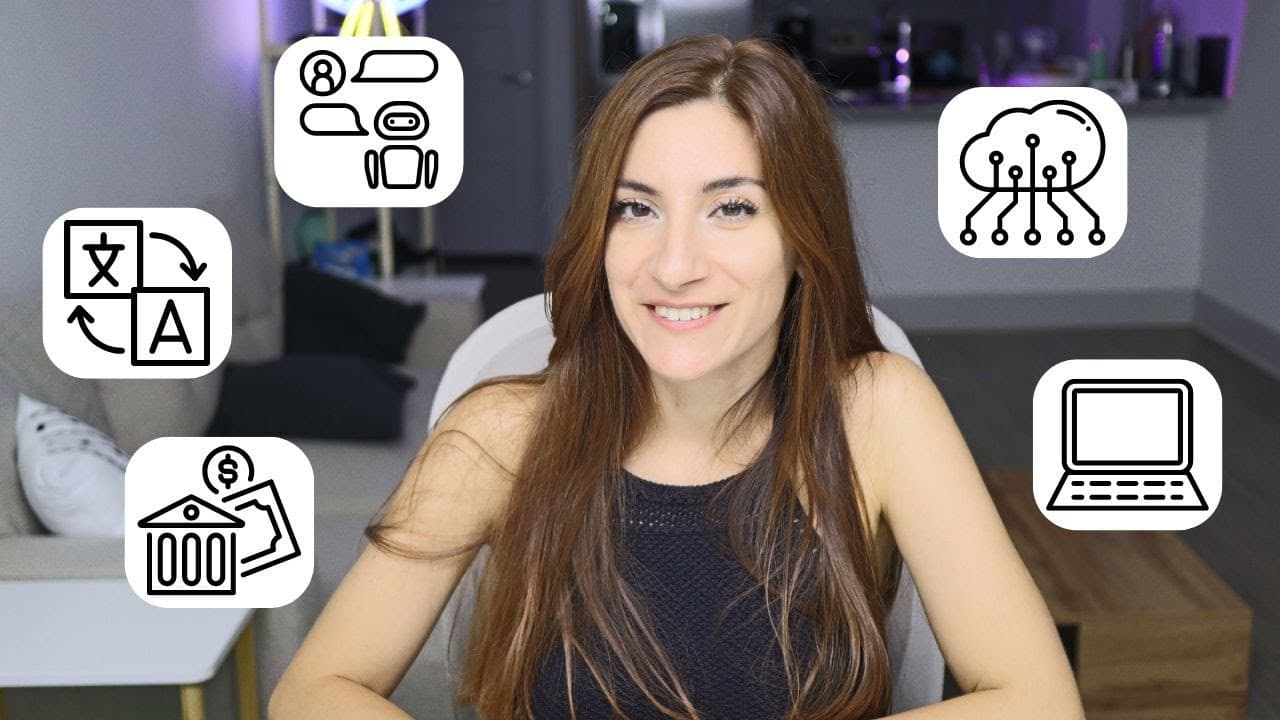
The five practical LLM fine-tuning use cases are financial analysis, custom-tone generation, language translation, data extraction, and code generation. Fine-tuning retrains a base model such as Llama, GPT, or Bloom on new data to shape how it behaves or communicates, rather than teaching it new information. The examples, benefits, workflows, and limitations below show where this approach can be useful.
Transcript
few months ago Sam Altman said Size Doesn't Matter okay maybe I oversimplified things a little what he actually said is that open AI would no longer prioritize parameter camp and the size of large language models but would instead focus on delivering capable useful and safe models and that's how we found out that event giants like open AI are hesit... Read More
Key Insights
- 🚙 OpenAI's shift towards capability and utility over large parameter sizes.
- 🥠 Practical applications of fine-tuning large language models in finance for sentiment analysis.
- 🥠 Custom tone generation for chatbots and content creation using fine-tuned models.
- 🥠 Improvement in language translation accuracy through fine-tuned models.
- 💁 Extracting information and structuring data using fine-tuned models for automation.
- 👨💻 Privacy benefits of fine-tuned models for generating code snippets.
- 👨💻 Notable fine-tuned models like Wizard Coder and Code Llama for code generation.
Install to Summarize YouTube Videos and Get Transcripts
Explore YouTube Video Summarizer or Get YouTube Transcript Extractor
Questions & Answers
Q: What are the top five use cases for fine-tuning large language models?
The five use cases are financial analysis, custom-tone generation, language translation, information extraction and data structuring, and code generation. These applications can support investment research, customer service, content creation, automation, translation, and private coding workflows.
Q: What is LLM fine-tuning?
Fine-tuning is the process of retraining a foundational model such as Llama, GPT, or Bloom on new data. It guides the model to restructure its existing knowledge and teaches it how to behave or communicate in a specific manner rather than supplying new information.
Q: What benefits can fine-tuned language models provide?
Fine-tuned models can improve the user experience, produce higher-quality results with fewer hallucinations, and deliver excellent accuracy. They can also reduce costs because users can achieve the desired behavior with shorter prompts.
Q: How can fine-tuned LLMs be used in finance and investment?
A finance-focused model can perform sentiment analysis by classifying text as negative, neutral, or positive. Finn GPT is trained on financial news, social media, Google Trends, and SEC filings, and its authors describe possible uses including personalized financial advisors, investment guidance, robo-advisors, and financial education.
Q: How can financial-news sentiment analysis be automated with Finn GPT?
The demonstrated workflow loads the ChatGLM2 6-billion-parameter model and a LoRA adapter, then asks Finn GPT to classify a news headline as negative, neutral, or positive. A Python script using Beautiful Soup and Requests can scrape h2 headlines from InvestorPlace and insert them into the prompt automatically.
Q: What are the limitations of using fine-tuned LLMs for investment decisions?
Stock prediction remains unreliable because life is unpredictable and unexpected events occur. Models can also become outdated because their training data may contain information that turns obsolete over time, so the described approach is not financial advice.
Q: Why fine-tune an LLM to use a custom tone?
A custom tone can help conversational agents and chatbots provide personalized customer support. It can also maintain a consistent brand voice across blog posts, social media updates, and marketing materials, while Harrison Chase demonstrated a system that generates tweets styled like Elon Musk.
Q: How can fine-tuning support translation, data extraction, and code generation?
Fine-tuning can make translations more accurate and contextually appropriate, including for specialized material such as religious texts. It can also extract and structure information for automation or generate code snippets with privacy benefits; the named code-focused examples are Wizard Coder and Code Llama.
Summary & Key Takeaways
-
OpenAI shifts focus from size to capability, leading to an emphasis on fine-tuning large language models.
-
Five practical use cases for fine-tuning models, including finance, custom tones for chatbots, language translation, extracting data, and generating code snippets.
-
Fine-tuning offers improved user experience, cost savings, and accuracy in various applications.
Read in Other Languages (beta)
Share This Summary 📚
Summarize YouTube Videos and Get Video Transcripts with 1-Click
Try YouTube Summary with ChatGPT & Claude or YouTube Transcript Generator
Explore More Summaries from Maya Akim 📚




Summarize YouTube Videos and Get Video Transcripts with 1-Click
Try YouTube Summary with ChatGPT & Claude or YouTube Transcript Generator