Simon Sinek on Humility and Adaptive Leadership
TL;DR
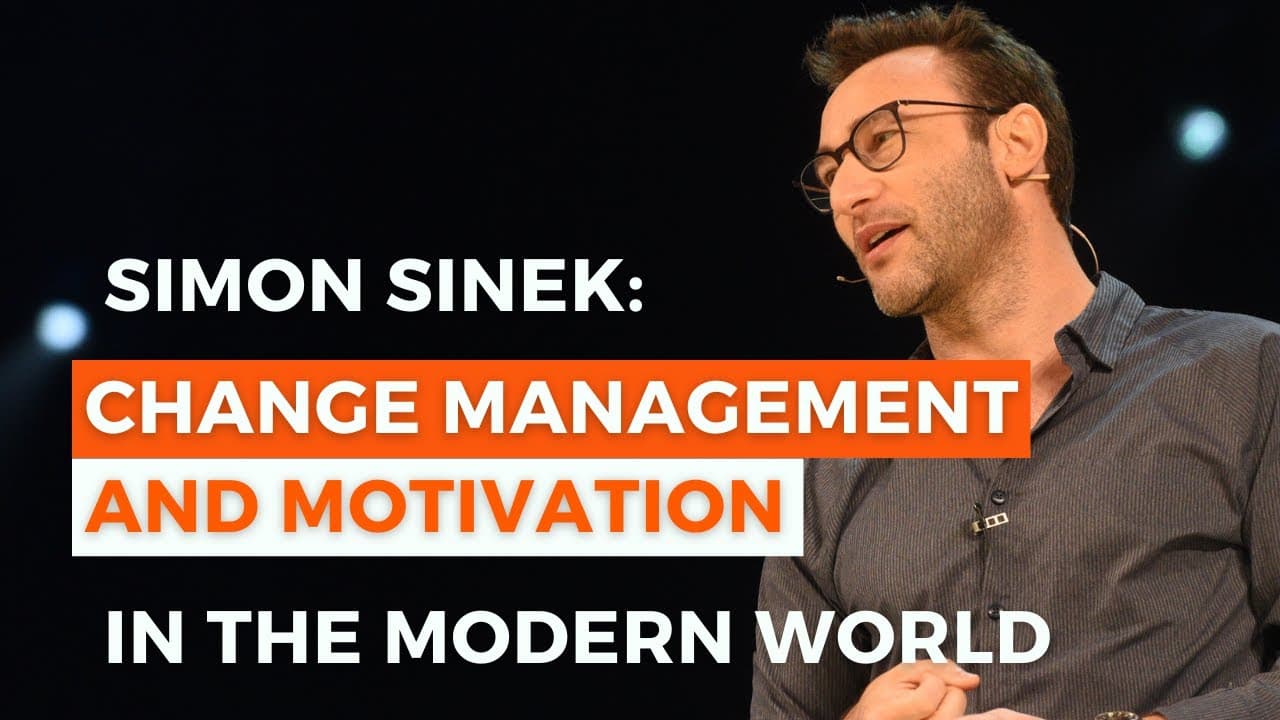
Great leadership means adapting your style to the situation while consistently putting people first, practicing empathy, and using human skills. Simon Sinek says command-and-control should activate only during extreme stress, after trust has been built in good times, and switch off when the crisis ends. He also argues that seniority’s perks belong to the position, not the person. Read on for practical lessons about trust, humility, and decision-making.
Transcript
How we feeling? You excited? Yeah, good. I was doing jumping jacks in the back. Were you? Is that what you do before you go? Oh. Um, okay. So, I don't know if everybody knows this, but you don't preview any of the questions that I'm going to ask you. So, um, but I do, if it's okay, I want to start off with one that is something a little more person... Read More
Key Insights
- There is no single way to lead, but foundational principles are universal: put people first, practice empathy, and use human skills, while letting your own personality show up in how you apply them.
- Command-and-control leadership makes for exciting movies but is actually terrible in practice. Real high-functioning organizations run quietly, where people help each other and work gets done whether or not the boss is present.
- Command-and-control leadership only works in times of extreme stress, and only when trust has already been built during good times. When the stress passes, a good leader turns that mode back off.
- Good decision-making improves with more information and perspectives, which is why even the Marine Corps emphasizes feedback and asking 'what do you think?' rather than screaming orders. No leader is expected to have all the answers.
- Humility is everything in leadership because no one achieves what they achieve alone. Someone always took a bet on you, gave you an opportunity, or let you try again after you failed.
- Leaders lacking gratitude and humility usually carry underlying fear and insecurity that will eventually backfire. The best leaders deflect compliments by saying 'it wasn't just me.'
- The perks of seniority, such as more money, a better parking space, or someone fetching your jacket, are given to the position you hold, not to you personally, as the styrofoam-cup story illustrates.
- When danger threatens the tribe, leaders must be willing to give up the perks of their position. Facing potential loss, as in the LA fires, shifts people toward gratitude and a desire to give more.
Install to Summarize YouTube Videos and Get Transcripts
Explore YouTube Video Summarizer or Get YouTube Transcript Extractor
Questions & Answers
Q: How should leaders adapt their leadership style to different situations?
Leaders should preserve foundational principles such as putting people first, practicing empathy, and using human skills while adjusting their style to the situation. In normal conditions, they should seek input and perspectives; during extreme stress, they may temporarily use command-and-control.
Q: Why is command-and-control usually a poor everyday leadership style?
Command-and-control concentrates action around a leader who screams orders and appears to save the day, which Simon Sinek calls terrible leadership despite its appeal in movies. In a strong organization, work gets done quietly and people help one another whether or not the boss is present.
Q: When should a leader use command-and-control?
Command-and-control should be used rarely and only during extreme stress, when ordinary consultation is no longer practical. It works only if trust was already built during good times, and the leader should turn it off after the crisis passes.
Q: How does gathering different perspectives improve leadership decisions?
More information and perspectives improve a leader’s decision-making ability. Leaders are not expected to have every answer, so asking others what they think and gathering their points of view are essential practices.
Q: What did Simon Sinek observe about leadership in the Marine Corps?
During a visit to Quantico, where the Marine Corps selects officers through OCS, Sinek learned that Marines are not constantly screaming orders as television might suggest. Their leadership includes substantial feedback, requests for input, and questions such as “What do you think?”
Q: Why is humility important in leadership?
Sinek says no one achieves success entirely alone; someone provided an opportunity, took a chance, or allowed another attempt after failure. Effective leaders therefore respond to recognition with gratitude and acknowledge that the result was not theirs alone.
Q: What is the lesson of the under secretary’s styrofoam-cup story?
As under secretary of defense, the speaker received business-class travel, transportation, assistance, and coffee in a ceramic cup. After leaving office, he traveled coach and poured his own coffee into styrofoam, realizing that the ceramic cup and other privileges belonged to his position rather than to him personally.
Q: How did the LA wildfire crisis change people’s perspective?
As evacuation zones moved closer to his home, Sinek mentally chose what he would leave behind and felt immense gratitude for what he still had. A friend who lost his house and everything inside concluded that he had spent too much of his life taking and now needed to give more through service.
Summary & Key Takeaways
-
Simon Sinek opens by describing the tense week of the LA wildfire crisis, checking the Watchduty app obsessively as evacuation zones crept closer. Facing potential loss made him grateful for what he has, and a friend who lost everything realized he needed to shift from being a taker to giving more.
-
On leadership, Sinek explains styles must adapt to situations while foundational principles like empathy and putting people first stay universal. Command-and-control leadership makes exciting movies but is terrible in practice; it should only switch on during extreme stress, and only after trust has been built in good times.
-
Sinek stresses humility, noting no one succeeds alone. He tells the under secretary's styrofoam-cup story: the ceramic cup and travel perks were meant for the position, not the person. A retired CEO's lost party invitation reinforces that status and its privileges belong to the role, not the individual.
Read in Other Languages (beta)
Share This Summary 📚
Summarize YouTube Videos and Get Video Transcripts with 1-Click
Try YouTube Summary with ChatGPT & Claude or YouTube Transcript Generator
Explore More Summaries from Simon Sinek 📚





Summarize YouTube Videos and Get Video Transcripts with 1-Click
Try YouTube Summary with ChatGPT & Claude or YouTube Transcript Generator