Can AI Make Better Decisions Than Humans?
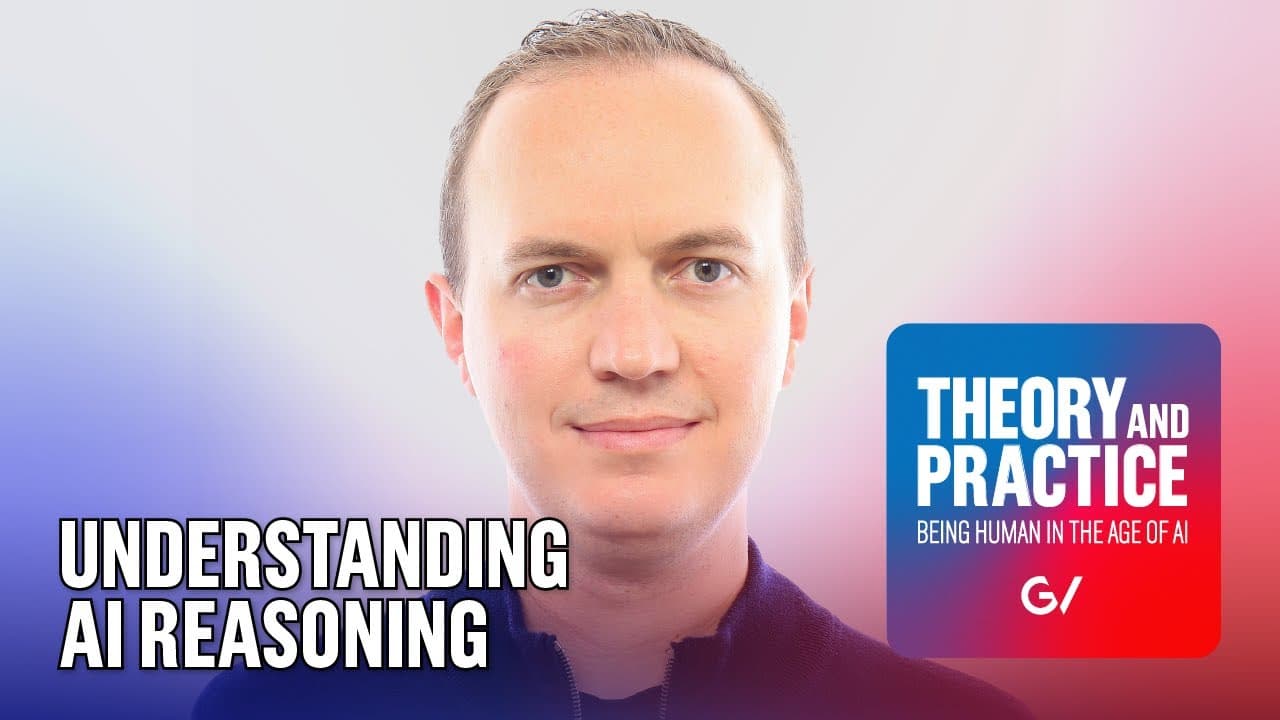
TL;DR
Computers are evolving to perform tasks traditionally reserved for human judgment, including medical decision-making. Key components like predictive models, memory, and reasoning are crucial for AI to make informed judgments. As AI continues to grow, it could surpass human capabilities in specific domains, particularly in healthcare.
Transcript
welcome to GV theory and practice this series is exploring what it means to be human in the age of human-like AI I'm Anthony filipakis and I'm Alex wilchico this is our seventh episode and today we're going to be talking about computers using judgment and making decisions these really are tasks that until now have been The Preserve of humans so for... Read More
Key Insights
- 🎭 Computers are becoming capable of performing tasks traditionally done by humans, such as making judgments and decisions.
- 💻 The Chinese Room argument, which questions whether computers can have human-like understanding, has been refuted through various counterarguments.
- 🤩 Key components necessary for computers to make judgments and decisions include predictive models, memory, reasoning, and the ability to take action.
- 🌍 The future of AI involves advancements in these components, as well as embodying machines to interact with the physical world.
- 🌥️ Computers can already outperform humans in certain tasks, particularly perception and classification, due to their ability to process and analyze large amounts of data.
- 🎰 Humans possess unique cognitive abilities, such as creativity and empathy, which are currently challenging to replicate in machines.
- 🦻 AI has the potential to revolutionize healthcare and biology by aiding in tasks such as disease diagnosis, genomics research, and treatment optimization.
Install to Summarize YouTube Videos and Get Transcripts
Explore YouTube Video Summarizer or Get YouTube Transcript Extractor
Questions & Answers
Q: Can computers make better decisions than humans?
In certain tasks, computers have already demonstrated the ability to outperform humans, particularly in perception and classification tasks. However, humans still excel in certain areas that require empathy, creativity, and understanding the broader context.
Q: How do humans and computers differ in their approach to learning from errors?
Humans have a reward signal that drives their learning, which is influenced by biological factors and often prioritizes short-term pleasure over long-term survival. Computers, on the other hand, can have a specified reward function, allowing us to optimize their learning based on our preferences and goals.
Q: What are the challenges involved in creating machines that have the same cognitive abilities as humans?
Implementing human-like cognitive abilities in machines requires advancements in various areas, including perception, memory, decision-making, and embodiment. While progress has been made in training large neural networks, there are still limitations in memory systems, real-time perception, and integrating these components seamlessly.
Q: How can AI contribute to healthcare and biology?
AI has the potential to assist in tasks such as diagnosing diseases, analyzing genomics data, and discovering new treatments. By leveraging AI's ability to process and understand vast amounts of data, it can aid in solving complex healthcare and biological problems.
Summary & Key Takeaways
-
Computers are being developed to perform tasks that were traditionally done by humans, such as making judgments and decisions in areas like healthcare.
-
The Chinese Room argument, which questions whether computers can have human-like understanding, is examined and refuted through different perspectives.
-
Key components for computers to make judgments and decisions include predictive models, memory, reasoning, and the ability to take action.
-
The future of AI involves further advancements in these components, as well as embodying machines to interact with the physical world.
Read in Other Languages (beta)
Share This Summary 📚
Summarize YouTube Videos and Get Video Transcripts with 1-Click
Try YouTube Summary with ChatGPT & Claude or YouTube Transcript Generator
Explore More Summaries from GV (Google Ventures) 📚





Summarize YouTube Videos and Get Video Transcripts with 1-Click
Try YouTube Summary with ChatGPT & Claude or YouTube Transcript Generator