Hunter Fraser, Pooled ChIP-seq identifies QTLs affecting transcription factor binding
TL;DR
Researchers use a pooled chip-seq method to identify genetic variants in non-coding regions that affect transcription factor binding and complex traits, providing insights into the molecular mechanisms of genotype-phenotype relationships.
Transcript
normally whenever I give a talk in front of my PhD advisor Mike Eisen I like to take the opportunity to poke some fun at him but in this instance I decided not to after seeing the very public humiliation that he doled out to my postdoc advisor to Eric Lander so I think I'm just gonna let that slide this time in the hopes that I stay on Mike's good ... Read More
Key Insights
- 🖐️ Non-coding genetic variants play a major role in complex traits, as shown by the enrichment of binding qtls in regions associated with complex traits.
- 👻 Pooled chip-seq allows for efficient mapping of binding qtls and reduces experimental variability.
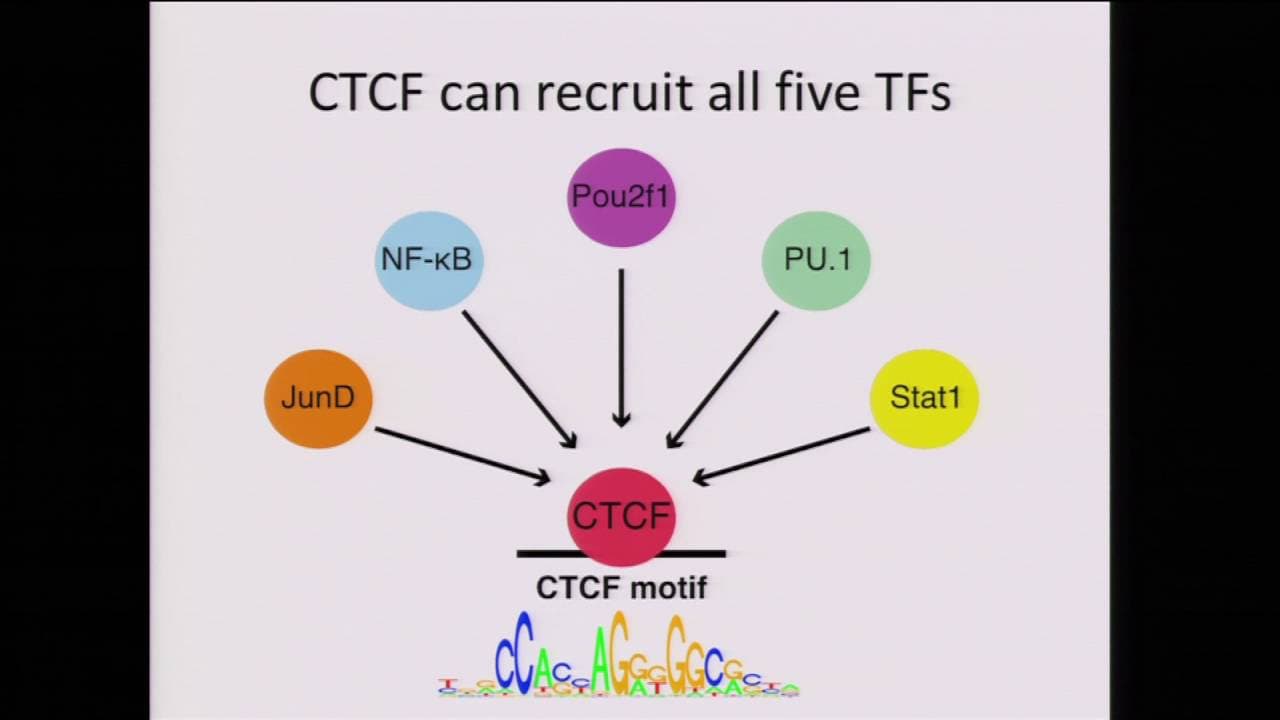
- 😑 Bqtls can affect multiple transcription factors, indicating complex interactions in gene expression regulation.
- 😑 The presence of binding qtls in enhancers and promoters suggests their role in gene expression regulation.
- 😑 Chromosomal interactions play a role in the functionality of binding qtls, impacting gene expression across long distances.
- ❓ Bqtls have implications for population-specific traits and complex diseases.
- 🧑🏭 Different transcription factors can recruit each other to binding sites, indicating the complexity of transcriptional regulation.
Install to Summarize YouTube Videos and Get Transcripts
Explore YouTube Video Summarizer or Get YouTube Transcript Extractor
Questions & Answers
Q: What is the main focus of research in the author's lab?
The main focus is understanding how genotype affects phenotype, specifically in relation to non-coding genetic variation and complex traits.
Q: What is the significance of genome-wide association studies (GWAS)?
GWAS have transformed our ability to associate genotype with phenotype by identifying regions of the genome that contribute to variation in complex traits.
Q: How do researchers overcome the challenge of studying non-coding regions?
By using a pooled chip-seq approach, researchers can identify genetic variants that affect transcription factor binding in non-coding regions, providing insights into their impact on gene expression regulation.
Q: How do these bqtls affect disease risk?
By affecting transcription factor binding, bqtls can impact gene expression and potentially contribute to disease risk for complex traits.
Summary & Key Takeaways
-
Traditional research on genotype-phenotype relationships has focused on protein coding changes in Mendelian traits, but recent studies have shown that non-coding genetic variants also play a major role in complex traits.
-
Using a pooled chip-seq approach, researchers mapped thousands of genetic variants (binding qtls or bqtls) that affect transcription factor binding in non-coding regions.
-
These bqtls are found to be enriched in regions associated with complex traits and have potential implications for disease risk and gene expression regulation.
Read in Other Languages (beta)
Share This Summary 📚
Summarize YouTube Videos and Get Video Transcripts with 1-Click
Try YouTube Summary with ChatGPT & Claude or YouTube Transcript Generator
Explore More Summaries from Stanford 📚



Summarize YouTube Videos and Get Video Transcripts with 1-Click
Try YouTube Summary with ChatGPT & Claude or YouTube Transcript Generator