What Are the Trickster Roles of Hermes and Loki?
TL;DR
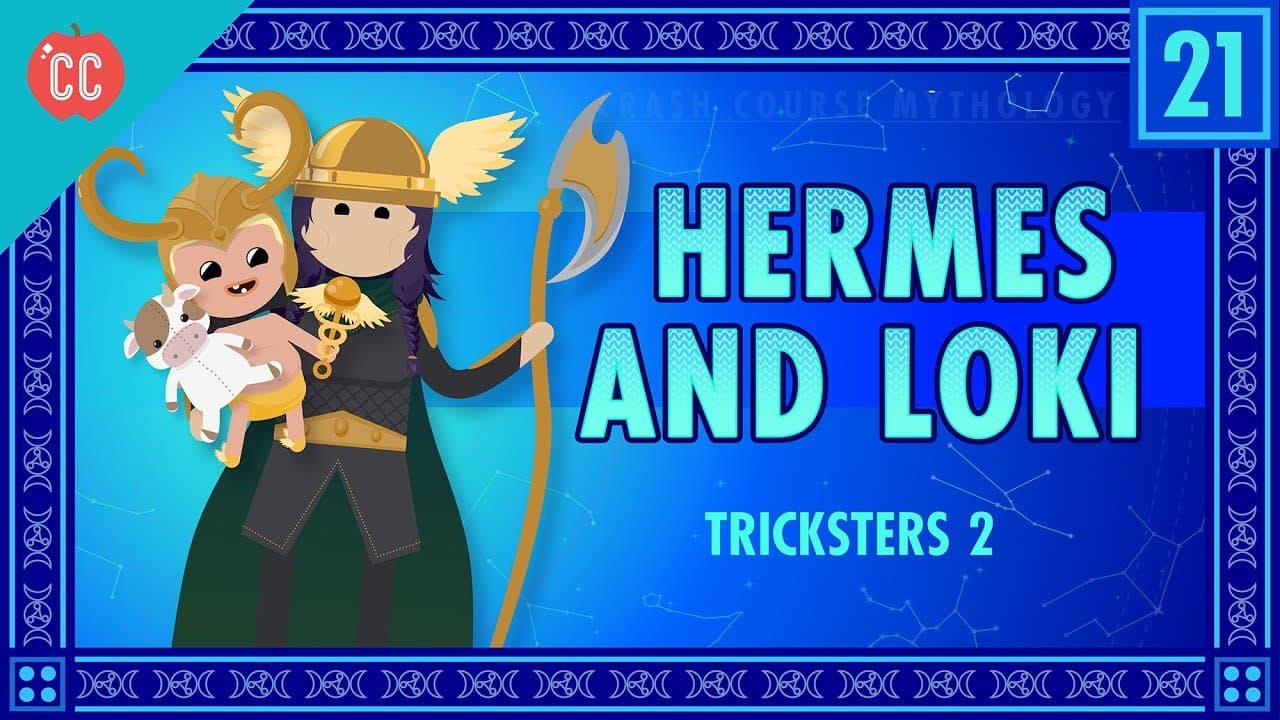
Hermes and Loki serve as cultural trickster heroes in mythology, with Hermes using his cunning to create the lyre and deceive Apollo, while Loki's mischief leads to the creation of legendary artifacts like Mjolnir. Their stories highlight the duality of creation and destruction, showcasing how tricksters cleverly navigate challenges and influence their cultures.
Transcript
Hey there. I'm Mike Rugnetta. This is crash course Mythology, and today we're continuing with Tricksters We're going to look at the trickster as a culture hero Meaning someone whose creativity adds to the culture of the mythological world they inhabit We're going to focus on Europe in this episode looking specifically at Hermes the greek version of... Read More
Key Insights
- Hermes is often depicted as a messenger and is known for his inventiveness, which makes him a culture hero in Greek mythology.
- The myth of Hermes as a baby highlights his trickster qualities, including deceitfulness, inventiveness, and charm, which contribute to his cultural significance.
- Hermes' creation of the lyre from a tortoise shell is significant for Greek culture, symbolizing the link between creation and destruction.
- Loki, a central figure in Norse mythology, uses his wit to navigate the consequences of his trickery, such as stealing Sif's hair.
- Loki's actions lead to the creation of important Norse mythological artifacts, including Mjolnir, which becomes a symbol of protection for the gods.
- The story of Loki and the dwarves Brokk and Eitri demonstrates the competitive nature of craftsmanship in Norse mythology.
- Both Hermes and Loki's stories illustrate that tricksters can influence culture positively, even if their actions are initially disruptive.
- Tricksters like Hermes and Loki provide models for human behavior, emphasizing problem-solving and wit over supernatural abilities.
Install to Summarize YouTube Videos and Get Transcripts
Explore YouTube Video Summarizer or Get YouTube Transcript Extractor
Questions & Answers
Q: What role does Hermes play in Greek mythology?
Hermes is primarily known as a messenger god in Greek mythology, but he also embodies the qualities of a trickster. His inventiveness and charm make him a culture hero, as seen in the myth where he creates the lyre from a tortoise shell, influencing Greek culture and myth.
Q: How does Hermes' creation of the lyre impact Greek culture?
Hermes' creation of the lyre from a tortoise shell is significant as it becomes one of Apollo's main symbols, representing music and storytelling. This myth highlights the connection between creation and destruction, as Hermes' actions contribute to the cultural and mythological landscape of ancient Greece.
Q: What consequences does Loki face for stealing Sif's hair?
Loki faces the wrath of Thor for stealing Sif's hair, leading him to seek the help of dwarves to create a magical replacement. His actions result in the creation of several important Norse artifacts, such as Mjolnir, but he narrowly avoids losing his head through his wit and cleverness.
Q: What is the significance of Mjolnir in Norse mythology?
Mjolnir, the hammer created by the dwarves Brokk and Eitri, is significant in Norse mythology as it symbolizes Thor's power and protection over the gods. Despite its short handle, Mjolnir is unbreakable and always returns to Thor, becoming a crucial element in the defense against giants.
Q: How does Loki's trickery affect the Norse gods?
Loki's trickery, such as the theft of Sif's hair, leads to the creation of valuable artifacts for the Norse gods. His actions, while initially disruptive, ultimately result in gifts that become foundational to Norse mythology, demonstrating the dual nature of tricksters as both troublemakers and cultural contributors.
Q: What lesson can be drawn from Hermes and Loki's stories?
The stories of Hermes and Loki illustrate that tricksters, despite their mischief, can have a positive impact on culture and mythology. Their wit and inventiveness offer a model for human behavior, emphasizing the importance of problem-solving and creativity in navigating challenges and influencing cultural narratives.
Q: What role do dwarves play in Loki's story?
In Loki's story, dwarves play a crucial role as master craftsmen who create significant artifacts for the Norse gods. The competitive nature between the dwarves, spurred by Loki's manipulation, leads to the creation of treasures like Mjolnir, highlighting the importance of craftsmanship in Norse mythology.
Q: Why are Hermes and Loki considered culture heroes?
Hermes and Loki are considered culture heroes because their actions, though often mischievous, lead to the creation of important cultural and mythological elements. Hermes' invention of the lyre and Loki's involvement in the creation of Norse treasures exemplify how tricksters can contribute to the cultural fabric of their respective mythologies.
Summary & Key Takeaways
-
This episode of Crash Course Mythology explores the roles of Hermes and Loki as trickster figures and culture heroes. Hermes' story involves his cunning as a baby, creating the lyre and deceiving Apollo, while Loki's tale focuses on his mischief leading to the creation of significant Norse artifacts.
-
Hermes' myth demonstrates the dual nature of creation and destruction, as he invents the lyre from a tortoise shell. Meanwhile, Loki's antics result in the creation of Mjolnir and other treasures, showcasing the competitive craftsmanship among Norse dwarves.
-
Tricksters like Hermes and Loki are portrayed as cultural influencers, using their wit and creativity to navigate challenges. Their stories highlight the importance of problem-solving and inventiveness, offering a model for human behavior in mythological contexts.
Read in Other Languages (beta)
Share This Summary 📚
Summarize YouTube Videos and Get Video Transcripts with 1-Click
Try YouTube Summary with ChatGPT & Claude or YouTube Transcript Generator
Explore More Summaries from CrashCourse 📚



Summarize YouTube Videos and Get Video Transcripts with 1-Click
Try YouTube Summary with ChatGPT & Claude or YouTube Transcript Generator